You don’t need to be a crafty genius to make something beautiful with yarn and a hook. In fact, some of the coziest, most heartfelt pieces ever made started with a complete beginner—someone just like you—sitting down for the first time, unsure if they could even hold the hook right.
If you’ve ever scrolled through Instagram and marveled at a hand-crocheted blanket, a chunky beanie, or even a tiny amigurumi bunny, and thought, “I could never do that,” this guide is for you. Crochet isn’t just for grandmas in rocking chairs or Pinterest perfectionists—it’s for anyone who wants to create something with their hands, slow down, and find joy in the process.
In this beginner-friendly guide, we’ll walk you through everything you need to know to start crocheting today—no experience required. We’ll cover the basic tools, the first stitches you’ll master, how to read a simple pattern, common mistakes (and how to fix them), and why this ancient craft is more therapeutic—and surprisingly modern—than you might think.
By the end, you won’t just understand crochet—you’ll be ready to make your very first project. And trust me, that first finished piece? It’s more rewarding than you can imagine. Let’s get started.
Why Crochet? The Surprising Benefits You Didn’t Expect
Crochet isn’t just about making scarves or afghans—it’s a quiet act of self-care in a world that never stops buzzing.
Think about it: when was the last time you did something with your hands that didn’t involve a screen? Crochet forces you to slow down. The rhythmic motion of pulling yarn through loops is meditative. Studies from the Journal of Health Psychology show that repetitive, hands-on crafts like crochet can reduce cortisol levels—our main stress hormone—and improve focus and mood.
It’s not magic. It’s neuroscience.
And here’s the best part: you don’t need to spend hours to feel the benefit. Even 15 minutes a day can ground you. One woman I spoke to, a nurse working 12-hour shifts, started crocheting during her lunch breaks. “It’s the only time I’m not thinking about work,” she told me. “I make one row, then breathe. Then another row. It’s my reset button.”
Crochet also builds confidence. Unlike many skills where progress feels invisible until the end, crochet gives you tangible results fast. That first chain stitch? You made it. That first row? You completed it. That wobbly dishcloth? It’s yours. Each small win adds up.
Plus, it’s affordable. You can start with under $10 in supplies. No expensive machines. No complicated software. Just yarn, a hook, and your hands.
And let’s not forget the social side. Crochet groups—online or in person—are some of the warmest, most supportive communities around. People share patterns, cheer each other on, and celebrate the “ugly baby blanket” phase (yes, we’ve all been there).
Crochet is more than a hobby. It’s a gentle rebellion against burnout. A way to say, “I matter. My hands matter. My time matters.”
Your First Toolkit: What You Actually Need (Nothing Fancy!)
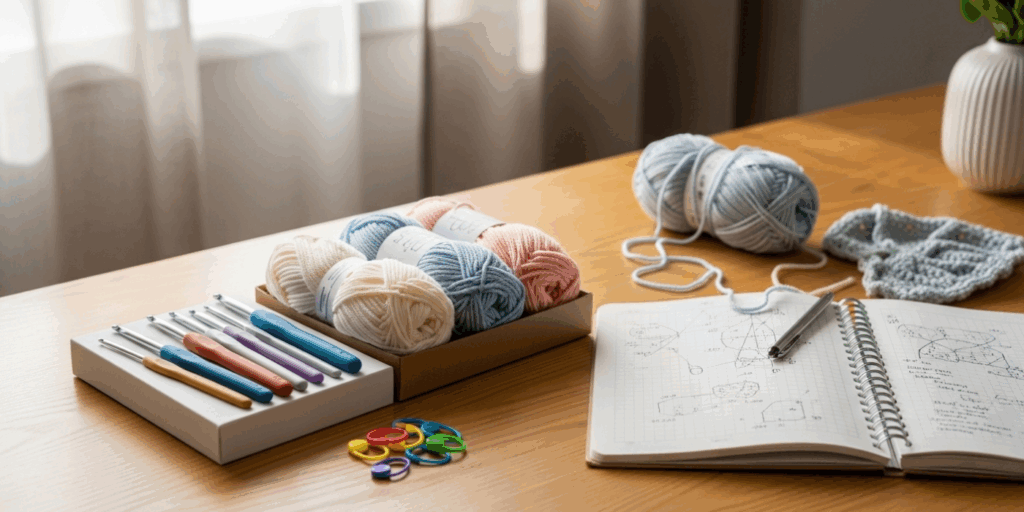
Let’s cut through the overwhelm. You don’t need 17 hooks, 50 skeins of yarn, or a craft room to start. In fact, the less you buy upfront, the better.
Here’s your real starter kit:
- One crochet hook – Size I/9 (5.5 mm) is perfect for beginners. It’s big enough to see what you’re doing, and it works well with medium-weight yarn.
- One skein of medium-weight yarn – Look for “worsted weight” or “category 4” on the label. Choose a light color (like cream, beige, or soft gray)—it makes it easier to see your stitches. Avoid super-bulky or slippery yarns (like silk or metallic) for now.
- Scissors – Any pair will do. Keep them near your chair.
- A tapestry needle (optional but helpful) – For weaving in ends later. You can use a large-eyed needle or even a clean safety pin for now.
That’s it. Seriously.
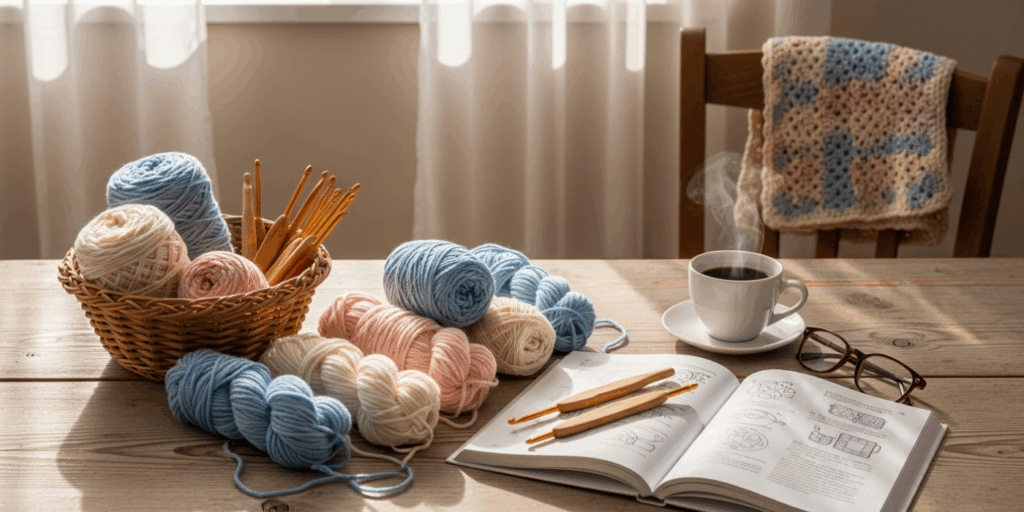
I know you’ve seen those Instagram-worthy craft tables with rainbow yarns and wooden hooks. But here’s the truth: you don’t need any of that to begin.
In fact, I started with a $2 hook from the dollar store and a thrift-store sweater I unraveled. It was lumpy. It was uneven. But it was mine.
When choosing yarn, avoid anything labeled “superwash” or “baby alpaca” for your first project—they’re soft but tricky to see stitches in. Stick with acrylic or cotton blends. They’re forgiving, washable, and budget-friendly.
Pro tip: If you’re unsure what to buy, head to your local craft store and ask for “beginner crochet starter pack.” Many stores sell them for under $15.
And please—don’t buy 10 colors yet. One is enough. Master the basics first. Color comes later. Focus on the process, not the palette.
The First Two Stitches: Chain and Single Crochet (Yes, That’s All You Need!)
You might think crochet has dozens of stitches. And it does. But here’s the secret: you only need two to start making real things.
Let’s break them down—slowly, simply, without jargon.
1. The Chain Stitch (ch)
This is your foundation. Think of it like drawing a line with yarn.
- Hold the hook like a pencil.
- Make a slip knot: Loop the yarn, pull a loop through, and slide it onto the hook. Tighten gently.
- Yarn over (wrap the yarn over the hook from back to front).
- Pull that loop through the slip knot.
- Repeat.
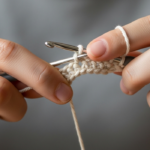
Each loop you pull through is one chain stitch. Make a chain of 10. Feel how it looks? That’s your first crochet piece.
Why it matters: Almost every pattern starts with a chain. Master this, and you’ve unlocked 80% of beginner projects.
2. The Single Crochet (sc)
Now, let’s turn that chain into fabric.
- Insert your hook into the second chain from the hook.
- Yarn over.
- Pull up a loop (you now have two loops on your hook).
- Yarn over again.
- Pull through both loops.
One single crochet done.
Do that in every chain across. You’ll end up with a little rectangle. That’s your first swatch.
Why it matters: Single crochet is the building block of blankets, dishcloths, amigurumi, and hats. It’s tight, sturdy, and perfect for learning tension.
Practice these two stitches for five minutes a day for three days. Don’t aim for perfection. Aim for consistency.
Your hands will remember the motion before your mind does.
And guess what? Once you can chain and single crochet, you can make a simple coaster, a phone case, or even a tiny flower. You’re not just learning stitches—you’re learning how to make things.
Common Mistakes (And How to Fix Them Without Quitting)
Let’s be real: your first attempts won’t look like the photos on Pinterest. And that’s okay.
Here are the five most common beginner mistakes—and how to solve them fast:
1. Tight Stitches
You’re gripping the hook like you’re trying to crush a bug. Result? Your work feels stiff, and your fingers hurt.
Fix: Relax your grip. Imagine holding a bird—not too loose, not too tight. Take breaks. Shake out your hands.
2. Counting Stitches Wrong
You start with 10 chains… but end up with 8 stitches. You think you messed up.
Fix: Always count your chains before you start crocheting. And don’t count the loop on your hook as a stitch. The first stitch goes into the second chain from the hook.
3. Twisted Foundation Chain
Your chain looks like a corkscrew.
Fix: Lay your chain flat on the table before you begin. Gently stretch it out. If it twists, undo it and start again.
4. Accidentally Adding or Dropping Stitches
You’re suddenly one stitch short—or worse, one extra.
Fix: Count your stitches at the end of each row. If you’re off by one, it’s usually because you missed the last stitch or crocheted into the turning chain.
5. Frustration & Giving Up
You’ve been at it 20 minutes and it looks like a tangled mess.
Fix: Breathe. Put it down. Come back tomorrow. Crochet isn’t a race. Every expert was once a beginner who didn’t quit.
Remember: mistakes are part of the pattern.
I once made a hat that looked like a deflated balloon. I cried. Then I laughed. Then I frogged it (that’s crochet-speak for “unraveling your work”) and tried again. Now it’s my favorite gift to give.
Your first project doesn’t have to be perfect. It just has to be yours.
Your First Project: A Simple Dishcloth (Yes, Really!)
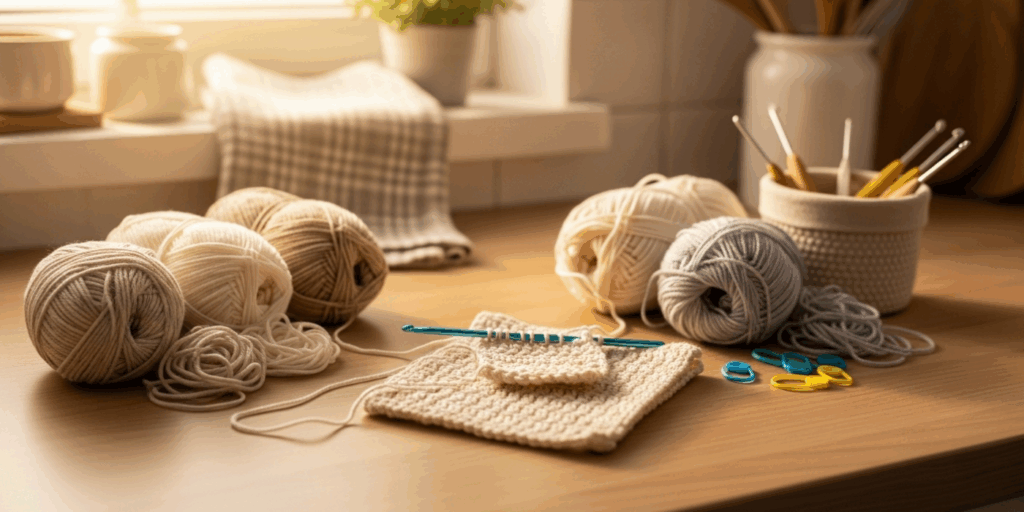
You’ve practiced your chain and single crochet. You’ve survived the wobbly rows. Now—let’s make something real.
Project: 6-inch Cotton Dishcloth
Why this? It’s small. It’s useful. And it’s the perfect way to practice even tension.
What you’ll need:
- 1 skein of 100% cotton yarn (like Lily Sugar ‘n Cream)
- Size I/9 (5.5 mm) hook
- Scissors
Instructions (super simple!):
- Chain 26.
- In the second chain from hook, work 1 single crochet. Continue across—25 sc total.
- Chain 1, turn your work.
- Single crochet in each stitch across.
- Repeat steps 3–4 until your square is about 6 inches wide.
- Fasten off. Weave in the ends with a tapestry needle.
Done.
You just made a functional, washable dishcloth. And it’s yours.
This project teaches you:
- How to turn your work
- How to maintain even tension
- How to finish cleanly
And here’s the magic: once you finish this, you’ll want to make another. And another. Maybe in a different color. Maybe bigger. Maybe as a washcloth for your dog.
This is how habits form—not through grand goals, but through small, satisfying wins.
You’re not just making a dishcloth. You’re building confidence. One stitch at a time.
Crochet as a Lifelong Skill: More Than Just a Hobby
Here’s something most beginners don’t realize: crochet isn’t just something you do in your free time.
It’s a skill that grows with you.
As you get comfortable, you’ll discover:
- You can make gifts that mean more than store-bought ones.
- You can mend a sweater instead of tossing it.
- You can create cozy items for your home—no Amazon delivery needed.
- You can join a local group and make real friends.
- You can even turn this into a side hustle.
I know a woman in Ohio who started crocheting baby booties after her grandson was born. Within a year, she was selling them at farmers’ markets. Now she runs a small Etsy shop and teaches weekend workshops.
It didn’t happen overnight. But it started with one chain stitch.
Crochet also connects you to history. This craft has been passed down for centuries—from ancient Egypt to Appalachian homes to modern-day TikTok creators. You’re joining a global family of makers.
And in a world of fast fashion and disposable things, choosing to make something by hand is quietly revolutionary.
You’re saying:
“I value time over speed.”
“I value care over convenience.”
“I value my hands.”
That’s powerful.
So whether you crochet one blanket a year or ten, you’re not just making yarn art—you’re making a life that feels more intentional, more creative, more you.
Final Thoughts: Your Hands Are Already Ready
You don’t need talent. You don’t need time. You don’t need a perfect setup.
You just need to begin.
Right now.
Grab your hook. Pick up that yarn. Make a slip knot.
That’s it.
You’ve already taken the first step.
The rest? It’ll come. Slowly. Unevenly. Beautifully.
Every expert crocheter started exactly where you are—with a little doubt, a lot of curiosity, and one tiny loop of yarn.
So go ahead. Make that first chain.
Make it messy. Make it crooked. Make it yours.
And when you finish your first dishcloth? Take a picture. Post it. Celebrate it.
You didn’t just make a cloth.
You made the beginning of something beautiful.
What will you make first?
A cozy blanket? A pet toy? A gift for someone you love?
Drop your idea in the comments below—I’d love to cheer you on.
And if this guide helped you take your first step, please share it with a friend who’s been wanting to try crochet but didn’t know where to start.
Because the world needs more handmade things.
And more people who believe they can make them.
You’ve got this. One stitch at a time. ❤️
Gabriela Ferreira is a passionate crochet and knitting enthusiast who finds inspiration in every skein of yarn she touches. With a love for color, texture, and handmade detail, she brings creativity and warmth to each project she creates. Gabriela believes that every stitch tells a story, and she enjoys sharing her craft with others who appreciate the beauty of fiber arts.