You’ve probably stared at a skein of glittery, bouclé, or hand-dyed yarn and thought, “This is beautiful… but what do I even do with it?”
You’re not alone. Specialty yarns—those dazzling, textured, or unconventional fibers—have exploded in popularity over the past few years. From shimmering metallic threads to fluffy chenille and slubby hand-spun wool, they’re showing up everywhere: on Instagram feeds, in boutique boutiques, and even in cozy throw blankets at your favorite café. But here’s the truth: most people buy them… then get stuck. They don’t know how to handle them. They fear mistakes. They worry their project will look “off.” And so, those gorgeous skeins sit untouched, gathering dust.
The good news? You don’t need to be a master knitter or expert weaver to use specialty yarns successfully. In fact, some of the most stunning handmade pieces come from simple projects paired with bold, unexpected fibers. This article will guide you through the why, how, and what of working with specialty yarns—not just to avoid frustration, but to unlock creativity you didn’t know you had.
We’ll explore why these yarns are more than just eye candy, how to choose the right one for your skill level, practical tips to handle tricky textures, and real-life examples that prove you don’t need perfection to create magic. By the end, you’ll not only feel confident picking up that sparkly or fuzzy skein—you’ll be excited to.
Why Specialty Yarns Are More Than Just a Trend
Let’s be honest: specialty yarns aren’t new. People have been twisting silk, adding beads, and dyeing wool with natural pigments for centuries. But today, they’ve become a symbol of self-expression in a world that often feels too fast, too digital, too uniform.
Think about it. In a time when mass-produced clothing dominates, choosing a hand-dyed, uneven, slightly irregular yarn is a quiet rebellion. It says: I value uniqueness. I embrace imperfection. I’m willing to slow down and make something that matters.
And it’s not just emotional—it’s practical. Specialty yarns can transform a simple scarf into a conversation piece. A basic beanie made with a bouclé yarn suddenly looks expensive, luxurious, and custom-made. Even a plain dishcloth made with cotton terry yarn becomes a tactile delight.
According to a 2024 survey by the Craft Yarn Council, over 68% of crafters reported using at least one specialty yarn in their last project—and 82% said it made them feel more connected to their craft. Why? Because these yarns feel different. They invite you to slow down, touch, notice, and appreciate texture in a way that smooth, machine-spun yarns rarely do.
But here’s the catch: many tutorials and patterns assume you’re using standard worsted weight acrylic. When you swap in a metallic, a ribbon yarn, or a novelty blend, things can go sideways. Stitches get lost. Tension gets wonky. You might end up with a lumpy hat or a scarf that unravels at the edges.
That’s why understanding why these yarns behave differently is the first step to using them well. They’re not broken. They’re just… different. And once you learn their language, they become your most loyal creative partners.
Choosing the Right Specialty Yarn for Your Skill Level (and Project)
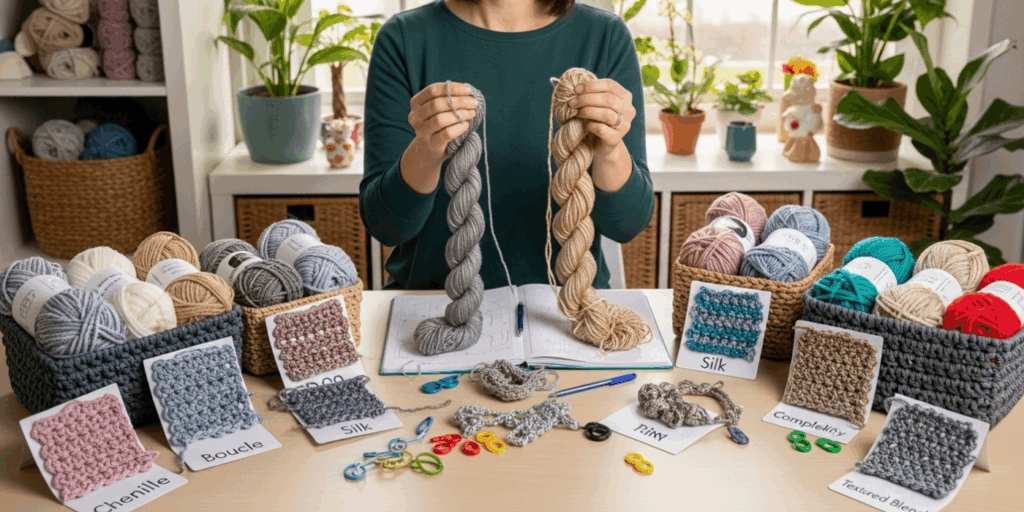
Not all specialty yarns are created equal. Some are beginner-friendly. Others? Let’s just say they come with a warning label.
If you’re new to handcrafting—or just new to unusual fibers—start with yarns that have some structure. For example:
- Bouclé: Fluffy, looped, and soft. It hides mistakes well and adds instant texture. Perfect for scarves, cowls, or chunky blankets.
- Chenille: Smooth, velvety, and forgiving. It drapes beautifully and doesn’t split easily.
- Cotton Terry: Great for dishcloths or baby blankets. It’s sturdy, washable, and easy to see your stitches in.
Avoid starting with:
- Metallic or foil yarns: They’re slippery, stiff, and can fray. Best for accents, not entire sweaters.
- Ribbon yarns: These are flat and wide. They require very specific needle sizes and tension. Easy to mess up if you’re not used to it.
- Hand-spun or “artisan” yarns: These can be wildly uneven. Beautiful? Absolutely. Predictable? Not so much.
Pro Tip: Look for blends. A yarn that’s 70% wool + 30% silk or 50% cotton + 50% acrylic is often easier to work with than 100% novelty fiber. The base fiber gives you stability; the specialty component gives you flair.
And here’s something most people don’t think about: match the yarn to the project. Don’t try to knit a fitted sweater with a fuzzy, haloed yarn. It’ll disappear into itself. Instead, use it for a loose cowl, a shawl, or a pillow cover. Let the yarn shine where it belongs.
I once saw a beginner make a stunning blanket using only a single skein of self-striping bouclé. She didn’t even know how to read a pattern—she just cast on and knitted until she ran out. The result? A cozy, cloud-like blanket that looked like it came from a designer studio. She didn’t need perfection. She just needed courage.
Start small. Start simple. Let the yarn guide you.
Mastering the Basics: How to Handle Trickier Yarns Without Frustration
Okay, you’ve picked your yarn. Now what? Here’s the secret: you don’t fight specialty yarns—you work with them.
Let’s take metallic yarn, for example. It’s shiny, yes—but it’s also slippery and tends to twist. If you try to knit it like regular yarn, your stitches will slide off your needles, and you’ll end up with a tangled mess.
Solution? Use larger needles. Go up 1–2 sizes from what the pattern recommends. This gives the yarn room to breathe. Also, try knitting with two strands held together—one metallic, one regular cotton or wool. The base yarn stabilizes the shiny one, and you get the best of both worlds.
Bouclé? It’s fuzzy. You can barely see your stitches. So how do you count rows?
Try this: Use a stitch marker every 10 rows. Or, better yet, knit in a simple garter stitch (knit every row). It’s forgiving, reversible, and hides any irregularities. You don’t need complex lace or cables to make something beautiful.
Another common issue? Splitting. Some novelty yarns—especially those with thin filaments or blended fibers—can fray or split when you poke them with your needle.
Fix it: Use blunt-tipped needles (like bamboo or wood) instead of sharp metal ones. They glide through the fibers instead of piercing them. Also, hold the yarn gently. Don’t pull. Let it flow.
And here’s a game-changer: swatch, swatch, swatch. I know you’re eager to start your project. But trust me—spend 20 minutes knitting a 4×4 inch square. You’ll learn how the yarn behaves, how it drapes, and whether you even like working with it. You might discover that a yarn that looks amazing in the skein turns out stiff or scratchy when knitted. Better to find out now than after 10 hours of work.
One of my students, Lisa, fell in love with a hand-dyed silk blend. She started a shawl, only to realize halfway through that it was too slippery and didn’t hold its shape. She frogged it (yes, she cried), but then used the same yarn for a fringe on a simple cotton blanket. The result? Magic. The silk caught the light beautifully, and the blanket stayed sturdy. She learned: sometimes, the yarn isn’t wrong. You just need to use it differently.
Combining Specialty Yarns with Basic Patterns for Maximum Impact
Here’s where things get fun: you don’t need a new pattern to use specialty yarns.
In fact, some of the most stunning projects are made by pairing a simple, classic pattern with a bold yarn.
Think of it like this: a little black dress. It’s timeless. But add a statement necklace? Instant glamour.
The same applies to knitting and crocheting.
Try this:
- Knit a basic garter stitch scarf using a solid color yarn. Then, switch to a metallic or glitter yarn for the last 6 inches. Voilà—a dramatic, unexpected finish.
- Crochet a simple beanie with worsted weight cotton. Add a band of ribbon yarn around the brim. Suddenly, it looks like it cost $80.
- Make a granny square blanket using plain acrylic. Then, weave in a few squares made with hand-painted silk. The contrast is breathtaking.
You don’t need to be an expert to do this. You just need to be curious.
I once saw a woman at a craft fair make a tote bag using only one skein of “eyelash” yarn (the kind with long, furry fibers sticking out). She didn’t even use a pattern—she just crocheted a rectangle and sewed the sides. The bag looked like a cloud you could carry. People kept asking where she bought it. She smiled and said, “I made it. From yarn I found at the dollar store.”
That’s the power of specialty yarns: they elevate the ordinary.
And here’s another trick: use them as accents. You don’t have to use them for the whole project. A few rows of metallic thread along a sweater’s neckline. A fringe of chenille on a pillow. A single stripe of bouclé in a baby blanket. These small touches add personality without overwhelming the piece.
Bonus tip: If you’re unsure, try alternating rows. One row of regular yarn. One row of specialty yarn. It creates rhythm. It’s calming. And it lets your eyes rest between the texture bursts.
Try it. You might be surprised how much joy a simple rhythm can bring.
The Emotional Power of Imperfect Craft: Why “Flaws” Are Your Secret Weapon
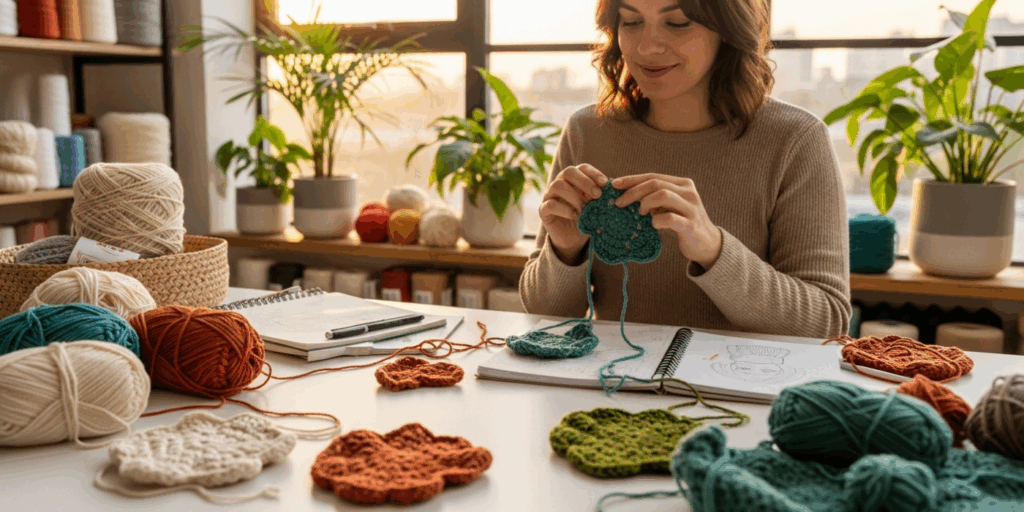
Let’s talk about something no one tells you: specialty yarns don’t want to be perfect.
They want to be alive.
A hand-dyed yarn might have subtle color variations that look like a sunset. A bouclé might have loops that stick out in random places. A hand-spun yarn might be thicker in some spots, thinner in others.
In machine-made goods, that’s called a defect.
In handmade craft? That’s called character.
When you learn to embrace those “imperfections,” something magical happens. You stop trying to control the yarn—and start enjoying the process.
I remember a workshop I led last spring. A woman named Maria had been knitting for 30 years. She was meticulous. Every stitch even. Every row perfect. Then she picked up a skein of hand-dyed alpaca with wild color shifts. She panicked. “It’s uneven,” she said. “It’s ugly.”
I asked her to knit just one row. She did. And then she looked at it.
“I didn’t make that,” she whispered. “It just… happened.”
That moment changed her. She stopped fighting the yarn. She started listening to it. By the end of the week, she’d made a wrap that looked like a river of autumn leaves. People cried when they saw it.
Specialty yarns teach us something profound: beauty doesn’t always come from control. Sometimes, it comes from surrender.
When you use these yarns, you’re not just making a scarf or a blanket. You’re practicing presence. You’re learning to let go. You’re honoring the handmade, the human, the imperfect.
And in a world obsessed with speed and polish, that’s revolutionary.
So the next time your bouclé yarn creates a weird bump? Smile. That’s not a mistake. That’s your fingerprint.
Final Thoughts: Your Next Project Awaits (And It’s Simpler Than You Think)
You don’t need a fancy loom. You don’t need a $100 yarn stash. You don’t even need a pattern.
All you need is one skein of specialty yarn—and the courage to try.
Whether it’s a sparkly ribbon for your next gift tag, a fuzzy chenille for a cozy throw, or a hand-dyed silk for a simple headband, these yarns are waiting to be loved.
They’re not here to intimidate you. They’re here to inspire you.
So go ahead. Pick up that yarn you’ve been eyeing. Cast on. Knit a few rows. Let yourself feel the texture. Notice the way the light catches it. Let your fingers move slowly. Breathe.
This isn’t just crafting. It’s therapy. It’s art. It’s joy.
And the best part? You don’t have to be perfect to make something beautiful.
Your turn: What’s one specialty yarn you’ve been afraid to try? Drop a comment below—I’d love to help you choose your first project with it. And if you’ve already used one in a way that surprised you? Share your story. We’re all learning together.
Because the world doesn’t need more perfectly uniform sweaters.
It needs more soulful, sparkly, fuzzy, handcrafted wonders.
Go make one.
Gabriela Ferreira is a passionate crochet and knitting enthusiast who finds inspiration in every skein of yarn she touches. With a love for color, texture, and handmade detail, she brings creativity and warmth to each project she creates. Gabriela believes that every stitch tells a story, and she enjoys sharing her craft with others who appreciate the beauty of fiber arts.