You’ve got a ball of yarn in your hands. It’s soft, colorful, maybe even a little fuzzy. You’re about to start your next project—maybe a cozy sweater, a chunky blanket, or a pair of mittens. But as you hold it, you wonder: Is this made from something that grew in a field… or something that came out of a lab?
The difference between natural and synthetic yarn isn’t just a technical detail—it shapes how your project feels, lasts, breathes, and even how it impacts the planet. Whether you’re a seasoned knitter, a beginner crocheter, or just someone who loves the warmth of handmade things, understanding your yarn’s origins can transform your crafting experience.
In this guide, we’ll break down the real differences between natural and synthetic fibers—not with jargon or overwhelm, but with honest, practical insights you can use right away. We’ll explore how each type behaves under your needles, how they affect your health and the environment, what they cost, and which one is truly better for your next project. Plus, we’ll share simple tips to help you choose wisely—no matter your skill level or values.
By the end, you won’t just know the difference between wool and acrylic—you’ll feel confident picking the right yarn for the right reason.
Why Your Yarn’s Origin Matters More Than You Think
Let’s be real: most of us buy yarn because it looks pretty or feels nice. But here’s the thing—what’s inside that skein affects everything.
Natural fibers like wool, cotton, silk, and alpaca come from animals or plants. They’ve been used for thousands of years. Synthetic fibers like acrylic, nylon, and polyester? They’re man-made, usually from petroleum, and only became popular after World War II.
You might think, “It’s just yarn—how much difference can it make?” But consider this: a wool sweater can last 20 years if cared for properly. An acrylic one? It might pill, stretch out, or look worn after just a few seasons. Natural fibers breathe. Synthetic ones trap heat and moisture. That’s why your hand-knit scarf made from cotton feels cool in summer, while an acrylic one makes you sweat.
And it’s not just comfort. If you’re eco-conscious, you should know that synthetic yarns shed microplastics every time you wash them—tiny plastic particles that end up in our oceans. Natural fibers? They biodegrade. In fact, a wool sweater buried in soil can disappear in under a year.
So when you choose yarn, you’re not just choosing color or texture. You’re choosing durability, comfort, sustainability, and even your own well-being.
This guide will help you make smarter choices—without turning your hobby into a science project.
The Warmth Factor: Natural Fibers That Hug You Back
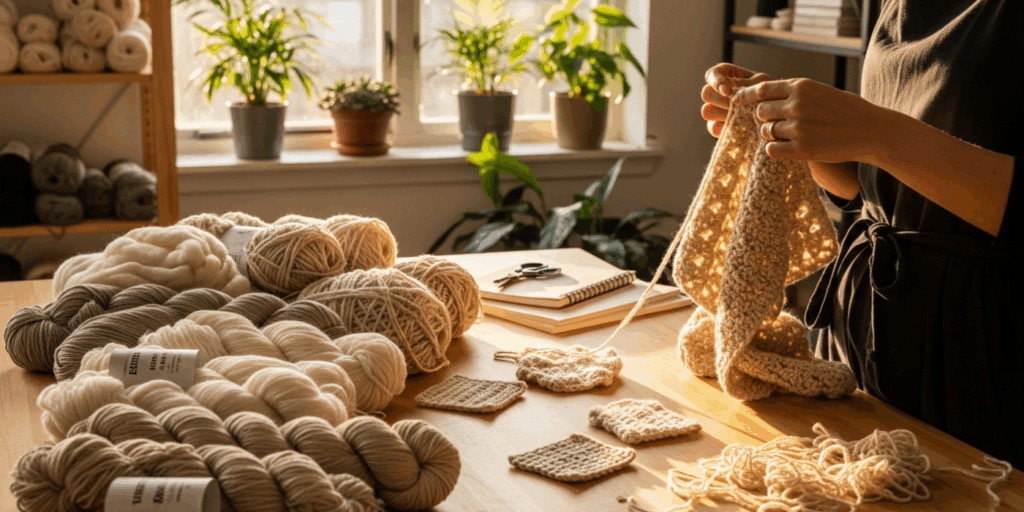
If you’ve ever wrapped yourself in a wool blanket during a winter storm, you know the magic of natural fibers. Wool, alpaca, cashmere, and even silk aren’t just warm—they’re intelligently warm.
Here’s why: natural fibers have tiny air pockets built right into their structure. Think of them like microscopic insulation. Wool, for example, can trap up to 80% of its weight in air. That’s why a lightweight wool sweater keeps you warmer than a thick synthetic one.
And it gets better. Wool doesn’t just retain heat—it regulates it. When you’re active, it wicks moisture away from your skin. When you’re still, it holds warmth. That’s why sheep don’t overheat in summer or freeze in winter. And yes—your sweater works the same way.
Cotton, on the other hand, is all about breathability. It’s perfect for summer tops, baby clothes, or dishcloths because it absorbs sweat and dries quickly. But unlike wool, it doesn’t insulate well when wet. That’s why you wouldn’t want to wear a cotton sweater on a snowy hike.
Alpaca? It’s warmer than wool and hypoallergenic—no itchy fibers. And silk? It’s luxurious, lightweight, and naturally temperature-regulating. A silk-blend shawl feels cool against your skin in the heat, yet keeps you cozy when the AC kicks on.
Natural fibers also have a beautiful way of aging. A well-cared-for wool blanket gets softer over time. It doesn’t just wear out—it lives with you.
Compare that to acrylic, which often starts to look shiny or pilled after a few washes. It doesn’t “mature.” It just… fades.
So if you’re making something meant to last—like a heirloom baby blanket, a gift for your grandma, or a winter coat—go natural. You’re not just making a garment. You’re making a memory.
The Practicality of Synthetics: When Plastic Yarn Actually Makes Sense
Now, let’s talk about the underdog: synthetic fibers.
Yes, acrylic, nylon, and polyester are made from oil. Yes, they don’t biodegrade. But they’re also affordable, durable, and incredibly easy to care for.
Let’s say you’re knitting socks for your toddler. Kids are messy. Socks get washed daily, tossed in the dryer, and stretched beyond recognition. Acrylic blends? They bounce back. They’re machine-washable, colorfast, and resistant to moths and mildew. Wool? It might shrink, felt, or get eaten by moths if not treated properly.
Or imagine you’re making a rug for your entryway. Foot traffic? Heavy. Spills? Constant. A synthetic blend—like a nylon-acrylic mix—will hold up far longer than a 100% cotton rug, which will flatten and stain quickly.
Synthetics are also a lifesaver for people with wool allergies. Not everyone can tolerate sheep’s wool, but a high-quality acrylic can mimic its softness without the itch.
And let’s not forget cost. A skein of merino wool can cost $15–$30. A comparable skein of acrylic? $3–$6. For big projects like blankets or scarves, that adds up fast. If you’re on a budget—or just practicing your stitches—synthetics give you room to experiment without fear.
Here’s the kicker: modern synthetics aren’t what they used to be. Brands like Red Heart Super Saver and Lion Brand Wool-Ease now blend acrylic with natural fibers to get the best of both worlds. You get softness, warmth, and easy care—all in one ball.
So don’t write off synthetics. They’re not villains. They’re tools. And sometimes, the right tool for the job is made in a lab.
The Environmental Truth: What Your Yarn Choices Really Mean
Let’s get real for a moment.
Every time you wash a synthetic yarn item—say, a bright pink acrylic scarf—you’re releasing thousands of microplastic fibers into your drain. These tiny plastic bits don’t break down. They flow into rivers, then oceans, and eventually end up in fish, salt, and even our drinking water. Studies estimate that 35% of all microplastics in the ocean come from synthetic textiles.
Natural fibers? They return to the earth. A wool sweater left in a compost pile? It’ll decompose in 6–12 months. Cotton? Even faster. No toxins. No pollution. Just nutrients for the soil.
But here’s the twist: not all natural fibers are created equal.
Organic cotton? Great—grown without pesticides. But conventional cotton? It’s one of the most chemically intensive crops on Earth, using 16% of the world’s insecticides. And wool? If it comes from farms that overgraze or mistreat animals, it’s not as “green” as it seems.
So what’s the real answer?
Choose mindfully.
Look for certifications: GOTS (Global Organic Textile Standard) for cotton, Responsible Wool Standard (RWS) for wool, or OEKO-TEX for synthetics (which ensures no harmful chemicals were used in processing).
Buy secondhand yarn. Join a yarn swap. Support small farms and ethical brands—even if it costs a little more. You’re not just buying yarn; you’re voting with your dollars.
And here’s a pro tip: if you love acrylic for its affordability, wash your synthetic projects in a Guppyfriend bag or a Cora Ball. These special laundry balls catch microfibers before they escape into waterways. Small change. Big impact.
Your craft doesn’t have to harm the planet. But it can help heal it—if you choose wisely.
The Feel Factor: Texture, Drape, and How Yarn Behaves Under Your Hands
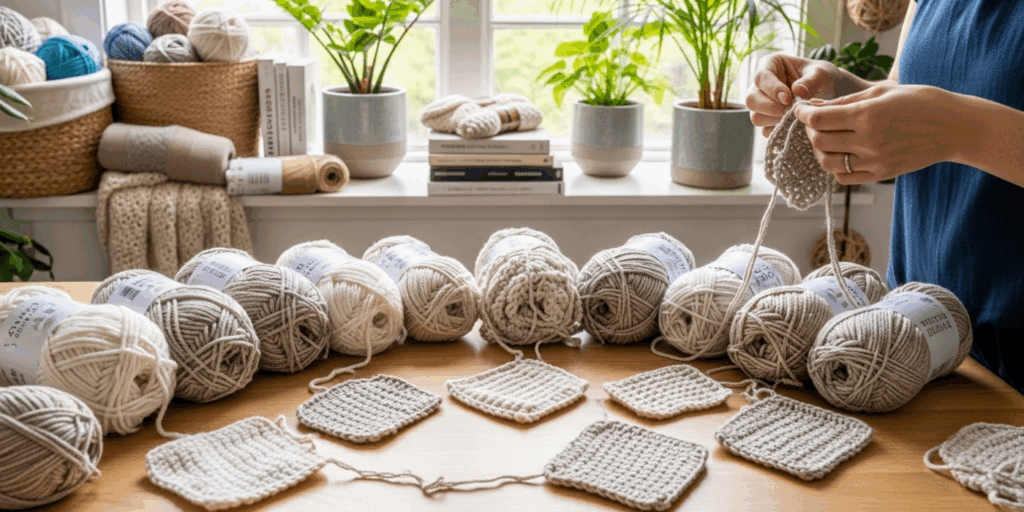
Ever knit with a yarn that just… doesn’t feel right?
Maybe it’s too slippery. Too stiff. Too sticky. You can see the pattern, but your fingers keep fighting it.
That’s because every fiber has its own personality.
Natural fibers like silk and alpaca have a beautiful drape—they flow like liquid. Perfect for shawls, lacework, or elegant tops. Wool has a slight “memory”—it holds its shape well, which is why it’s ideal for cables and textured stitches. Cotton? It’s dense and heavy. Great for tote bags or dishcloths, but it can sag in sweaters if not supported by a good stitch pattern.
Synthetics? They’re often more uniform. Acrylic is smooth and predictable. Nylon is strong and elastic—great for socks. But they can feel “plasticky.” Some people describe it as “cold” to the touch, even when it’s warm.
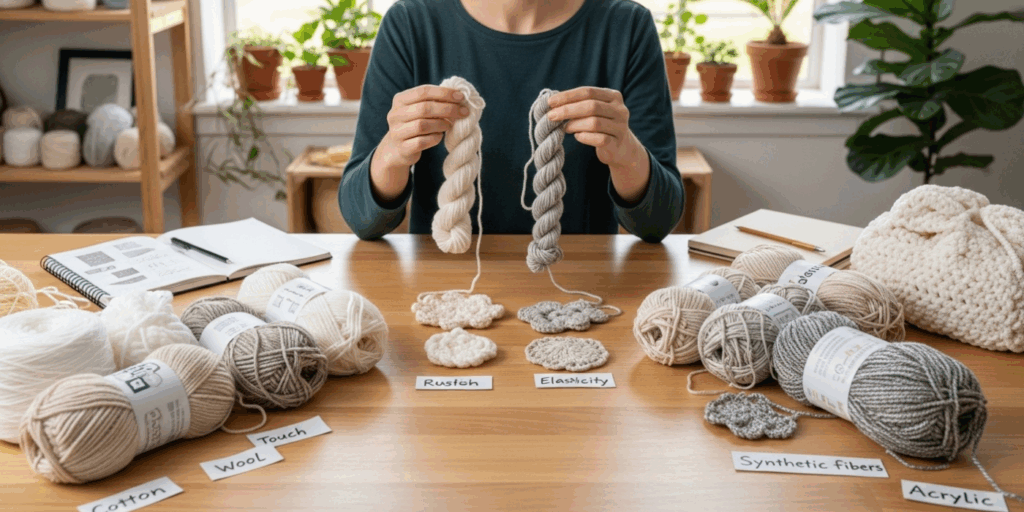
Try this: hold a ball of wool and a ball of acrylic side by side. Rub them between your fingers. Notice how the wool feels slightly rough but warm? The acrylic feels slick and cool? That’s not just perception—it’s science.
And here’s something most beginners don’t realize: natural fibers stick to each other. That’s why wool felts. It’s also why your knitting doesn’t unravel as easily. Acrylic? It slides. That’s why some people find it harder to fix mistakes—it doesn’t grip the needle or the stitches the same way.
If you’re new to knitting, you might think acrylic is easier. And for some, it is. But many experienced crafters swear by wool for its “forgiving” nature. It’s more responsive. More alive.
So when you’re picking yarn, don’t just look at the label. Touch it. Drape it. Imagine how it’ll feel against your skin, how it’ll move as you wear it.
Your hands know what your eyes don’t.
Blends: The Smart Middle Ground (And Why They’re Winning)
Here’s the secret most yarn shops won’t tell you: the best yarns aren’t 100% anything.
They’re blends.
Think of them like the perfect sandwich: sourdough (natural) + cheddar (synthetic) = unforgettable.
A wool-acrylic blend? You get the warmth and breathability of wool, plus the easy care and affordability of acrylic. That’s why Lion Brand Wool-Ease is one of the best-selling yarns in the U.S.
Cotton-polyester blends? They’re the go-to for T-shirts, dishcloths, and baby blankets. They hold their shape, resist shrinking, and dry fast.
Even silk-nylon blends are popular in sock yarns. The silk adds sheen and softness. The nylon adds strength. Result? Socks that look luxurious and last for years.
Blends are the unsung heroes of the crafting world. They solve problems. They make projects accessible. They bridge the gap between ethics and practicality.
And here’s the best part: you don’t have to choose “pure” to be intentional. You just have to choose aware.
Next time you’re browsing yarn, look at the fiber content. Is it 50/50? 70/30? That tells you what you’re getting. Want softness? Go for more natural. Want durability? Lean into the synthetic.
Blends give you control. And control means confidence.
Making the Right Choice: A Simple Decision Guide for Every Project
Still unsure? Here’s your no-fluff, easy-to-use cheat sheet:
| Winter sweater | Wool, alpaca, or wool blend | Warmth, breathability, longevity |
| Summer top or shawl | Cotton, linen, or bamboo | Light, cool, absorbent |
| Baby blanket | Organic cotton or wool blend | Soft, hypoallergenic, washable |
| Socks | Wool-nylon blend | Elastic, durable, moisture-wicking |
| Dishcloths | Cotton | Absorbs water, withstands heat |
| Rug or basket | Acrylic, polyester, or nylon | Tough, colorfast, easy to clean |
| Gift for someone allergic to wool | Acrylic or bamboo | Safe, soft, affordable |
| Lace shawl | Silk, alpaca, or bamboo blend | Drape, sheen, lightweight elegance |
And remember: if you’re unsure, start small. Buy a single skein. Knit a swatch. Live with it for a week. See how it feels. See how it washes. Then decide.
Your hands will thank you.
The Heart of It All: Crafting With Intention
At the end of the day, yarn isn’t just thread. It’s time. It’s care. It’s connection.
When you choose natural fibers, you’re honoring tradition. You’re supporting farmers, shepherds, and small-scale artisans who work with the earth, not against it.
When you choose synthetics, you’re choosing accessibility. You’re making art possible for people on a budget, in areas with limited resources, or with physical needs that require easy-care materials.
There’s no “right” fiber. Only the right choice for you—right now.
Maybe today, you knit with acrylic because you’re learning. Maybe next month, you’ll splurge on a luxury alpaca blend for a gift. That’s okay. Growth is part of the journey.
What matters is that you’re paying attention. That you’re asking questions. That you’re choosing with awareness.
Crafting isn’t just about making something beautiful.
It’s about living beautifully.
Final Thought: What Will You Make Next?
So—what’s in your basket right now?
Is it a soft, cloud-like ball of merino wool? Or a vibrant, budget-friendly acrylic?
Whatever it is, hold it. Feel it. Remember: every stitch you make carries meaning.
Next time you shop for yarn, pause. Read the label. Ask yourself: Does this align with how I want to live?
And if you’re ready to try something new? Grab a skein of organic cotton. Or a wool blend. Or even a recycled polyester yarn. Experiment. See what speaks to you.
Because the best projects aren’t the ones that look perfect.
They’re the ones that feel true.
What’s your favorite fiber—and why?
Drop a comment below! Are you team wool? Team acrylic? Or do you love blends like I do? Let’s swap stories, tips, and favorite yarns. And if this guide helped you choose your next project, please share it with a fellow crafter. The world needs more handmade love. 🧶💛

Gabriela Ferreira is a passionate crochet and knitting enthusiast who finds inspiration in every skein of yarn she touches. With a love for color, texture, and handmade detail, she brings creativity and warmth to each project she creates. Gabriela believes that every stitch tells a story, and she enjoys sharing her craft with others who appreciate the beauty of fiber arts.