Imagine holding a skein of yarn that doesn’t just warm your hands—but also protects the planet.
That’s the quiet revolution happening in crochet circles right now. As more of us seek to live with intention, our hobbies are becoming powerful tools for change. Crochet, once seen as just a cozy pastime, is now a canvas for sustainability. And the secret? The yarn we choose.
From ocean plastic turned into soft, colorful threads to wool harvested with care for sheep and soil alike, eco-friendly yarns are no longer niche—they’re thriving. In this article, we’ll explore the most thoughtful, planet-loving yarn options available today. You’ll learn why your next project matters more than you think, discover brands that are truly walking the talk, and find simple ways to make your crochet habit kinder to the Earth—without sacrificing beauty, texture, or joy.
Whether you’re a seasoned crocheter or just picking up a hook for the first time, this guide will help you create something beautiful and meaningful. Let’s dive in.
Why Your Yarn Choice Matters More Than You Think
Let’s be honest: most of us don’t think twice about where our yarn comes from. We pick it based on color, price, or how soft it feels against our skin. But here’s the truth we often ignore: the textile industry is the second-largest polluter in the world, after oil.
Think about it. A single acrylic sweater can release over 700,000 microplastic fibers in one wash. And acrylic? It’s made from petroleum—fossil fuels dug up, processed, and spun into fibers that take hundreds of years to break down. Even “natural” cotton isn’t innocent. Conventional cotton farming uses massive amounts of water and pesticides—enough to pollute rivers and harm farmers’ health.
Now picture this: every time you choose a yarn made from recycled materials, organic fibers, or ethically sourced wool, you’re voting with your wallet. You’re telling the industry: “I care where this comes from.”
And the good news? You don’t need to overhaul your entire stash. Just one mindful choice—switching from acrylic to a plant-based alternative for your next beanie or blanket—can make a real difference.
According to a 2023 report by the Ellen MacArthur Foundation, if just 10% of crocheters and knitters switched to sustainable yarns, it could prevent over 1.2 million tons of CO₂ emissions annually. That’s like taking 250,000 cars off the road.
Your hook isn’t just making stitches—it’s making change.
Meet the Stars: Top Eco-Friendly Yarn Materials Explained
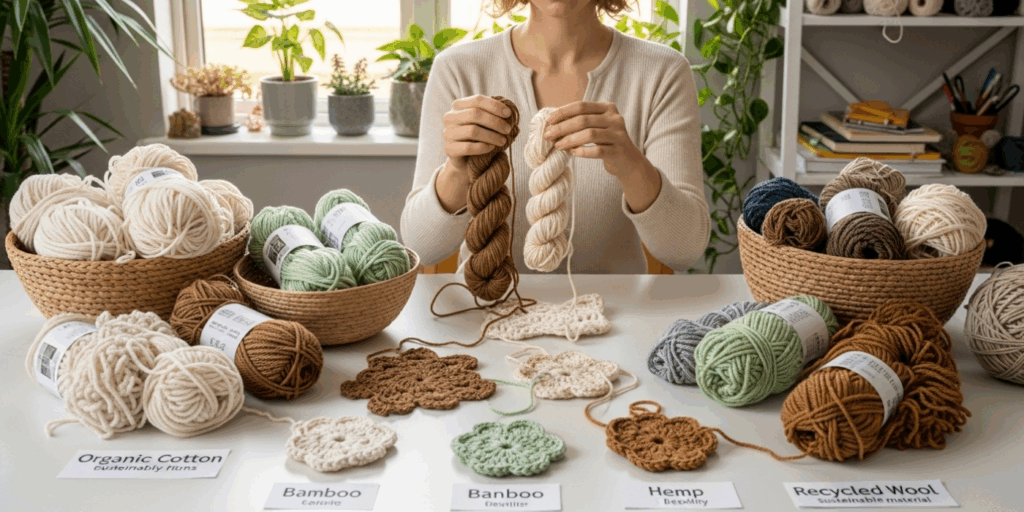
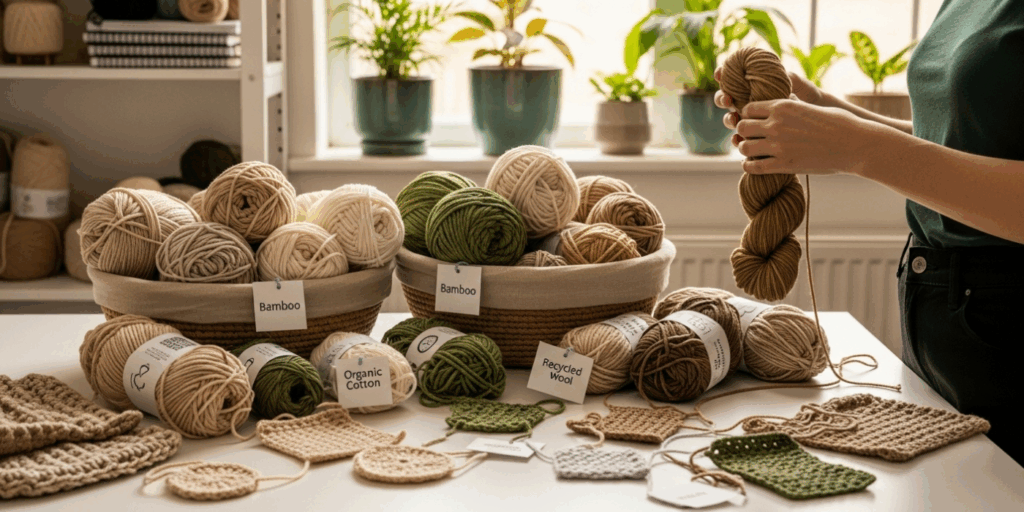
Not all “green” yarns are created equal. Let’s break down the most popular sustainable options—and why they’re worth your attention.
1. Organic Cotton
Unlike conventional cotton, organic cotton is grown without synthetic pesticides or GMOs. It uses up to 91% less water and supports healthier soil. Brands like Purl Soho’s Organic Cotton or Lion Brand’s 24/7 Cotton offer soft, breathable yarn perfect for baby clothes, dishcloths, or summer tops. Bonus? It’s machine-washable and gentle on sensitive skin.
2. Bamboo (and Bamboo Lyocell)
Bamboo grows fast, needs no pesticides, and regenerates quickly. But not all “bamboo” yarn is equal. Some are made with harsh chemicals that strip away its eco-credentials. Look for bamboo lyocell, which uses a closed-loop process that recycles solvents. Lion Brand’s Re-Up and Harrisville’s Bamboo Blend are great examples—silky, drapey, and perfect for shawls.
3. Recycled Cotton and Recycled Polyester
Here’s the magic trick: some companies take discarded cotton clothing or plastic bottles and turn them into new yarn. Tulip’s EcoYarn (made from recycled plastic bottles) and We Are Knitters’ Recycled Cotton transform waste into wearable art. One skein of recycled polyester can save up to 8 plastic bottles from landfills.
4. TENCEL™ (Lyocell from Eucalyptus)
This one’s a game-changer. Made from sustainably harvested eucalyptus trees, TENCEL™ uses 99% closed-loop water recycling and biodegrades in soil. It’s buttery soft, breathable, and drapes like silk. Knit Picks’ TENCEL™ Yarn is ideal for lacework or delicate garments.
5. Wool from Ethical Sources
Wool doesn’t have to be bad for the planet. Look for ZQ-certified, GOTS-certified, or Fair Trade wool. These labels mean sheep are treated humanely, land is managed responsibly, and workers are paid fairly. Brands like EcoYarns (Australia) and The Woolery (USA) offer stunning, naturally dyed wool you can feel good about.
And don’t forget hemp, alpaca, and soy silk—all low-impact fibers with unique textures. Hemp, for instance, grows without irrigation and even improves soil health. Try Hemp Traders’ Eco Yarn for sturdy, rustic projects.
How to Spot “Greenwashing” and Choose Real Sustainability
Not every brand calling itself “eco-friendly” deserves your trust.
Here’s the reality: greenwashing is everywhere. You might see a label that says “natural fibers” or “eco-conscious” while the yarn is still dyed with toxic chemicals, shipped across oceans in plastic bags, or made in factories with poor labor practices.
So how do you tell the real deal from the hype?
Ask yourself three simple questions:
🔹 Is the fiber source transparent?
Look for certifications: GOTS (Global Organic Textile Standard), OEKO-TEX®, Fair Trade, or B Corp. These aren’t just buzzwords—they’re verified standards.
🔹 Are the dyes non-toxic?
Natural dyes (from plants, insects, or minerals) are ideal, but even synthetic dyes can be safe if they’re OEKO-TEX® certified. Avoid yarns that smell chemical or fade quickly in sunlight.
🔹 Is the packaging plastic-free?
A yarn ball wrapped in recycled paper, tied with twine, and shipped in a cardboard box? That’s sustainability. One wrapped in glossy plastic with a plastic label? Probably not.
Pro tip: Check the brand’s website. Do they talk about their supply chain? Do they share photos of their farms or factories? Do they mention carbon offsets or water reuse? If the answer is “no,” dig deeper.
One of my favorite examples? EcoYarns in Australia. They grow their own organic cotton, spin it in a solar-powered mill, and ship in compostable mailers. You can literally trace your yarn from seed to skein. That’s transparency.
Practical Tips to Make Your Crochet Habits More Sustainable
You don’t need to buy all new yarn tomorrow. Sustainability is about progress, not perfection.
Here are 5 simple, actionable ways to make your crochet life greener—starting today:
✅ Start with what you have.
Before buying new yarn, dig through your stash. You might be surprised how many half-used skeins are hiding in your closet. Try combining them for a scrappy blanket or colorful tote bag.
✅ Buy local and small-batch.
Support independent dyers and fiber artists in your region. Fewer miles traveled = lower carbon footprint. Etsy shops like Little Green Yarns or local fiber co-ops often use natural dyes and minimal packaging.
✅ Choose multi-use projects.
Make items you’ll actually use: reusable produce bags, dishcloths, or tote bags. A single crocheted produce bag can replace 100 plastic ones a year.
✅ Wash gently and wisely.
Use cold water, eco-friendly detergent, and a Guppyfriend bag (yes, it’s a thing!) to catch microfibers. Air-dry instead of using the dryer—it saves energy and extends your yarn’s life.
✅ Recycle or repurpose old yarn.
Don’t toss that tangled ball from a project you didn’t love. Unwind it, soak it in warm water with a drop of vinegar, then rewind. You’ve just given it a second life.
And here’s a fun challenge: Try one project this month using only recycled or upcycled yarn. Maybe it’s a granny square blanket made from old t-shirts (t-shirt yarn!) or a cozy hat from leftover wool. You’ll be amazed at how creative—and satisfying—it feels.
The Joy of Slow, Intentional Crochet
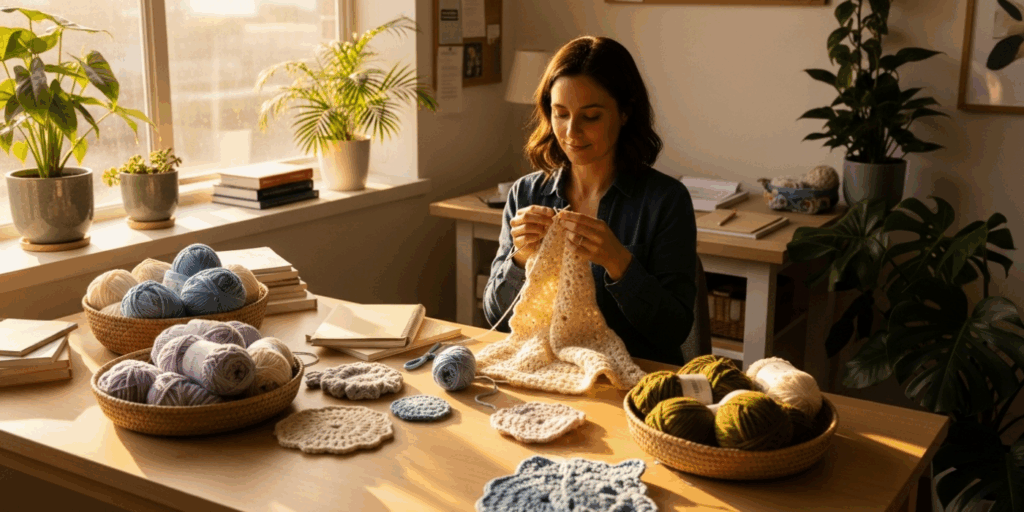
There’s something deeply healing about slowing down.
In a world of fast fashion and instant gratification, crochet is a quiet rebellion. When you choose sustainable yarn, you’re not just making something beautiful—you’re reclaiming time, care, and connection.
Think about it:
- The woman in Peru who hand-spun the alpaca wool for your scarf.
- The farmer in Oregon who grew organic cotton without chemicals.
- The small business owner who packs your order by hand, with love and recycled paper.
When you crochet with sustainable yarn, you become part of that story.
I remember the first time I used yarn made from recycled fishing nets. I’d bought it on a whim, drawn to its ocean-blue hue. When I finished my cowl, I held it up to the light and thought: This was once trash. Now it’s warmth.
That’s the magic.
Sustainable crochet isn’t about being perfect. It’s about being present. It’s about choosing a skein that doesn’t just look good—but feels right.
And when you make something with care, it lasts longer. It gets passed down. It becomes heirloom.
Your next project? It could be the one that inspires your sister, your friend, your neighbor. Because when people see what you’ve made—and hear the story behind it—they start asking questions.
And that’s how change begins.
Where to Find and Support Ethical Yarn Brands (With Real Links!)
Ready to shop sustainably? Here are a few trusted brands that walk the talk—no greenwashing here:
- Lion Brand Re-Up – Made from 100% recycled plastic bottles. Soft, affordable, and available nationwide.
- Knit Picks – Offers TENCEL™, organic cotton, and wool with full transparency. Their “We Love Yarn” program even lets you return used yarn for recycling.
- We Are Knitters – Uses recycled cotton and natural dyes. Comes in gorgeous, minimalist packaging.
- EcoYarns (Australia) – Fully traceable, zero-waste, and carbon-neutral shipping.
- The Woolery – Offers ZQ-certified merino wool, naturally dyed, and hand-spun in the USA.
- Hemp Traders – For those who love texture and durability. Perfect for bags and home decor.
Many of these brands offer subscription boxes or yarn clubs with seasonal eco-friendly selections. Try one—it’s like a monthly gift to the planet.
And if you’re feeling adventurous? Try making your own yarn from old T-shirts or thrifted sweaters. It’s easier than you think—and wildly rewarding.
Final Thoughts: Stitch by Stitch, We Heal the World
Crochet isn’t just about patterns and stitches.
It’s about legacy.
Every loop you make, every color you choose, every skein you buy—it all adds up. Not in a loud, flashy way, but in the quiet, steady rhythm of a life lived with awareness.
You don’t need to be a hero to make a difference. You just need to care enough to choose differently.
Maybe today, you’ll swap that acrylic yarn for organic cotton.
Maybe tomorrow, you’ll teach a friend how to unravel an old sweater and re-spin it.
Maybe next week, you’ll donate your handmade dishcloths to a local shelter.
Small acts. Big ripples.
The Earth doesn’t need us to be perfect.
It just needs us to try.
So pick up your hook.
Choose your yarn with heart.
And stitch something beautiful—for you, for others, for the planet.
What’s your favorite eco-friendly yarn?
Have you ever turned an old sweater into something new? I’d love to hear your story—drop a comment below and let’s inspire each other.
And if this article helped you see your crochet in a new light, please share it with a fellow maker. Together, we can turn every stitch into a statement.
Happy crocheting—and even happier planeting. 🌿🧶
Gabriela Ferreira is a passionate crochet and knitting enthusiast who finds inspiration in every skein of yarn she touches. With a love for color, texture, and handmade detail, she brings creativity and warmth to each project she creates. Gabriela believes that every stitch tells a story, and she enjoys sharing her craft with others who appreciate the beauty of fiber arts.