You’ve got your yarn, your hook, and a pattern you’re so excited to start. But when you open your crochet bag, you’re met with a tangled mess of tools you don’t remember buying—and half of them are gathering dust. Sound familiar?
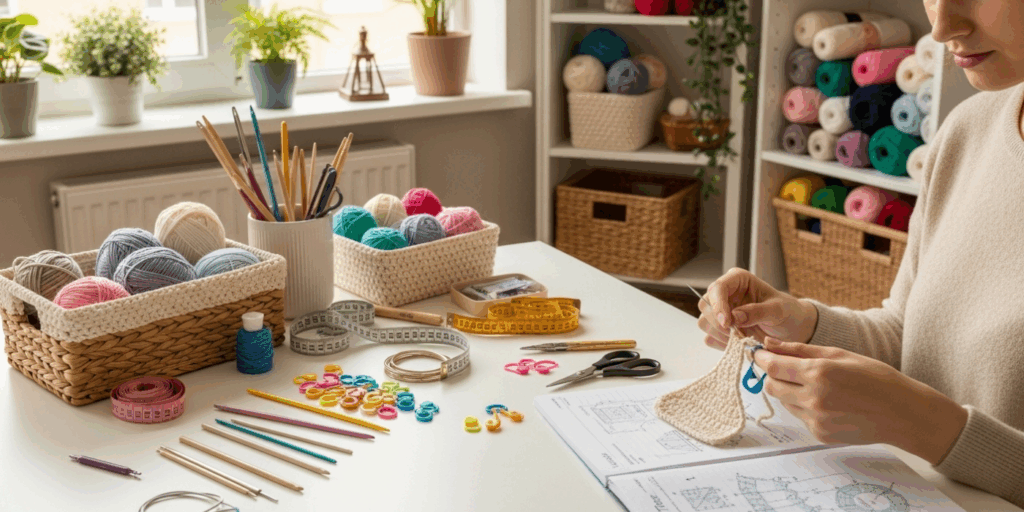
Here’s the truth: crochet isn’t just about the hook and the yarn. It’s about the quiet, often-overlooked tools that turn frustration into flow, and chaos into creativity. Whether you’re a beginner who just finished your first scarf or a seasoned crocheter who’s made dozens of amigurumi, the right notions can make all the difference. They’re not flashy, they don’t show up in Instagram photos, but they’re the unsung heroes behind every neat stitch, perfectly aligned edge, and project finished on time.
In this guide, we’re cutting through the noise. No fluff. No overpriced gadgets that collect dust. Just the actual crochet notions you’ll use—repeatedly, reliably, and joyfully. We’ll walk through the 5 tools that belong in every crocheter’s toolkit (and the 3 you can safely ignore), share real-life hacks from fellow makers, and help you build a simple, organized system that saves you time and sanity. By the end, you’ll know exactly what to keep, what to toss, and how to make your next project smoother than your favorite cotton yarn.
Let’s get into it.
1. The Hook Isn’t the Only Star—Here’s What You Really Need
Let’s be honest: most of us start crochet because we’re drawn to the hook. It’s the centerpiece. The icon. The thing we see in YouTube tutorials and Pinterest boards. But here’s the secret most beginners don’t learn until they’re halfway through a blanket: your hook is just one piece of the puzzle.
The truth? You’ll use your tape measure more than your hook on most projects. Ever wonder why your scarf is 12 inches wide instead of 18? Or why your hat keeps sliding off your head? Chances are, you didn’t check your gauge. And gauge? That’s measured with a tape measure. I learned this the hard way when I made a sweater for my sister—only to realize it was two sizes too small because I didn’t measure my swatch. Lesson learned.
Then there’s the stitch marker. Sounds tiny, right? But try counting 127 stitches in a round without one. Spoiler: you’ll lose count by row 5. I used to rely on safety pins, but they snagged my yarn. Now I use plastic ring markers—they glide over stitches, don’t leave marks, and cost less than a coffee. I keep a small bag of them in my project bag, and I swear by them for amigurumi, hats, and even granny squares.
And let’s not forget scissors. Not just any scissors—small, sharp, and dedicated to yarn. I used to cut my yarn with kitchen shears until I realized they were dulling my hook’s edge (yes, that happens). Now I have a tiny pair that fits in my palm. They’re the reason I can snip ends cleanly without fraying.
These aren’t “nice-to-haves.” They’re must-haves. Think of them like the foundation of a house. Your hook is the roof. But without a solid base? Everything collapses.
Pro Tip: Keep a small pouch with your hook, tape measure, stitch markers, and scissors. Label it “My Crochet Essentials” and toss it in your bag every time you leave the house. No more hunting for tools mid-project.
2. The Dreaded Yarn Needle—Why It’s Your Secret Weapon
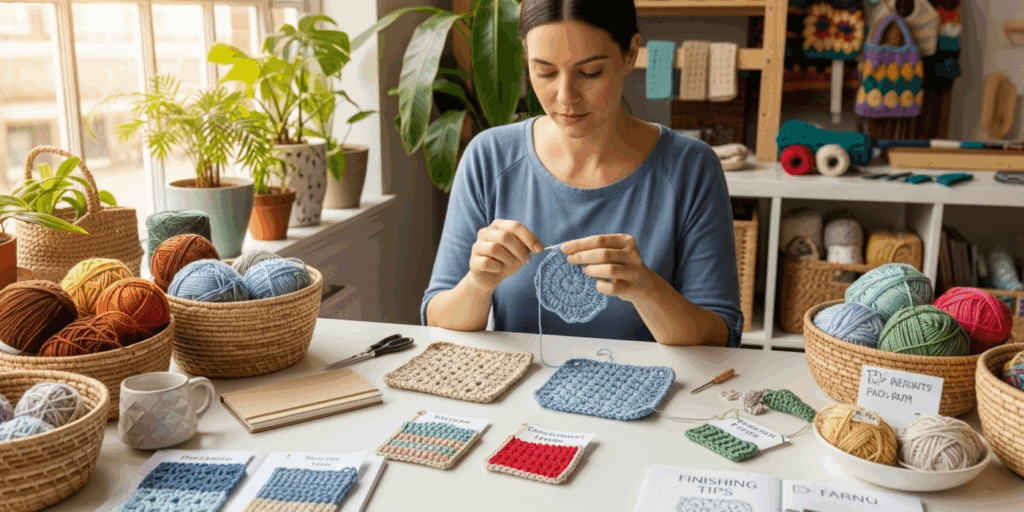
If you’ve ever tried to weave in ends with your fingers, you know the struggle. Tangled yarn. Frustrated hands. Ends that pop out after one wash. Enter: the yarn needle.
It’s not glamorous. It doesn’t have a name brand or a TikTok trend. But if you’ve ever finished a project only to leave it half-finished because weaving in ends felt impossible—you need this tool.
A yarn needle (also called a tapestry needle) is a blunt-tipped, large-eyed needle designed for threading yarn through stitches. It’s the difference between spending 45 minutes wrestling with a needle that keeps slipping and finishing your project in 10 minutes with clean, invisible ends.
I used to avoid them because I thought they were “for knitting.” But guess what? Crocheters need them too. Especially for seaming, joining granny squares, or hiding those pesky tails from color changes.
Here’s a game-changer: use a needle with a large eye. If you’re working with bulky yarn, a tiny needle will make you want to cry. I switched to a size 16 (or 5mm) needle for chunky projects, and it’s been a revelation. For finer yarns, go with a size 10 or 12.
And here’s a hack I learned from a veteran crocheter: thread your needle with the tail before you start weaving. That way, you’re not fumbling with a slippery end while trying to thread the needle. Just tie a tiny knot at the end of the tail to keep it from slipping through the eye, then thread it like a ribbon.
Also, keep a few needles in different sizes in your project bag. One for worsted weight, one for lace, one for bulky. It takes 30 seconds to grab the right one—and saves you hours of frustration.
Real story: Last winter, I made a blanket for my nephew. I spent two weeks crocheting. Then I spent three days weaving in ends. With the right needle? It took 90 minutes. That’s the power of the right tool.
Don’t underestimate this little guy. It’s the quiet MVP of your crochet toolkit.
3. The Magic of the Row Counter (Yes, Really)
Raise your hand if you’ve ever counted rows… and then counted them again… and then counted them a third time because you weren’t sure.
I’ve been there. More than once. I once lost track of my row count on a baby blanket and had to frog back 12 rows because I thought I was on row 45—but I was actually on row 38. Cue the tears. And the snack break.
Enter: the row counter.
This tiny, often-overlooked gadget is a game-changer for anyone doing repetitive patterns—granny squares, lace shawls, even simple scarves. It doesn’t have to be fancy. I use a simple mechanical clicker that fits on my finger like a ring. Each time I finish a row, I click it. Done. No mental math. No sticky notes. No guesswork.
I know what you’re thinking: “But I can just write it down.” Sure. But when you’re watching TV, chatting with a friend, or crocheting on the bus, you don’t want to dig out a notebook every 5 minutes. A row counter lets you stay in the zone.
There are digital counters, app-based counters, even ones that attach to your hook—but for most of us, the simple mechanical kind is perfect. They’re cheap (under $5), durable, and work without batteries.
Here’s a pro tip: use it for more than rows. I use mine for color changes in striped blankets, increases in amigurumi, and even for counting repeats in lace patterns. It’s not just a row counter—it’s a pattern tracker.
And if you’re worried about forgetting to click? Set a reminder: “Click after every 10 rows.” Even if you miss one, you’ll know you’re off by a small number—not 15.
I’ve had mine for 3 years. It’s still working. And I’ve made over 20 projects with it. That’s not luck. That’s strategy.
Your brain is meant for creativity—not counting. Let the counter do the math.
4. The Unsung Hero: Stitch Holders and Cable Needles (Yes, Even for Crochet!)
You might be thinking: “Cable needles? That’s knitting stuff.” And you’re right—mostly. But here’s the twist: crochet uses stitch holders too.
Ever started a sleeve on a top-down sweater and needed to put stitches on hold while you worked the body? Or made a shawl with a center panel and wanted to pause the side panels? That’s where a stitch holder comes in.
A stitch holder is a flexible, closed-loop tool (often made of plastic or metal) that holds live stitches safely while you work elsewhere. I use mine for:
- Holding the shoulders of a cardigan while I finish the body
- Pausing a lace motif while I work the border
- Keeping the last row of a hat secure before seaming
They’re not flashy. But they’re lifesavers. I used to use safety pins or scrap yarn, but the yarn kept slipping, and the pins snagged. A proper stitch holder? Smooth, secure, and easy to slide on and off.
And while we’re at it—cable needles? Surprisingly useful for crocheters who do cable stitches (yes, they exist!). If you’re working a crochet cable pattern (like a twisted stitch design), a cable needle helps you hold stitches out of order while you cross them. I used one for my first cable scarf—and it made the whole thing feel like magic.
You don’t need a whole set. Just one or two. Look for a short, curved metal one—it’s easier to maneuver than plastic.
Why this matters: Crochet is more versatile than most people think. Once you start using tools designed for holding rather than making, you unlock advanced techniques without the overwhelm.
Think of it like cooking. You don’t need a sous-vide machine to make soup. But if you want to make perfect soup? Tools help.
5. The Tools You Can (and Should) Skip
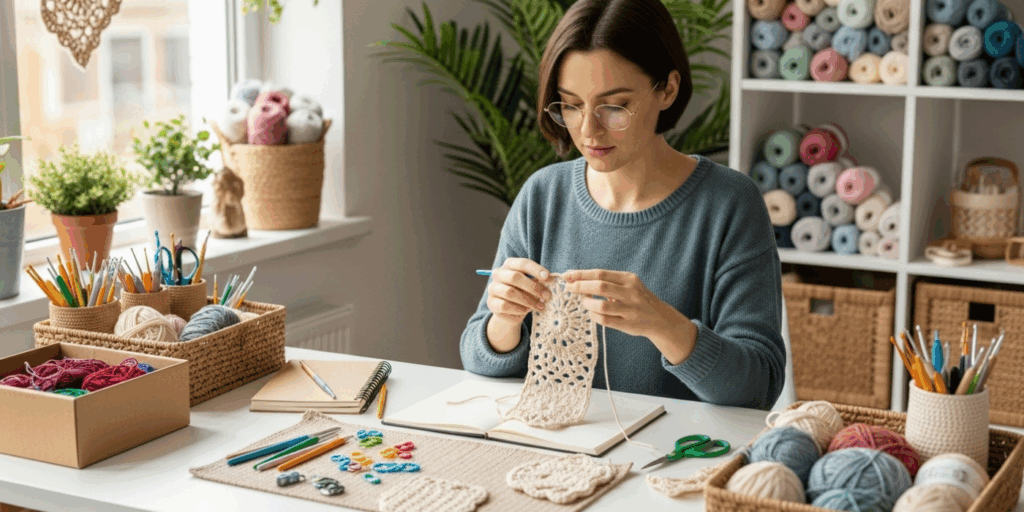
Let’s talk about the clutter.
Every craft store has a section labeled “Crochet Accessories.” And it’s full of things you don’t need.
The Yarn Winder? Only if you buy yarn in hanks (not skeins). Most store-bought yarn comes pre-wound. Save your money.
The Tension Guide? Sounds fancy, but it’s for advanced lace knitters. Crocheters adjust tension naturally with their hands.
The Glittery Hook Case? Cute, but if it doesn’t hold your hooks securely? It’s just decoration.
I used to buy every “crochet kit” I saw. I had 3 different hook organizers, 5 types of stitch markers (including ones shaped like cupcakes), and a “yarn cutter” that was just a tiny pair of scissors glued to a keychain. Guess what? I only use the scissors and the plastic ring markers.
Here’s the rule: If you haven’t used it in 3 months, let it go.
Your project bag isn’t a museum. It’s a toolbox. Keep only what serves your process.
I once cleaned out my bag and found 17 stitch markers I didn’t even know I owned. I donated 12 of them. The ones I kept? The ones I reach for every single time.
Simplicity is the secret to enjoying crochet—not more stuff.
6. Build Your Personal Crochet Kit (A Simple System That Works)
So now you know what you need. How do you keep it organized?
Here’s my system—simple, affordable, and totally customizable.
- One small pouch (like a makeup bag or pencil case) for your daily essentials:
- 1 hook (your go-to size)
- 1 tape measure
- 3 stitch markers
- 1 yarn needle
- 1 small pair of scissors
- 1 row counter
- One larger bag for project-specific tools:
- Extra hooks (sizes you’re using)
- Stitch holders
- Cable needle (if needed)
- Notes or printed pattern
- One drawer or box for backups:
- Extra yarn needles
- Spare stitch markers
- Extra row counter
- Scissors (backup pair)
I keep my daily pouch in my purse. My project bag stays on my couch. My backup drawer is in my craft room. No chaos. No panic.
And here’s the best part: you can build this for under $20. A $5 pouch, $3 row counter, $2 stitch markers, $1 scissors, $5 for a needle. Done.
You don’t need to spend hundreds. You just need to be intentional.
Final Thought: Tools Don’t Make the Maker—But They Make the Process Joyful
Crochet is about more than stitches. It’s about peace. About rhythm. About creating something beautiful with your hands.
The right tools don’t make you a better crocheter. But they make the journey smoother. Less frustrating. More joyful.
Think of them like the right shoes for a hike. You don’t need designer boots. But if your shoes are too tight, too slippery, or missing laces? You’re not going to enjoy the trail.
Your crochet tools are your trail gear. They’re the quiet companions that help you show up, stay focused, and finish what you start.
So go ahead. Clean out your bag. Toss the stuff you don’t use. Invest in the things you do. Keep your essentials close. Celebrate the small wins—the clean ends, the perfectly counted rows, the stitch marker that didn’t slip.
You’re not just making blankets or hats. You’re building a practice. A ritual. A quiet, creative sanctuary.
And you deserve tools that honor that.
What’s your must-have crochet tool?
I’ve listed mine—but I’d love to hear yours. Did I miss something? Do you swear by a certain needle? A brand of stitch marker? A weird hack I haven’t tried? Drop it in the comments below. Let’s build a community of smarter, happier crocheters—together.
And if this guide helped you declutter your bag or finally understand why your scarf is too narrow? Share it with a friend who’s still using kitchen scissors to cut yarn. Because everyone deserves to enjoy crochet—without the chaos.
Gabriela Ferreira is a passionate crochet and knitting enthusiast who finds inspiration in every skein of yarn she touches. With a love for color, texture, and handmade detail, she brings creativity and warmth to each project she creates. Gabriela believes that every stitch tells a story, and she enjoys sharing her craft with others who appreciate the beauty of fiber arts.