You spent hours—maybe even days—crocheting that adorable amigurumi unicorn, that cozy infinity scarf, or that intricate doily that looks like it came straight out of a fairy tale. You’ve poured your heart into every stitch. But here’s the question no one tells you: How much should you charge for it? And more importantly… who will even know it exists?
If you’re a crocheter turning your passion into a small business, you’re not alone. Millions of artisans worldwide are selling handmade goods online, from Etsy to Instagram to local craft fairs. But here’s the hard truth: most crafters undercharge—not because they don’t value their work, but because they don’t know how to calculate it properly. And without smart promotion, even the most beautiful piece can disappear into the digital void.
This guide is your roadmap to pricing your crochet creations with confidence—and promoting them in ways that actually attract buyers, build your brand, and turn your hobby into sustainable income. We’ll break down the math behind fair pricing, show you how to market your work authentically (no spam, no fluff), and give you real, actionable tips you can use starting today. Whether you’re selling your first scarf or scaling your crochet shop, this is your chance to stop undervaluing your talent—and start thriving.
Why Pricing Your Crochet Work Right Is Non-Negotiable
Let’s start with the most painful truth: if you’re charging $10 for a handmade baby blanket that took you 20 hours to make, you’re essentially earning 50 cents an hour. That’s less than minimum wage in most states—and it’s unsustainable.
Many crocheters price based on “what others are charging” or “what feels right.” But here’s the problem: your time, materials, and skill are worth more than you think. Underpricing doesn’t help you—it hurts your entire craft community. When you sell too cheaply, you set a precedent that handmade = cheap. Buyers start expecting $5 amigurumis, and suddenly, everyone’s competing on price instead of quality.
So how do you fix it?
Start with this simple formula:
Total Cost = Materials + Labor + Overhead + Profit
- Materials: Yarn, stuffing, buttons, tags, packaging.
- Labor: Multiply your hours by your desired hourly rate (more on this in a minute).
- Overhead: Website fees, shipping supplies, Etsy listing fees, electricity, even your crochet hook depreciation.
- Profit: This is your reward for being an entrepreneur. Don’t skip it.
Let’s say your unicorn plushie uses $8 in yarn, takes 6 hours to make, and you want to earn $15/hour. Overhead is $2 (packaging + fees). Your profit margin? Let’s aim for 20%.
- Materials: $8
- Labor: 6 hours × $15 = $90
- Overhead: $2
- Subtotal: $100
- Profit (20%): $20
- Final Price: $120
That might sound high—but think about it. A mass-produced plastic toy from a big-box store costs $12. Your unicorn? It’s one-of-a-kind. It’s made with love. It’s heirloom quality. That’s the value you’re selling.
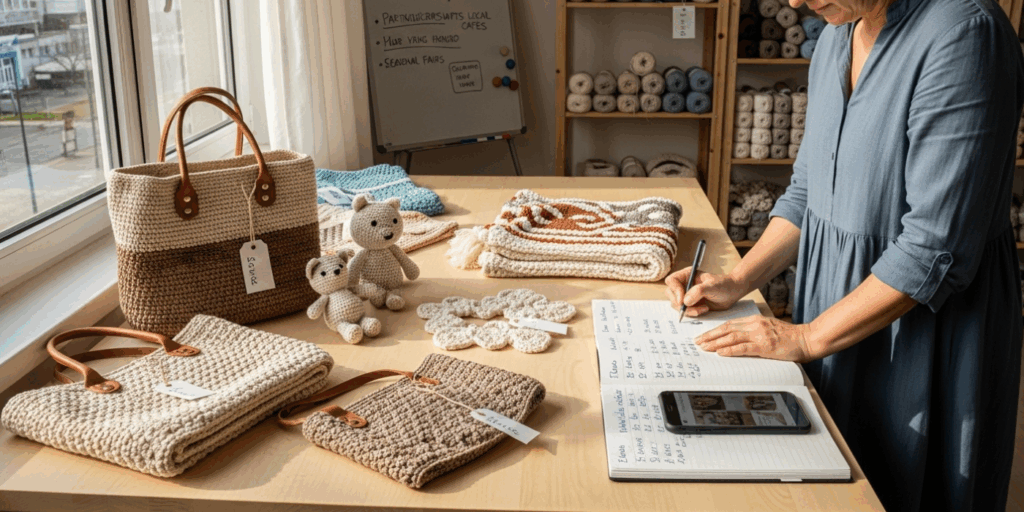
Pro Tip: Track your time. Use a free app like Toggl or even a simple notebook. You’ll be shocked at how long things take—and how much you’re really earning.
How to Set Your Hourly Rate (Without Feeling Guilty)

Here’s the uncomfortable truth: if you’re a stay-at-home mom, a retiree, or someone who crochets “just for fun,” you still deserve to be paid fairly. Your time is valuable—even if it doesn’t come with a job title.
So how do you decide what your hourly rate should be?
Ask yourself:
- What’s the minimum wage in your state? ($7.25 federal, but often $12–$15+ locally)
- What would you earn if you worked part-time elsewhere? (Even $12/hour is a starting point)
- Do you have advanced skills? (Lacework, colorwork, custom designs? Add 25–50% more)
I once spoke to a crocheter named Lisa who made intricate doilies. She charged $25 each. When we did the math, she was making $3/hour. She cried. “I’ve been doing this since I was 8,” she said. “I feel like I’m being paid for my childhood.”
That’s not fair.
Lisa raised her rate to $20/hour. Her doilies went from $25 to $80. Sales didn’t drop. They increased. Why? Because when you price with confidence, buyers sense the value. They don’t just see a doily—they see decades of skill, patience, and artistry.
Start with $10–$15/hour if you’re new. If you’re skilled, aim for $20–$30. That’s not greedy—it’s fair.
And here’s the secret: your customers aren’t buying yarn. They’re buying emotion. A grandmother buying a crochet baby blanket isn’t thinking, “Is this cheaper than Target?” She’s thinking, “Will this bring comfort to my granddaughter?” Your price reflects the love behind it.
Where and How to Promote Your Crochet (Without Being “Salesy”)
You’ve priced your work right. Now what? You need people to see it.
The good news? You don’t need a million followers. You just need the right ones.
Here are 4 powerful, low-pressure ways to promote your crochet:
1. Instagram & Pinterest: Visual Storytelling Wins
People don’t scroll for products—they scroll for inspiration. Post videos of your hands working the hook. Show the transformation from yarn to finished piece. Use hashtags like #handmadecrochet, #crochetartist, #slowfashion, and #supportsmallbusiness.
Don’t just post the final product. Post the process. A 15-second reel of you adding eyes to a stuffed owl? That’s gold. People love seeing the human behind the craft.
Pro Tip: Pin your best photos to Pinterest with keywords like “custom crochet baby blanket,” “unique crochet gift ideas,” or “handmade crochet scarf for women.” Pinterest is a search engine—and people are actively looking for handmade gifts.
2. Etsy SEO: Be Found, Not Just Seen
Etsy is your digital storefront. But if your listing says “Crochet Hat,” you’ll drown in 10,000 other listings.
Use long-tail keywords:
→ “Custom crochet beanie with earflaps for toddlers”
→ “Boho crochet infinity scarf for women winter”
→ “Personalized crochet name blanket for baby shower”
Use all 13 tags. Include variations. Use your customer’s language. If moms search for “cozy baby gift,” use that phrase.
Also, write descriptions that tell a story. Instead of “100% acrylic yarn,” say:
“This soft, hypoallergenic beanie is perfect for newborns with sensitive skin. Hand-crocheted with love in my home studio, it makes a thoughtful gift for new parents who want something truly special.”
3. Local Markets & Pop-Ups: Build Real Connections
There’s magic in handing someone their purchase in person. At a weekend craft fair, you’re not just selling—you’re connecting.
Bring samples. Offer a mini discount for people who follow you on Instagram. Have a little sign: “Ask me how I made this!” People love talking to artisans. Be curious, be warm, be real.
One crocheter I know, Maria, started selling at farmers’ markets. She brought a basket of free mini crochet flowers. People took one, smiled, asked how they were made—and 7 out of 10 bought something. The freebie wasn’t a loss—it was an invitation.
4. Email List: Your Secret Weapon
Every sale is a chance to build a relationship. Add a small note in your packaging:
“Loved your purchase? Join my newsletter for exclusive discounts, behind-the-scenes crochet tips, and first access to new designs!”
Even 50 subscribers can turn into loyal customers who buy from you every season. Use free tools like MailerLite or ConvertKit. Send a monthly email with a new design, a story about your day, or a “crochet of the month” giveaway.
The Power of Storytelling: Turn Buyers Into Believers
Here’s the most overlooked secret in handmade sales: people don’t buy things. They buy stories.
Think about it. Why do you buy a handmade mug instead of a $2 one from the dollar store? Because you imagine the hands that shaped it. The quiet morning the artist made it. The care they took to glaze it just right.
Your crochet pieces have stories too.
Don’t just list your product. Tell its story.
“This blanket was made for Emma, who was born 6 weeks early. Her mom asked for something soft, warm, and full of love. I used the softest organic cotton yarn I could find, and crocheted each row with a wish for her strength. Now it’s wrapped around her at naptime.”
That’s not a product description. That’s a memory in the making.
Create a “Behind the Stitch” section on your website or Etsy shop. Share photos of your workspace. Write about your journey:
- “I started crocheting after my dad passed away—it helped me heal.”
- “I quit my 9-to-5 to make crochet animals full-time. Here’s how I did it.”
When you share your truth, people don’t just buy your work—they become part of your journey.
And that’s the most powerful promotion of all.
Scaling Smart: When (and How) to Grow Without Burning Out
You’ve got sales. You’ve got a waiting list. You’re making $500 a month. Now what?
Growth is exciting—but it’s also dangerous if you’re not careful.
Don’t rush to mass-produce. Handmade means handmade. If you start outsourcing or using machine-made components, you lose the soul of your brand.
Instead, grow smart:
- Limit your product line. Focus on 3–5 bestsellers. Master them. Make them unforgettable.
- Offer custom orders—but set clear boundaries. “I take 5 custom orders per month.” Protect your time.
- Raise prices gradually. Every 3–6 months, increase prices by 10–15%. Your loyal customers will understand—and appreciate your growth.
- Bundle products. “Baby Gift Set” (hat + blanket + booties) sells better than individual items—and increases your average order value.
One crocheter I know, Jenna, started with just amigurumi animals. She noticed people kept asking for matching outfits. So she created “The Cozy Crew” collection: a bear, a bunny, and a tiny scarf—all sold together. Her average sale jumped from $35 to $85.
Growth isn’t about doing more. It’s about doing what matters, better.
Final Thought: Your Hands Are Creating More Than Crochet—They’re Creating Legacy
Every stitch you make is more than yarn and thread. It’s a piece of your soul. A moment of calm in a chaotic world. A gift that will be held, hugged, passed down.
You’re not just selling crochet.
You’re offering comfort.
You’re offering connection.
You’re offering beauty in a world that often forgets to slow down.
So don’t apologize for charging what you’re worth.
Don’t shrink your light to fit someone else’s idea of “affordable.”
Don’t let algorithms or competition silence your voice.
Your craft matters.
Your time matters.
You matter.
If you’ve made it this far, you’re already on the path to building something meaningful. Start by pricing your next piece with pride. Post one photo with heart. Send one email to a customer with a handwritten note.
That’s how change begins.
Your Turn: What’s Your Next Step?
You don’t need to overhaul your whole business today. Just pick one thing.
👉 Will you recalculate your pricing using the formula above?
👉 Will you take a video of your crochet process and post it on Instagram?
👉 Will you add a personal story to your next Etsy listing?
Drop a comment below—tell me what your next crochet creation will be, and what price you’re going to put on it. I’ll reply to every single one.
And if this guide helped you—even just a little—please share it with another crocheter who needs to hear it. Because when one artist thrives, we all rise.
Your hands have created magic. Now it’s time to let the world see it.
💛 Stitch with confidence. Sell with pride. You’ve earned it.
Gabriela Ferreira is a passionate crochet and knitting enthusiast who finds inspiration in every skein of yarn she touches. With a love for color, texture, and handmade detail, she brings creativity and warmth to each project she creates. Gabriela believes that every stitch tells a story, and she enjoys sharing her craft with others who appreciate the beauty of fiber arts.