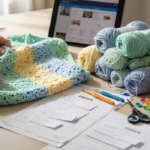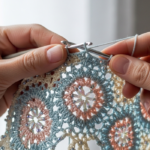
You’ve just finished your first granny square. It’s lopsided, the edges curl a little, and your fingers are sore—but you’re proud. You stare at it, smiling, and think: I wish I could show someone else who gets this.
That quiet moment—when the yarn feels like therapy, and each stitch becomes a breath—is one millions of us know well. But crochet isn’t just a solo craft. It’s a quiet revolution, a global web of hands knitting together stories, struggles, and triumphs. Whether you’re a beginner holding your first hook or a seasoned maker with a closet full of unfinished projects, you don’t have to do this alone.
This article is your guide to finding your crochet tribe—both online and in real life. We’ll explore how to discover welcoming communities, how to show up authentically (even if you’re shy), where to find mentorship, and how these connections can transform not just your craft, but your life. You’ll learn practical steps to join local groups, navigate social media without feeling overwhelmed, and even start your own circle if none exist nearby.
More than that, you’ll see how crochet communities offer more than pattern swaps and yarn recommendations—they offer belonging. In a world that often feels rushed and disconnected, these spaces remind us that slow, intentional creation is a radical act of self-care. Let’s find your people.
Why Crochet Communities Matter More Than You Think
Let’s be honest: crochet can feel lonely. You sit on your couch, headphones on, hook dancing between your fingers, while the world outside buzzes with notifications and deadlines. It’s peaceful—but sometimes, it’s also isolating.
That’s where community steps in.
Studies show that creative hobbies like knitting and crochet reduce stress, improve focus, and even help with anxiety and depression. But when you share that experience with others? The benefits multiply. A 2021 survey by the Craft Yarn Council found that 78% of crocheters who joined online or in-person groups reported feeling “more connected” and “less isolated” than those who worked alone.
Think about it: when you post a photo of your latest blanket and someone replies, “I made this exact pattern last winter—it kept me warm during my mom’s chemo treatments,” that’s not just feedback. That’s human connection.
Crochet communities are often built on empathy. They’re filled with people who understand the quiet joy of finishing a project after a hard day, or the frustration of unraveling ten rows because you missed a stitch. There’s no judgment here—only encouragement.
And it’s not just emotional support. These groups are treasure troves of knowledge. Need help reading a complex pattern? Someone’s been there. Want to learn Tunisian crochet? A member will record a 60-second TikTok tutorial for you. You’ll find free patterns, yarn swaps, charity drive ideas, and even virtual “stitch-alongs” where hundreds of people make the same project together—just to feel the rhythm of creation in sync.
This isn’t just about craft. It’s about resilience. In a time when so many of us feel disconnected, crochet communities offer something rare: a space where slowness is sacred, mistakes are celebrated, and every stitch tells a story.
You don’t need to be perfect. You just need to show up.
Finding Your Online Crochet Tribe: Where to Look (and How to Belong)
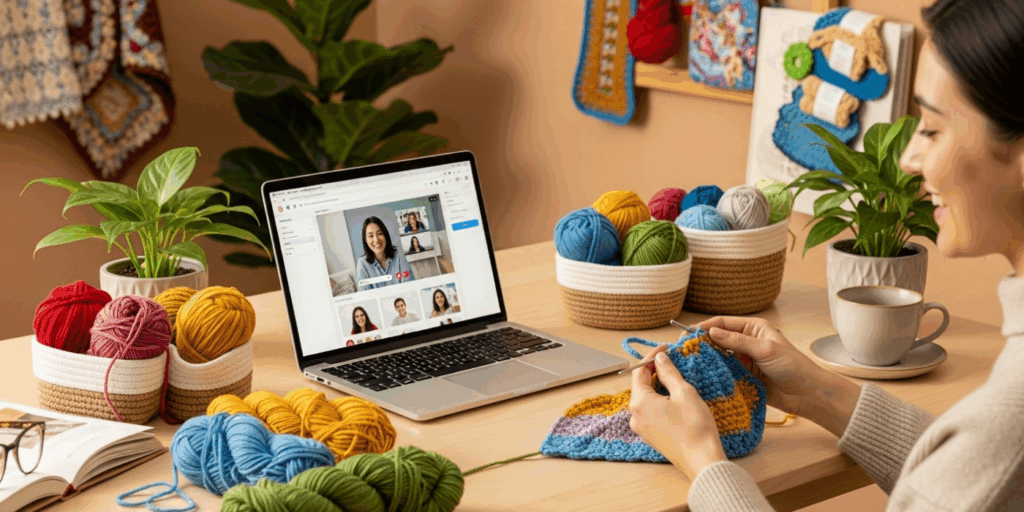
The internet is full of crochet spaces—but not all of them feel like home. Some are full of perfectionists showing off flawless afghans. Others are cluttered with ads and spam. The trick? Knowing where to look—and how to engage.
Start with Facebook Groups. They’re the heartbeat of online crochet. Search for terms like “Beginner Crochet Support,” “Crochet for Mental Health,” or “Free Crochet Patterns Community.” Look for groups with active daily posts, friendly moderators, and members who ask questions and help each other. Avoid groups that only post links or demand you “like this page to join.” Real communities thrive on conversation, not clicks.
Instagram is visual magic. Follow hashtags like #crochetcommunity, #crochetjourney, or #crochettherapy. Don’t just scroll—comment. Say something real: “Your color combo gave me life!” or “I’m stuck on row 12—any tips?” Many makers reply within hours. You might even get a DM from someone who’s been where you are.
Reddit has gems too. Try r/crochet or r/Needlework. These are text-heavy, thoughtful spaces where people share long stories about their projects, struggles with arthritis, or how crochet helped them through grief. It’s deep, real, and refreshingly unpolished.
Then there’s YouTube. Subscribe to creators who teach patiently—not just show off. Look for channels like “Bella Coco” or “The Crochet Crowd” that encourage questions in the comments. Watch their videos with your hook in hand. Pause. Rewind. Practice. Then come back and say, “I tried it! Here’s my version.”
TikTok is the wild, wonderful frontier. Short videos of satisfying stitches, “before and after” reveals, or even “crochet while crying” clips go viral. Join the #CrochetTok community. Post your own 15-second clip—even if it’s messy. You’ll be amazed who shows up to cheer you on.
Here’s the secret: don’t just consume—participate. Reply to three posts a week. Share a photo of your work, even if it’s imperfect. Ask a question. Celebrate someone else’s win.
You don’t need thousands of followers. You just need one person to say, “Me too.”
Connecting in Real Life: From Local Yarn Shops to Crochet Circles
Online is great—but nothing beats the feel of yarn between your fingers… and the sound of laughter from a room full of people doing the same thing.
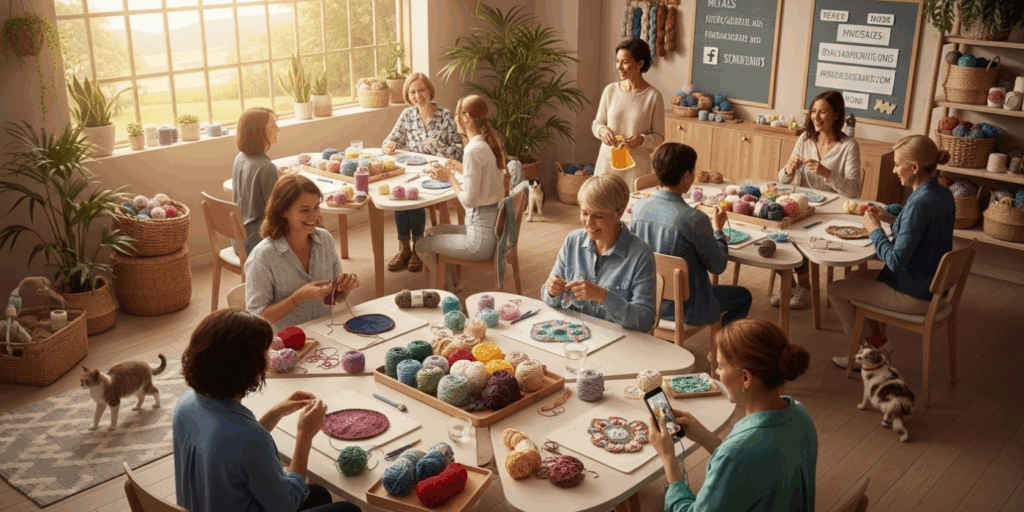
Start with your local yarn shop (LYS). Most have weekly crochet meetups—sometimes called “hook nights” or “stitch circles.” Call ahead. Ask if they host beginner-friendly sessions. Many offer free coffee, quiet music, and zero pressure. You walk in nervous. You leave with a new friend and a half-finished hat.
If your town doesn’t have one? Start one. Post on Facebook, Nextdoor, or your library’s bulletin board: “Crochet爱好者 (Crochet Lovers) – Let’s get together and stitch!” Include your phone number or email. You’d be surprised how many people are waiting for someone to say those words.
Libraries, community centers, and senior centers often host craft groups. Some even offer free supplies. Don’t assume you’re too young or too old—crochet doesn’t care about your age. I met a 14-year-old and a 78-year-old making matching amigurumi bunnies last month. They bonded over mismatched stitches and shared snacks.
Meetup.com is another goldmine. Search “crochet” in your city. You’ll find everything from “Crochet for Anxiety Relief” to “Crochet & Coffee for New Moms.”
And if you’re brave? Try crochet cafes. Some coffee shops now host “Hook & Sip” nights. Bring your project, order a latte, and join a table of strangers who become friends by row 5.
One woman in Portland told me she started attending a weekly circle after her divorce. “I didn’t know how to be around people again,” she said. “But crocheting next to someone quietly—no need to talk, just stitch—was the first time I felt safe in months.”
You don’t need to be outgoing. You just need to show up—with your hook, your yarn, and your quiet courage.
How to Be a Great Community Member (Even If You’re Shy)
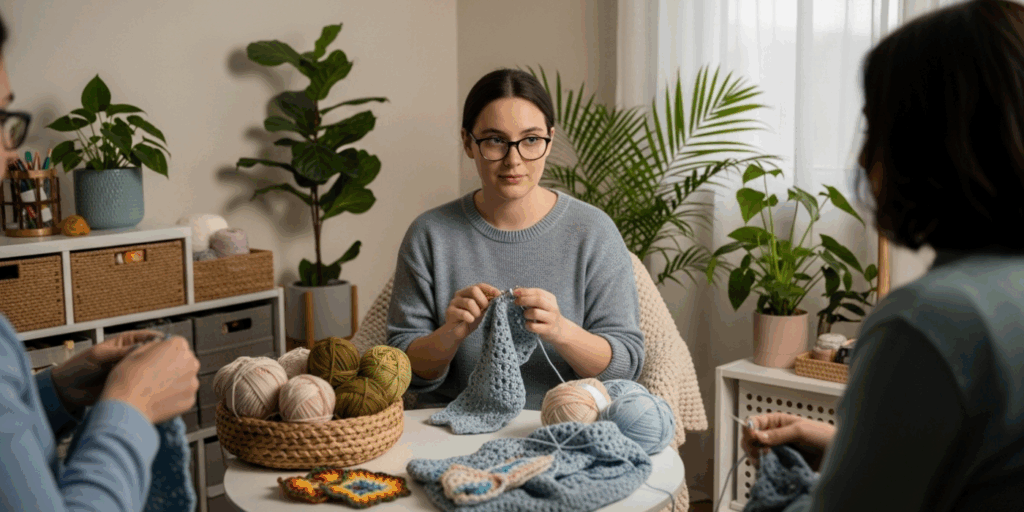
You’ve found your group. Now what?
Being part of a community isn’t about being the loudest or the most skilled. It’s about being present.
Here’s how to contribute—even if you hate speaking up:
- Say thank you. When someone answers your question, reply with genuine gratitude. A simple “This helped so much!” means more than you know.
- Share your process, not just the result. Post a photo of your tangled yarn and say, “Day 3 of this blanket… I think I lost 3 stitches. Help?” Vulnerability invites connection.
- Celebrate others. Comment on someone’s new project. Say, “I love how you used that color gradient!” or “You made that look so easy—I’m trying it next!”
- Offer help when you can. Even if you’re a beginner, you might know a trick someone else doesn’t. “I figured out how to fix that gap—want me to show you?”
- Be patient with yourself. It’s okay to lurk at first. Listen. Learn. Then, when you’re ready, speak.
One of my favorite stories? A woman named Linda joined a Facebook group after her husband passed away. She didn’t post for three months. Then, one day, she shared a photo of a tiny sock she crocheted for his favorite stuffed bear. She wrote: “I made this because I miss him. I didn’t know I could still make things after he was gone.”
The comments poured in. Strangers shared their own stories of loss. One woman sent her a ball of yarn. Another offered to mail her a pattern.
Linda didn’t need to be brave. She just needed to be honest.
You don’t have to be perfect to belong. You just have to be real.
Beyond the Hook: How Crochet Communities Create Real Change
Crochet isn’t just personal—it’s powerful.
Across the globe, crochet communities are turning yarn into action.
In the U.S., groups like “Crochet for a Cause” send blankets to homeless shelters. In the UK, “Stitch & Bitch” collect hats for premature babies in NICUs. In Nigeria, women’s cooperatives teach crochet to survivors of trafficking—giving them income and dignity.
Even small acts ripple.
A group in Ohio started making “stress balls” out of yarn for kids in hospitals. One child, a 6-year-old named Leo, hugged his so hard he didn’t let go during his IVs. His mom wrote to the group: “He hasn’t smiled like that since he got sick.”
That’s the magic.
These communities don’t just teach stitches—they teach compassion. They remind us that creativity can heal, that quiet hands can build bridges, and that a single loop of yarn can carry hope.
You don’t need to start a nonprofit. But you can:
- Donate one blanket this month
- Teach a friend to chain stitch
- Send a handmade item to someone going through a hard time
- Volunteer to help a senior learn to crochet
Every stitch you make with intention becomes part of something bigger.
And when you connect with others who feel the same? You become part of a movement—not just a crafter, but a caretaker.
That’s the quiet revolution of crochet.
Your Invitation: Start Today, No Matter Where You Are
You don’t need to wait for the perfect moment.
You don’t need to finish your first project perfectly.
You don’t need to have 1,000 followers or know all the stitches.
You just need to pick up your hook—and reach out.
Today, do one small thing:
- Join one online group (even if you don’t post yet).
- Text a friend: “Want to learn to crochet?”
- Visit your local yarn shop and say hello.
- Post a photo of your latest project with #CrochetCommunity.
And when someone replies? Say thank you.
Because that’s how it starts.
One stitch. One message. One “me too.”
The world is full of people who want to connect—not through likes or followers, but through the quiet, steady rhythm of making something with their hands.
You are not alone.
You never were.
Your tribe is out there.
They’re waiting for you to show up—with your yarn, your hook, and your heart.
What’s your favorite way to connect with other crocheters?
Have you found a community that changed your life? Share your story in the comments below—I read every one. And if this article resonated with you, please share it with someone who needs to know: You belong here.
Your next stitch? It might just lead you home.
Gabriela Ferreira is a passionate crochet and knitting enthusiast who finds inspiration in every skein of yarn she touches. With a love for color, texture, and handmade detail, she brings creativity and warmth to each project she creates. Gabriela believes that every stitch tells a story, and she enjoys sharing her craft with others who appreciate the beauty of fiber arts.