You’ve spent hours—maybe even days—perfecting that stunning amigurumi owl with the hand-stitched eyelashes. You posted it online, and within hours, someone else was selling it as their own design. Your heart sank. You worked so hard. You poured your creativity into every stitch. And now? Someone’s profit is built on your passion.
If this sounds familiar, you’re not alone. Crochet artists, from hobbyists turning side hustles into full-time businesses to Etsy sellers with thousands of loyal customers, are facing this exact problem every day. The truth? Your crochet patterns and unique designs are protected by copyright law—but only if you know how to use it.
This isn’t about legal jargon or intimidating courtrooms. It’s about protecting your art, your time, and your income. In this guide, we’ll break down everything you need to know about crochet copyright in plain, friendly language. You’ll learn how copyright actually works for handmade creators, what you can and can’t protect, how to officially register your patterns, and what to do if someone steals your work. Plus, we’ll share real-life examples and simple steps you can take today to safeguard your creations—no lawyer required.
Let’s turn your passion into something legally yours.
Why Copyright Matters More Than You Think (Even for Crocheters)
Let’s start with a myth: “If I post it online, it’s free for anyone to use.”
Nope. Not true.
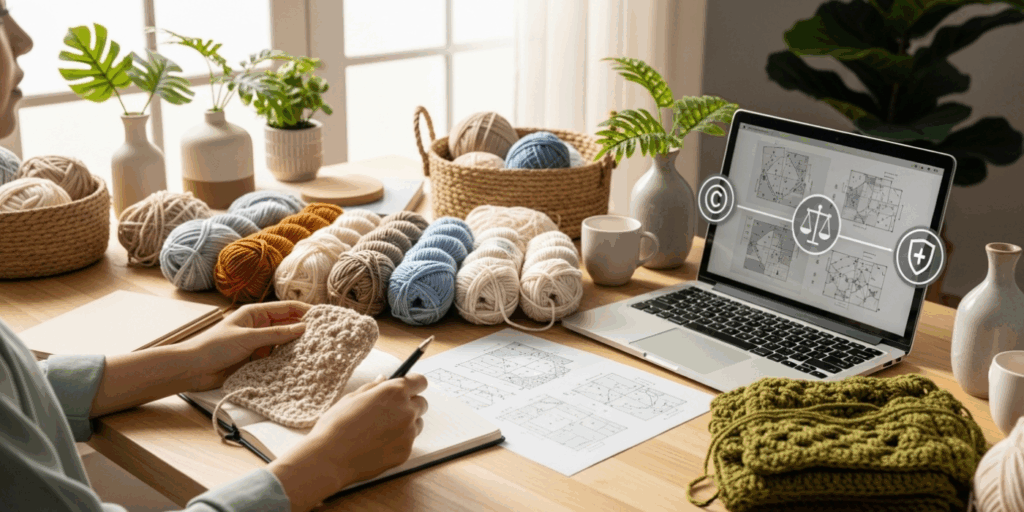
When you create an original crochet pattern—whether it’s a blanket with a unique stitch sequence, a stuffed animal with a signature pose, or a wearable piece with custom shaping—you’ve automatically created something protected under U.S. copyright law. That’s right. You own the rights the moment you write it down or record it. You don’t need to file anything yet. You don’t even need a © symbol.
But here’s the catch: automatic protection doesn’t mean automatic enforcement.
Think of it like planting a seed in your backyard. The plant grows on its own—but if someone comes along and digs it up to sell at the farmers’ market, you’ll need proof it’s yours to take legal action. Without registration, your options are limited. You can ask nicely. You can post a public warning. But you can’t sue for damages.
And that’s where so many crocheters get hurt.
A 2023 survey by the Craft Yarn Council found that over 62% of independent crochet designers reported seeing their patterns copied and sold without permission. Many didn’t know they could do anything about it. Others feared it was “too expensive” or “too complicated.” But here’s the reality: registering your copyright costs less than $50—and it transforms you from a vulnerable creator into a protected business owner.
Imagine this: You design a viral Christmas elf pattern. It sells 500 copies on Etsy. Then, someone uploads it to a Facebook group as “free download,” and suddenly, you’re getting zero sales. If you’ve registered your copyright, you can send a formal takedown notice to Etsy, Facebook, or even the person’s website—and they’re legally required to remove it. Without registration? You’re stuck watching your income disappear.
Your creativity has value. Copyright is the shield that defends it.
What Exactly Can You Copyright? (And What You Can’t)
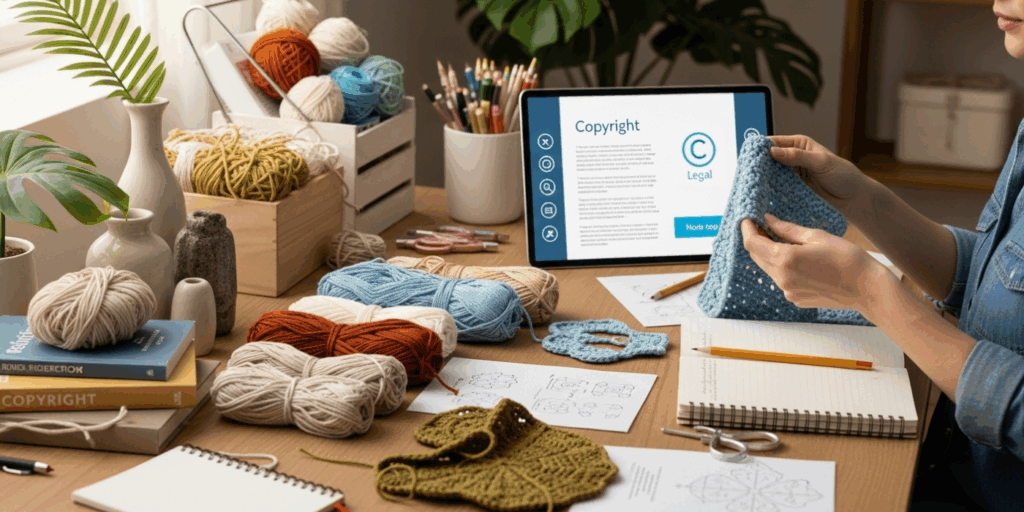
Not everything you make is protected the same way. Understanding the boundaries is key.
Here’s the good news: You can copyright the written pattern itself—the step-by-step instructions, the charts, the photos showing the finished piece, even the way you describe the technique. If you wrote “Row 3: Ch 2, (sc, hdc, dc) in next st, skip 2 sts, repeat across,” and that sequence is uniquely yours? That’s protected.
But here’s the twist: you cannot copyright the idea, the shape, or the general technique.
For example: You can’t claim copyright on the idea of a granny square blanket. Or on the concept of amigurumi animals. Those are standard, widely used forms in crochet. If someone else makes a bunny using the same basic techniques you learned from a 1970s book? That’s totally legal.
What you can protect is your specific expression of that idea.
Think of it like baking cookies. Anyone can make chocolate chip cookies. But if you invented a recipe that uses sea salt, dark chocolate chunks, and a secret 10-minute chill time that makes them extra chewy? You can copyright your recipe. You can’t stop others from baking cookies—but you can stop them from copying your exact method and selling it as their own.
Another common confusion: Yarn and colors. You can’t copyright a color combination like “pink and mint.” Anyone can use those. But if you designed a whole collection called “Ocean Breeze” with matching patterns, photos, and branding? That entire collection—its presentation, layout, and unique styling—can be protected.
And here’s a big one: Photos of your finished item. If you took the time to style, light, and photograph your crochet hat with a cozy scarf and a steaming mug? That photo? Copyrighted. Someone can’t just screenshot it and use it on their Etsy listing. That’s stealing your visual branding.
Pro Tip: If you’re selling patterns, always include a clear copyright notice at the top:
© [Your Name] [Year]. This pattern is for personal use only. Do not copy, redistribute, or sell. All rights reserved.
It’s simple. It’s professional. And it sets the tone.
How to Register Your Crochet Pattern (Step-by-Step, No Lawyer Needed)
Okay, so you know your pattern is valuable. You know it’s protected—but you want to lock it down. Here’s how to register it, in five easy steps.
Step 1: Finalize Your Pattern
Make sure your pattern is complete, clear, and written out. Include photos, charts, abbreviations, and any special notes. Save it as a PDF. This is your official “work.”
Step 2: Go to the U.S. Copyright Office Website
Visit copyright.gov . It’s free to browse. You’ll see a “Register a Copyright” button. Click it.
Step 3: Choose “Literary Works”
Even though it’s a crochet pattern, the U.S. Copyright Office classifies written instructions as “literary works.” Don’t worry—it’s not about novels. It’s about any original text-based creation.
Step 4: Fill Out the Form
You’ll be asked for your name, the title of your pattern, and whether it’s published. If you’ve sold it online, answer “yes.” Upload your PDF. Pay the fee—$45 for a single author, unpublished work (the cheapest option). You can pay with a credit card. Done.
Step 5: Wait for Your Certificate
Processing takes 3–9 months, but you’re protected from the day you submit. You’ll get an email confirmation, and eventually, a digital certificate. Keep it safe.
Bonus: If you’re creating multiple patterns, you can register them as a collection under one title—like “Winter Crochet Collection 2025”—and pay just one fee. That’s a huge money-saver for busy designers.
And here’s the kicker: Registration gives you the legal right to sue for damages—not just a warning. If someone copies your pattern and sells it for $15, and you’ve registered, you could potentially recover up to $150,000 per infringement (yes, really). That’s not a threat—it’s the law.
You’re not just protecting your pattern. You’re protecting your business.
What to Do If Someone Steals Your Pattern (Real Solutions, Not Just Anger)
Let’s say you found it. A Facebook group. A Pinterest pin. An Etsy shop. Your pattern—your words, your photos, your hours—being sold as someone else’s.
First: Breathe. Don’t post a rant. Don’t tag them publicly. That can backfire.
Instead, follow this calm, effective 3-step process:
1. Document Everything
Take screenshots. Save URLs. Note the date and time. Use a free tool like Wayback Machine to archive the page. You need proof.
2. Send a Polite, Professional DM or Email
Example:
Hi [Name],
I noticed your listing for “Cozy Snowman Hat” matches my original pattern, “Winter Snuggle Hat,” published on [date]. I created this design and hold the copyright. I’d appreciate it if you could remove the listing and credit me as the original designer. I’m happy to offer you a free copy of the pattern if you’d like to make it for personal use.
Thank you for your understanding.
—[Your Name]
Most people don’t realize they’re breaking the law. Often, they’ll remove it immediately.
3. If They Ignore You? File a DMCA Takedown Notice.
This is where registration matters. If you’ve registered your copyright, you can file a formal notice with Etsy, Pinterest, or Facebook. Each platform has a DMCA form (search “Etsy DMCA takedown” for the link). Fill it out with your evidence. They’re legally required to respond within 10–14 days.
Real Story: Sarah, a crochet designer from Ohio, had her “Puppy Slippers” pattern stolen and sold by 7 different sellers. She registered her copyright, sent DMCA notices to all 7, and within two weeks, every listing was removed. One seller even apologized and offered to promote her original pattern instead. She turned a violation into a partnership.
You don’t need to be aggressive. You just need to be informed.
Building a Brand That Stands Out (Beyond Copyright)
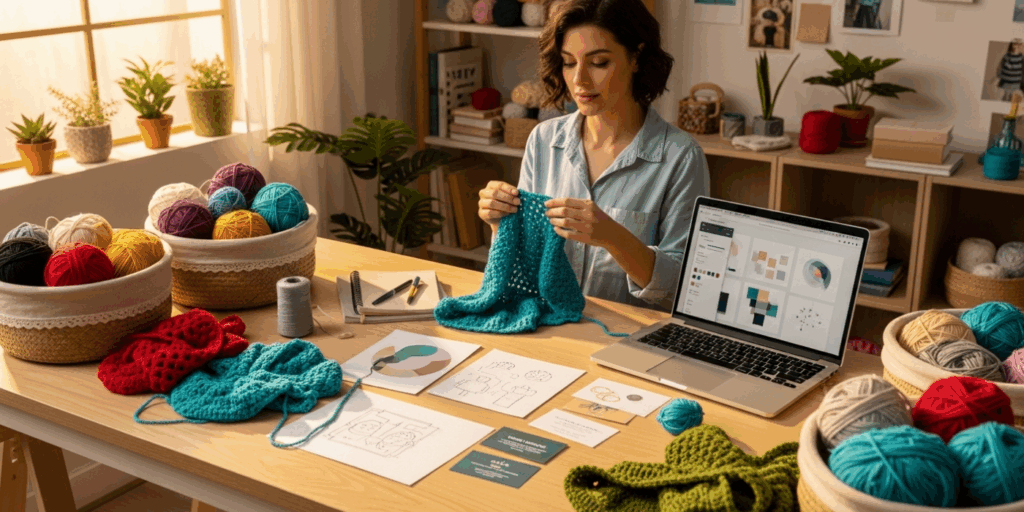
Copyright protects your words. But your brand? That’s your superpower.
Think of it this way: Copyright stops people from copying your pattern. But your brand makes people want to buy from you—even if someone else copies your design.
How?
- Unique Naming: Instead of “Blue Hat,” call it “Midnight Lullaby Hat.” Make it memorable.
- Signature Style: Do you always use tiny button eyes? A specific border? A handwritten note in every pattern? That’s your fingerprint.
- Professional Packaging: Include a thank-you card, a care guide, or a free mini-pattern with every purchase. It builds loyalty.
- Watermarked Photos: Add your website or logo subtly to your product photos. It’s not intrusive—it’s branding.
When people buy from you, they’re not just buying a pattern. They’re buying your voice, your care, your story.
And that? That’s impossible to copy.
One designer I know, Mia from Texas, started adding a handwritten quote on every pattern: “Stitch by stitch, you’re creating more than a blanket—you’re creating comfort.” Her customers started sharing photos of the quote on Instagram. Her sales doubled. Why? Because people felt connected to her—not just the design.
Copyright protects your work. Your personality makes it unforgettable.
The Bigger Picture: Why Protecting Your Art Matters
This isn’t just about money.
Crochet is more than yarn and hooks. It’s therapy. It’s community. It’s the quiet hours spent creating something beautiful when the world feels too loud.
When someone steals your pattern, it’s not just theft—it’s erasure. It tells you your time doesn’t matter. Your creativity is replaceable.
But it’s not.
Every time you register your copyright, you’re saying: I am an artist. My work has value. I deserve to be respected.
And when you stand up for your rights, you’re not just protecting yourself—you’re protecting the entire crochet community.
Imagine a world where every designer feels safe to create, share, and sell without fear. Where new crocheters aren’t misled into thinking patterns are “free” because someone copied them. Where creativity is honored, not exploited.
That world starts with you.
You don’t need to be a lawyer. You don’t need to be loud. You just need to be informed.
Start today. Register your next pattern. Add a copyright notice. Speak up when you see theft. Teach a friend.
Your stitches matter. Your voice matters. And your art? It’s worth protecting.
Final Thoughts: Your Next Step (It’s Easier Than You Think)
So here’s the truth: You don’t need to be perfect. You don’t need to hire a lawyer. You don’t need to wait until you’re “big enough.”
The best time to protect your crochet work was yesterday. The second-best time? Right now.
Go to copyright.gov. Pick one pattern you’ve created. Register it. It’ll take 20 minutes. $45. And it could save you thousands.
While you’re at it, add a copyright notice to every pattern you sell. Update your Etsy shop description. Share this article with a fellow crocheter who’s been quietly frustrated.
You’re not just a crafter. You’re a creator. A business owner. An artist.
And your work? It deserves to be yours.
What’s one pattern you’ve created that you’re proud of? Have you ever seen it copied? Share your story in the comments below—let’s build a community where creativity is respected, not stolen. And if this helped you, please share it with someone who needs to hear it. Because every crocheter deserves to feel safe in their craft. ❤️🧶
Gabriela Ferreira is a passionate crochet and knitting enthusiast who finds inspiration in every skein of yarn she touches. With a love for color, texture, and handmade detail, she brings creativity and warmth to each project she creates. Gabriela believes that every stitch tells a story, and she enjoys sharing her craft with others who appreciate the beauty of fiber arts.