Introduction
You’ve just finished your latest crochet piece—maybe it’s a buttery-soft baby blanket, a funky cactus amigurumi, or a set of matching scrunchies in dreamy pastels. It’s handmade, full of heart, and now you’re wondering: Where should I sell this?
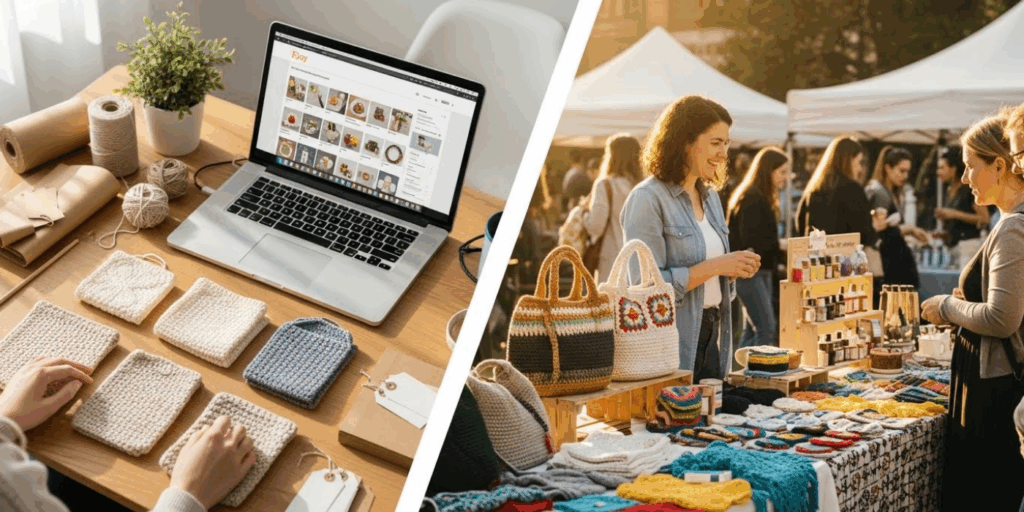
For crafters turning their passion into profit, the big decision usually comes down to two popular paths: Etsy, the go-to online marketplace for handmade goods, or local markets, like weekend craft fairs, farmers’ markets, or pop-up shops in your community.
Both options have loyal fans, real success stories—and real frustrations. But here’s the truth: There’s no single “right” answer. The best choice depends entirely on you—your personality, your schedule, your business goals, and even the type of items you love to make.
In this article, we’ll compare selling on Etsy and selling at local markets across five key areas: audience reach, customer interaction, time and logistics, profitability, and long-term growth. You’ll get real-world examples, honest pros and cons, and actionable tips—whether you’re dreaming of a global shop, craving community connection, or ready to blend both.
So grab your favorite hook, pour a cup of coffee, and let’s help you find the path that makes your crochet business—and your spirit—thrive.
Audience Reach: The Whole World vs. Your Neighborhood
One of the biggest differences between Etsy and local markets is who sees your work—and how far it travels.
Etsy gives you global access. With over 96 million active buyers (as of 2025), your shop could be discovered by a new mom in Canada searching for a gender-neutral baby hat, a teacher in Texas looking for classroom gifts, or someone in Germany who fell in love with your vintage-style doilies. This is especially powerful if you make niche, seasonal, or highly customizable items—things that might not sell well in your hometown but have a ready audience online.
Plus, your Etsy shop works 24/7. A customer can browse your listings at midnight and place an order while you’re asleep. That kind of passive reach is hard to match.
On the other hand, local markets connect you with your immediate community. You’re selling to neighbors, local business owners, school parents, and fellow makers who genuinely want to support hometown talent. Word of mouth spreads fast—one happy customer might tell five friends or invite you to vend at their office holiday party.
But your reach is naturally limited. If you live in a rural area or a town with few events, opportunities may be sparse. And unlike Etsy, local sales only happen when you’re physically present.
Practical tip: If your creations appeal to a broad or niche audience beyond your ZIP code, Etsy offers unmatched scale. But if your style resonates with your community’s vibe—and you love local connections—markets can be incredibly rewarding.
Customer Interaction: Digital Screens vs. Real Smiles
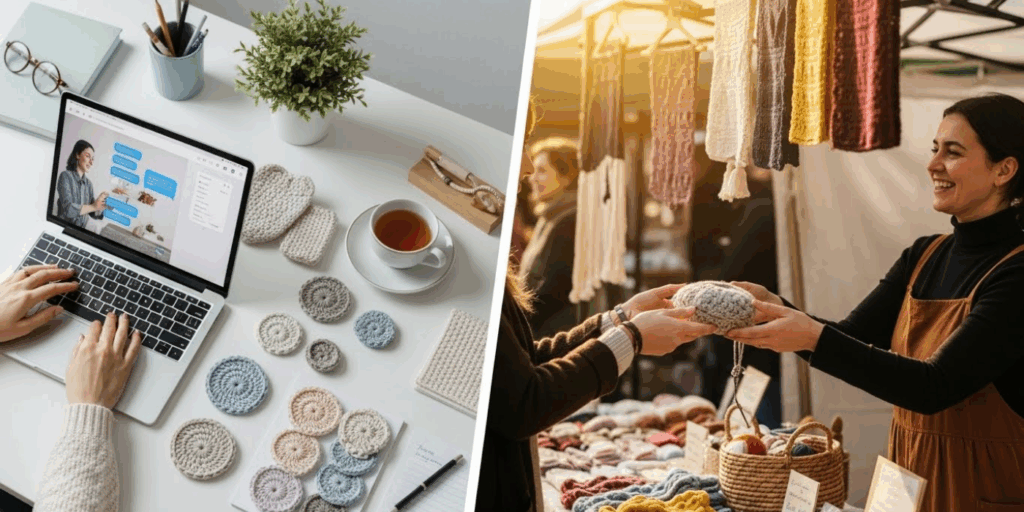
How you connect with buyers can deeply affect your joy—and your motivation to keep creating.
At local markets, every sale is personal. You watch someone’s eyes light up as they hold your crocheted sloth. You hear their stories (“This would be perfect for my niece’s birthday!”). You can offer on-the-spot customizations (“Want this beanie in sage instead of mustard?”). This human connection is energizing—it reminds you why you started crocheting in the first place.
Face-to-face interaction also builds instant trust. People see your hands, feel the yarn quality, and understand the time behind each stitch. They’re more likely to pay $42 for a market tote when they see the care you put into it.
Etsy, by contrast, is mostly digital and asynchronous. Buyers connect with you through photos, descriptions, and reviews. While you can build loyal fans (many Etsy shoppers return again and again), the experience lacks the warmth of a shared laugh or a handshake.
That said, some makers prefer this distance. If you’re shy, introverted, or managing social anxiety, Etsy lets you share your work without the pressure of constant conversation.
Think about it: Do you feel energized after chatting with strangers—or completely drained? Your answer might point you toward (or away from) the craft fair booth.
Time, Effort & Behind-the-Scenes Work
Don’t let anyone tell you selling handmade is “easy money.” Both paths demand serious effort—but in very different ways.
Selling on Etsy involves digital prep work:
- Taking bright, clean product photos (natural light + plain background = essential)
- Writing keyword-rich titles and descriptions (“Handmade Crochet Baby Blanket – Organic Cotton – Neutral Nursery Gift”)
- Packaging orders carefully and shipping them on time
- Responding to messages and managing returns
- Navigating Etsy’s fees (around 6.5% per sale + payment processing + optional ad costs)
The upside? Once your shop is polished, sales can roll in while you sleep. It’s true passive income potential—if your listings are visible and your products stand out.
Local markets, meanwhile, require intense bursts of energy:
- Spending days crocheting enough inventory
- Paying booth fees (anywhere from $20 to $200+ per event)
- Hauling tables, displays, and stock to the venue
- Standing for 6–8 hours in heat, rain, or wind
- Managing cash, card payments (via Square or PayPal), and leftover inventory
But you walk away with cash in hand and no shipping stress. And if the event is well-attended, you can make a month’s Etsy income in one Saturday.
Smart strategy: Many successful sellers do both. They test new designs at local markets (“Do people love these cat ear headbands?”), then list the winners on Etsy for year-round sales. Others use Etsy profits to fund their market booth setup—creating a powerful cycle.
Profitability & Pricing: What’s Left After Costs?
Let’s talk real money—because your time and talent deserve fair pay.
On Etsy, your “profit” isn’t your sale price. You must subtract:
- Etsy’s transaction fee (~6.5%)
- Payment processing (~3% + $0.25)
- Shipping supplies and postage
- Potential Etsy Ads spend (to boost visibility)
- Income tax (yes, really!)
Many new sellers underprice their work, forgetting to include their hourly rate. If a market bag takes 8 hours to make, is $25 really fair? Probably not. Etsy buyers often expect “handmade = cheap,” which can pressure you into undervaluing your skill.
At local markets, you avoid platform fees—but other costs add up:
- Booth fees
- Display supplies (tents, tablecloths, signage)
- Gas, parking, and food for the day
- Time spent not crocheting
However, local customers often understand the value of handmade. They see your process, feel the texture, and are more willing to pay $38 for that market bag because they get it. Plus, no shipping = higher margins per item.
Try this pricing formula:
Materials + (Your Hourly Rate × Hours Spent) + Overhead = Minimum Price
Don’t be afraid to charge what your work is worth—on either platform.
Brand Building & Long-Term Growth
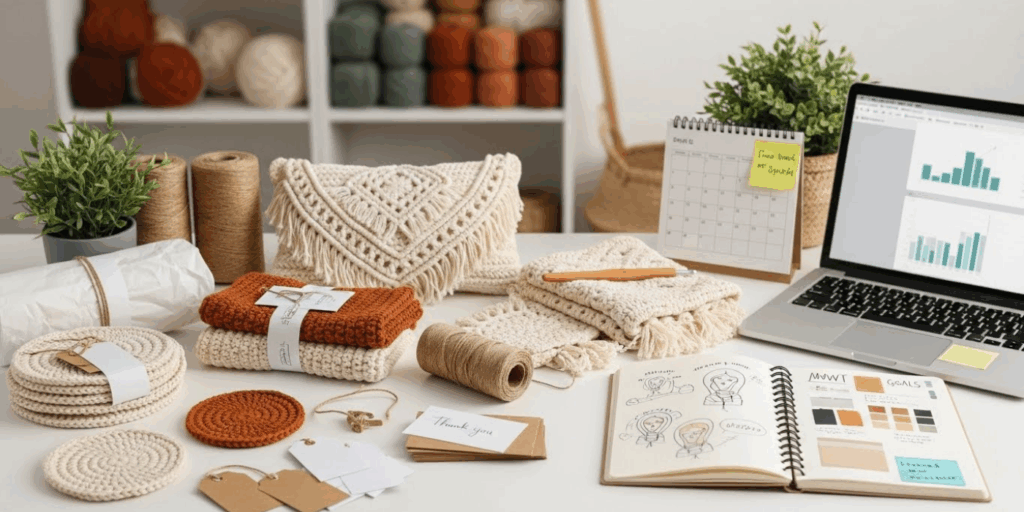
Where can you build a recognizable, sustainable business?
Etsy offers scalability and data. With solid SEO and consistent branding (logo, packaging, shop aesthetic), you can grow a shop that attracts repeat buyers, custom requests, and even wholesale opportunities. Etsy also gives you sales analytics—so you know which products are trending and when to restock.
But remember: you’re renting space on Etsy’s platform. If policies change (like they did with the “handmade” definition in 2022) or fees increase, your business can be shaken overnight. You also compete with mass-produced “handmade-style” items from big retailers.
Local markets, while smaller, let you build a personal brand in your community. People remember “the crochet vendor at the downtown market” and seek you out. You can hand out business cards, collect emails for a newsletter, or partner with local cafes to display your work.
Over time, this grassroots loyalty can lead to teaching workshops, custom commissions, or features in local media—opportunities that are harder to spark online.
Best of both worlds: Use your market presence to drive traffic to your Etsy shop (“Find more styles online!”), and use your Etsy reviews to build credibility at events (“Loved by 500+ buyers worldwide!”).
Finding Your Perfect Fit: It’s Not One-Size-Fits-All
Still unsure? Ask yourself a few honest questions:
- Do I enjoy chatting with strangers—or prefer working alone? → Local = yes; Etsy = maybe.
- Do I need cash this weekend—or can I wait weeks for orders to build? → Local = faster cash.
- Are my items bulky, fragile, or expensive to ship? → Local avoids shipping risks.
- Do I live near cities with frequent, well-attended markets? → Local could be golden.
- Am I comfortable with tech, photos, and basic marketing? → Etsy will reward you.
And remember: You don’t have to pick forever. Many crocheters start locally to gain confidence, then expand online. Others begin on Etsy and later add markets for seasonal income or creative inspiration.
Your path can evolve as your life and business do.
Final Thoughts: Your Journey, Your Rules
Selling your crochet isn’t just about making money—it’s about sharing your creativity, connecting with others, and building something meaningful with your own two hands (and one trusty hook!).
Etsy offers global reach, passive income potential, and scalability—but demands digital savvy and resilience in a competitive space.
Local markets deliver human connection, instant feedback, and full pricing control—but require physical effort and depend on event quality.
The “best” choice isn’t about which platform makes more money—it’s about which one aligns with your energy, your values, and your vision for your creative life.
So take that first step. List your first Etsy item. Sign up for that spring craft fair. Or try both for three months and see what feels right.
Now we’d love to hear from you: Are you team Etsy, team local markets—or happily doing both? What’s your biggest win (or lesson learned) from selling your crochet? Share your story in the comments below—your experience might be the push another maker needs to start their own journey!
Gabriela Ferreira is a passionate crochet and knitting enthusiast who finds inspiration in every skein of yarn she touches. With a love for color, texture, and handmade detail, she brings creativity and warmth to each project she creates. Gabriela believes that every stitch tells a story, and she enjoys sharing her craft with others who appreciate the beauty of fiber arts.