Introduction
What if you could crochet without counting stitches, following strict patterns, or worrying about gauge? What if your yarn and hook became paintbrushes—and your work, a canvas? Welcome to the liberating world of freeform crochet, where rules bend, creativity soars, and every stitch tells a personal story.
Unlike traditional crochet, which relies on precision and repetition, freeform crochet is all about intuition, spontaneity, and artistic expression. It’s the perfect outlet for crafters who feel confined by rows and rounds—or for beginners who want to explore texture and color without pressure. In this guide, you’ll discover what freeform crochet really is, why it’s more than just “messy stitching,” and how to start your own fearless, rule-breaking project.
We’ll explore its history, essential techniques, common materials, and inspiring ways to turn scraps into art. Whether you dream of wearable sculptures, abstract wall hangings, or a whimsical patchwork bag, freeform crochet gives you permission to create exactly what you envision—no pattern required. Ready to let go of perfection? Let’s dive in.
What Is Freeform Crochet—And Why It’s Not “Just Random Stitches”
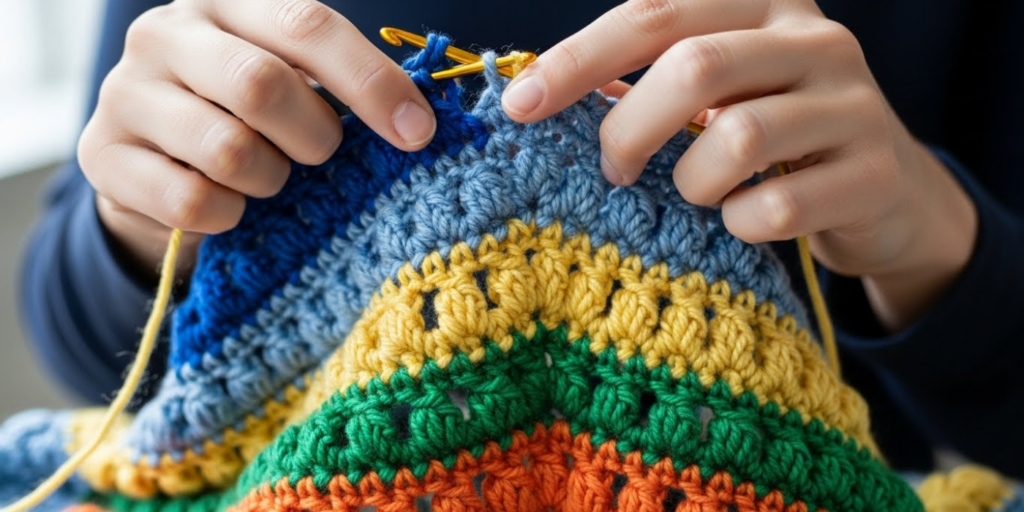
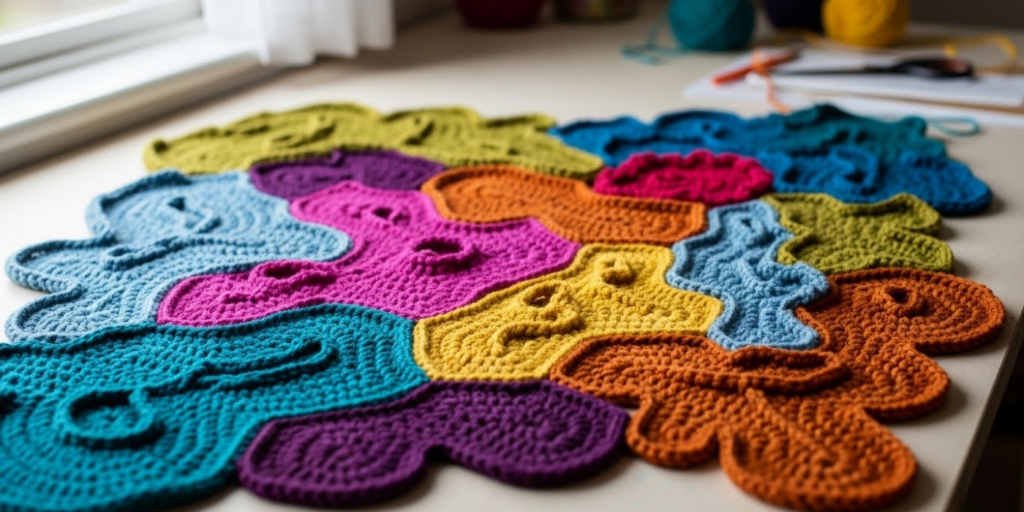
At first glance, freeform crochet might look chaotic: tangled spirals, unexpected color changes, mismatched textures stitched together like a textile collage. But beneath the surface lies intentional chaos—a deliberate dance between structure and freedom.
Freeform crochet emerged in the mid-20th century but gained global attention through the Australian “Crazy Crochet” movement of the 1970s and 80s, led by artists like Sylvia Bo Bilvia and Margaret Bechtel. These pioneers rejected mass-produced uniformity, using leftover yarns and unconventional materials to create richly textured, one-of-a-kind pieces.
Unlike traditional patterns that dictate every stitch, freeform encourages you to:
- Change colors whenever inspiration strikes
- Mix stitch types (single crochet next to popcorn stitches? Yes!)
- Add found objects (buttons, beads, wire, fabric strips)
- Work in any direction—up, sideways, diagonally, even in 3D forms
It’s not about “getting it right.” It’s about expressing what feels right.
Think of it like jazz music: there’s rhythm and technique underneath, but the magic is in the improvisation. Freeform crochet honors your mood, your materials, and your moment—making each piece deeply personal and impossible to replicate.
Essential Techniques to Get Started (Even If You’re a Beginner)
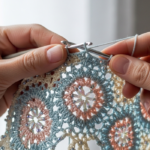
The beauty of freeform crochet? You only need to know a few basic stitches to begin. In fact, many freeform artists use just three: chain (ch), single crochet (sc), and slip stitch (sl st). From there, everything else unfolds organically.
Here’s a simple way to start:
- Choose a “starter shape”—a circle, square, or wavy strip. This becomes your base.
- Add stitches freely: Work along any edge. Increase wildly for ruffles, decrease sharply for curves.
- Change colors mid-row: Just drop one yarn and pick up another. No need to weave in ends yet!
- Attach new elements: Create a separate “swatch” (a flower, coil, or mesh panel), then sew or crochet it directly onto your base.
- Embrace asymmetry: Let one side grow tall while the other stays flat. Contrast is key.
Many beginners worry about “ruining” their work. But in freeform, there’s no wrong. A “mistake” might become a bold design feature—a jagged edge that mimics mountain ranges, or a loose loop that adds dimension.
Pro tip: Keep a “freeform journal” of small swatches. Experiment with stitch combinations, color clashes, or unusual materials (like ribbon, plastic strips, or metallic thread). These become your personal library of textures to draw from later.
Materials: Why Your Scrap Bin Is a Treasure Trove
One of the most joyful aspects of freeform crochet is its zero-waste ethos. This art form thrives on leftovers—those half-used skeins, mystery yarns, and oddments most crafters stash “just in case.”
You can use:
- Multiple yarn weights in the same piece (yes, chunky and lace together!)
- Non-traditional fibers: hemp, silk, cotton rope, t-shirt yarn
- Found objects: seashells, vintage brooches, keys, dried flowers (sealed for durability)
- Different hooks: Switch hook sizes to alter tension and drape mid-project
The key is contrast. Pair smooth mercerized cotton with fuzzy mohair. Stitch matte wool beside shiny nylon. The more varied your materials, the richer your final piece will feel.
Don’t worry about matching dye lots or fiber care instructions—freeform pieces are often art objects, not everyday garments. That said, if you plan to make a wearable (like a vest or hat), consider pre-washing yarns to avoid future shrinkage surprises.
Sustainability bonus: By using scraps, you reduce textile waste and give forgotten yarns a vibrant second life. Many eco-conscious artists now showcase freeform work as a form of slow fashion activism.
Inspiration from Nature, Emotion, and Everyday Life
Freeform crochet isn’t made in a vacuum—it’s often a response to the world around you. Some artists crochet what they see: coral reefs, storm clouds, autumn leaves. Others stitch what they feel: joy, grief, nostalgia.
For example:
- A freeform wall hanging might mimic tree roots, with brown cords twisting into white “mushrooms” and green tendrils.
- A sculptural bowl could represent ocean waves, using undulating rows of blue and teal with pearl beads as seafoam.
- A wearable cape might channel a phoenix, with fiery red-orange ruffles rising from a dark base.
To find your own inspiration:
- Take a walk and collect textures: bark, pebbles, flower petals. Photograph or sketch them.
- Listen to music while crocheting—let the tempo guide your stitch speed and density.
- Journal your emotions before you start. What colors match your current mood?
Remember: freeform crochet is visual poetry. It doesn’t need to “look like” something—it just needs to feel true.
How Freeform Crochet Builds Creative Confidence
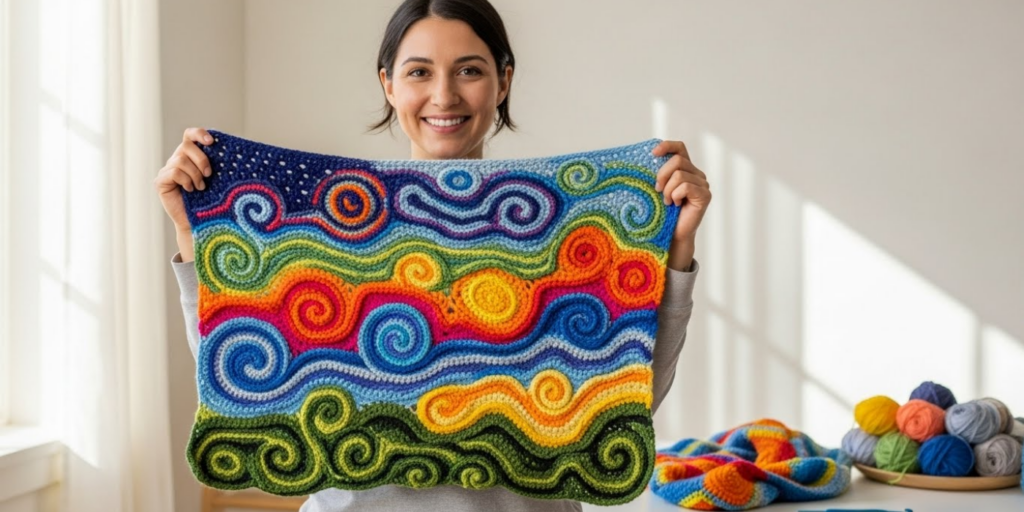
Beyond aesthetics, freeform crochet offers a powerful psychological benefit: it heals the perfectionism many crafters carry. In a world of Instagram-perfect projects and rigid tutorials, freeform whispers, “Your voice matters—even if it’s messy.”
Many crocheters report that working freeform:
- Reduces crafting anxiety
- Encourages playful experimentation
- Reconnects them to the joy of making
- Helps process emotions through tactile creation
One artist shared that after a personal loss, she stitched a freeform shawl using her grandmother’s leftover yarns—each color representing a memory. “It wasn’t pretty by traditional standards,” she said, “but it held my grief and my love. That’s all it needed to do.”
For beginners, freeform removes the fear of “failing” a pattern. For experienced crocheters, it reignites curiosity. Either way, it’s a reminder that creativity isn’t about control—it’s about courage.
Practical Tips to Avoid Common Freeform Pitfalls
Even in a rule-free zone, a few gentle guidelines can keep your project from becoming overwhelming:
- Start small. A coaster, brooch, or bookmark gives you room to experiment without commitment.
- Limit your color palette (at first). Try 2–3 contrasting colors instead of 10. You’ll learn how hues interact without visual chaos.
- Use a consistent tension. Even if stitches vary, try to keep your yarn tension steady so the piece doesn’t pucker or stretch unevenly.
- Secure loose ends as you go. Weave them into dense sections or use them as “roots” to attach new elements.
- Step back often. Place your work on a neutral surface and view it from a distance. Does it feel balanced? Dynamic? Boring? Trust your gut.
And remember: you can always add, but you can’t un-crochet. If a section feels “off,” cover it with a bold appliqué or fringe. In freeform, there’s always a way forward.
From Hobby to Art: Showcasing Your Freeform Creations
Once your piece is complete, how do you share it with the world? Freeform crochet shines as:
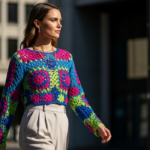
- Wearable art (jackets, hats, gloves)
- Home decor (cushion covers, lampshades, plant hangers)
- Gallery installations (many textile museums now feature freeform pieces)
- Therapeutic tools (used in art therapy for self-expression)
Photograph your work in natural light against a simple backdrop. Describe your inspiration in captions—this adds depth and invites connection.
Online communities like Ravelry’s “Freeform & Experimental Crochet” group or Instagram hashtags like #freeformcrochet and #textileart are full of supportive makers. Don’t be shy—your unique vision belongs there.
Conclusion
Freeform crochet isn’t just a technique—it’s a mindset. It invites you to let go of rigid expectations, trust your instincts, and celebrate imperfection as beauty. In a craft world often obsessed with precision, freeform is your rebellion, your sanctuary, your playground.
We’ve explored its roots, its techniques, its materials, and its emotional power. But the real magic happens when you pick up your hook and begin without a plan. No pattern. No pressure. Just you, your yarn, and the quiet thrill of making something that exists nowhere else in the world.
So dig into that scrap bin. Choose a color that makes your heart skip. Make a stitch—any stitch—and see where it leads. Your first freeform piece might surprise you. It might even change how you see yourself as a creator.
Now, we’d love to hear from you: What emotion, memory, or natural form would you stitch into your first freeform piece? Share your idea in the comments below—or better yet, start stitching and tag us when you’re done! The world needs more fearless makers like you.
Gabriela Ferreira is a passionate crochet and knitting enthusiast who finds inspiration in every skein of yarn she touches. With a love for color, texture, and handmade detail, she brings creativity and warmth to each project she creates. Gabriela believes that every stitch tells a story, and she enjoys sharing her craft with others who appreciate the beauty of fiber arts.