Introduction
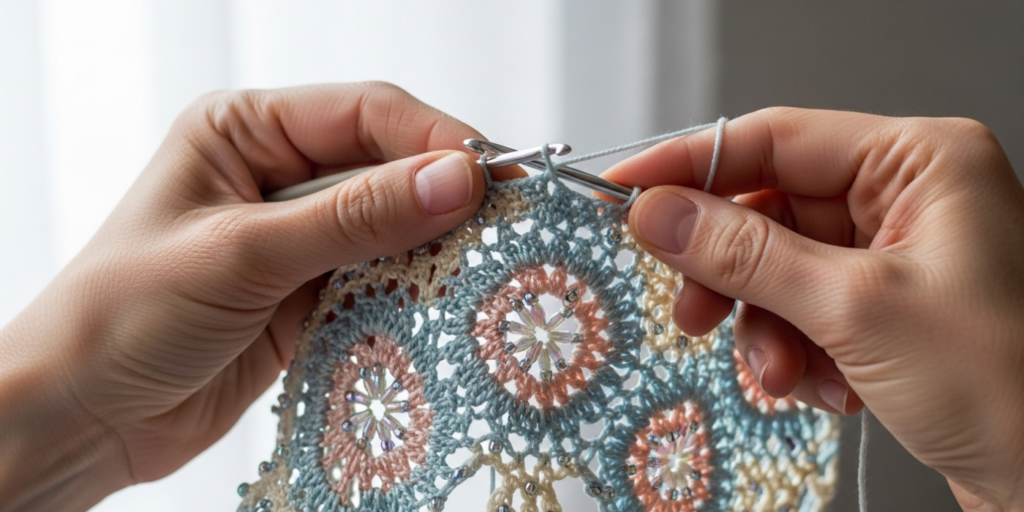
Imagine a delicate lace shawl shimmering under soft light—not from thread alone, but from hundreds of tiny glass beads catching the glow with every movement. Or consider a statement necklace where intricate crochet stitches cradle pearls like precious secrets. This is the magic of crochet beadwork: where fiber meets fine detail, and craft becomes wearable art.
While basic crochet charms with a single bead have long delighted beginners, integrating beads into advanced patterns unlocks a whole new dimension of texture, elegance, and complexity. Whether you’re designing heirloom jewelry, embellishing garments, or pushing the boundaries of textile art, beadwork adds rhythm, weight, and intentionality to your stitches.
In this guide, we’ll explore how to seamlessly weave beads into sophisticated crochet projects. You’ll discover the best methods for stringing and securing beads, learn how to read and adapt bead-integrated patterns, and gain practical tips for choosing materials that complement your vision. We’ll also cover common challenges—like bead slippage or tension issues—and how to solve them before they unravel your work.
Ready to elevate your crochet beyond yarn? Let’s thread the needle (or rather, the hook) and dive into the luminous world of advanced crochet beadwork.
Why Beadwork Transforms Crochet from Craft to Art
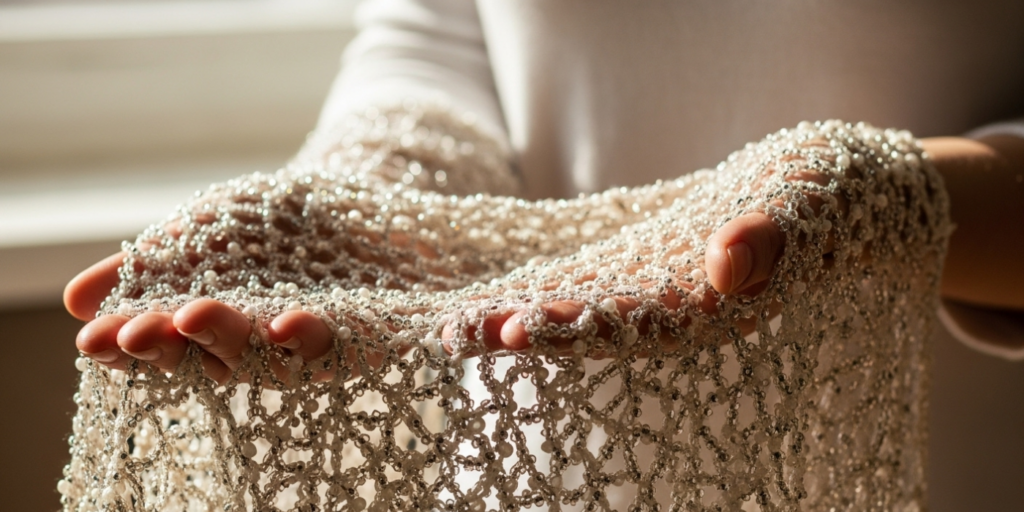
Adding beads to crochet isn’t just decorative—it’s transformative. A simple mesh lace pattern becomes a cascading veil of light when seeded with seed beads. A geometric motif gains depth and dimension when highlighted with Swarovski crystals at key intersections.
Historically, bead crochet dates back centuries: Victorian women beaded reticules (small handbags), while Eastern European and Middle Eastern artisans used it for ceremonial trim and jewelry. Today, designers like Irina Sharipova and Tatiana Popova blend traditional bead crochet with modern silhouettes, proving its place in high fashion and slow craft movements alike.
But beyond aesthetics, beads serve functional roles too. They add weight to lace collars so they drape beautifully, provide structure to openwork cuffs, and even create subtle sound elements—think of a bracelet that softly chimes with movement.
For the advanced crocheter, beadwork is a chance to control negative space. In filet or lace crochet, beads can anchor airy designs, guiding the eye through the pattern like punctuation in a poem. Each bead becomes a deliberate pause—a moment of focus in a sea of loops.
Most importantly, bead integration invites intentionality. You’re no longer just counting stitches—you’re composing with texture, light, and rhythm. That shift in mindset is what turns repetitive motion into meditative creation.
Methods for Adding Beads: From Pre-Stringing to On-the-Fly
There are three primary techniques for incorporating beads into crochet, each suited to different project types and skill levels. Mastering all three gives you creative flexibility.
- Pre-stringing beads onto the yarn
This is the most common and reliable method for dense or intricate beadwork. Simply thread your chosen beads onto the yarn before you begin crocheting—like loading beads onto a necklace cord. As you work, slide a bead down to the hook when the pattern calls for it, then stitch as usual.
Best for: Jewelry, beaded edgings, and patterns requiring precise bead placement (e.g., every 3rd stitch).
Tip: Use a beading needle or floss threader for tiny beads and fine yarn. Store pre-strung yarn on a bobbin to prevent tangling. - Hooking beads directly onto stitches
With this method, you pick up a bead as you work by hooking it and pulling it through the stitch. It’s faster for sparse bead accents.
Best for: Occasional embellishments, amigurumi eyes, or adding a single bead to a flower center.
Caution: Beads can slip off if tension is too loose. Use a smaller hook for the beaded stitch to secure it. - Sewing beads on after crocheting
While less integrated, this method offers maximum placement control and works well with heavy or irregularly shaped beads (like gemstones or wood).
Best for: Mixed-media projects, upcycled garments, or when you want to test bead layouts before committing.
Pro insight: For advanced patterns with frequent bead repeats, pre-stringing is almost always preferred. It ensures consistent tension and prevents constant interruptions to fetch beads. Just double-check your total bead count before you start—running out mid-row is every beader’s nightmare!
Choosing the Right Beads, Yarn, and Hooks
Not all beads play nicely with all yarns—and mismatched materials can lead to frustration or broken threads. Here’s how to pair them wisely:
Bead Types:
- Seed beads (size 6/0 to 15/0): Ideal for fine thread crochet (size 20–100). Czech and Japanese seed beads offer uniform holes and brilliant finishes.
- Gemstone or glass beads (2–6mm): Best for chunkier yarns or focal points in jewelry. Ensure the hole is large enough for your yarn doubled (since beads pass through loops).
- Metal beads: Add weight and shine but can fray delicate threads—use with nylon or silk crochet thread.
Yarn Considerations:
- Crochet thread (size 10–100): The gold standard for beadwork. Mercerized cotton (like DMC or Anchor) is smooth, strong, and holds stitch definition.
- Linen or silk thread: Luxurious drape for high-end pieces, but less forgiving for tension errors.
- Avoid: Wool or fuzzy yarns—they obscure beads and make threading difficult.
Hook Selection:
- Use steel hooks (sizes 0.60mm–1.75mm) for thread work. Their fine tips slide easily through bead holes.
- Match hook size to thread—not bead size. Too large a hook creates loose stitches; beads will wobble or shift.
Bonus tip: Always test a swatch with your chosen bead-thread-hook trio. Work 10 rows with beads and check:
✓ Do beads sit flat?
✓ Is tension even?
✓ Can you comfortably pull thread through the bead hole without fraying?
Investing time in material testing saves heartache later—especially in complex designs where ripping out beaded rows is nearly impossible.
Reading and Adapting Advanced Beaded Crochet Patterns
Beaded patterns often look intimidating, filled with abbreviations like “B” or “bead in next st.” But once you understand the code, they’re no harder than standard charts—just more detailed.
Most patterns specify when and where to place beads using one of two systems:
- Row-by-row instructions: “Ch 1, bead, sc in next st…”
- Charts with symbols: A dot or diamond icon marks beaded stitches.
Key things to watch for:
- Does the pattern assume pre-strung beads? If not, adjust your workflow.
- Are beads placed in specific stitch types (e.g., only in dc, not ch)? Placement affects drape and visibility.
- Is the bead count per row or per repeat? Misreading this can lead to huge shortages.
Want to add beads to a non-beaded pattern? Start simple:
- Identify natural focal points: picot tips, shell peaks, or corner stitches.
- Insert one bead per repeat to test balance.
- Ensure the stitch can support the bead’s weight—single crochet holds beads better than chain spaces.
For example, adding a seed bead to the center of each pineapple motif in a lace shawl draws the eye without distorting the flow. Or threading beads along the spine of a cable stitch creates a spine of light through texture.
Remember: less is often more. A single well-placed bead can speak louder than a dozen scattered ones.
Troubleshooting Common Beadwork Challenges
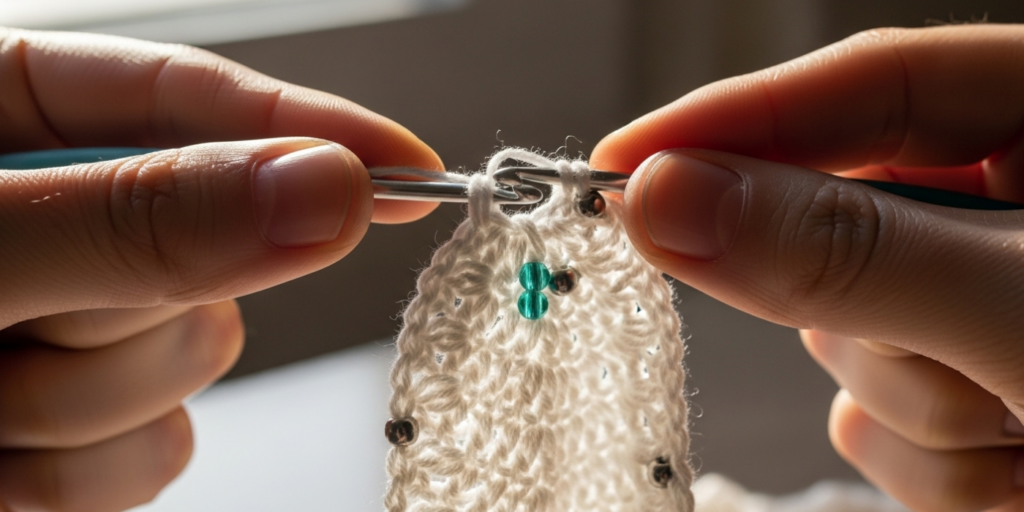
Even seasoned beaders run into snags. Here’s how to solve the most frequent issues:
- Beads slide or flip sideways
→ Your stitch is too loose. Try a hook one size smaller just for beaded stitches, or use a tighter tension on that row only. - Thread frays while stringing beads
→ Coat the last inch of thread with beeswax or thread conditioner. Or use a twisted nylon beading thread for threading, then tie it to your crochet thread for stitching. - Beads obscure the stitch pattern
→ You’re using beads that are too large. Switch to smaller seed beads (11/0 instead of 8/0) or space them farther apart. - Uneven drape or curling edges
→ Beads add weight. If only one edge is beaded, the piece will curl toward it. Balance bead placement symmetrically, or add stabilizing stitches (like a picot border) to counteract pull. - Lost count or skipped bead
→ Mark pattern repeats with locking stitch markers in a contrasting color. Count beads as you string them using a bead board with numbered sections.
And if a mistake happens? Don’t frog the whole row. Use a thin tapestry needle to carefully remove just the beaded stitch, reposition the bead, and rework that single stitch. Patience pays off.
Inspiration and the Future of Beaded Crochet
Today’s beaded crochet is evolving beyond bracelets and doilies. Designers are using it in avant-garde fashion, textile sculpture, and even sustainable art—like beaded nets that highlight ocean plastic pollution.
You don’t need a runway to innovate, though. Think of how beads could:
- Trace the constellations in a celestial-themed baby blanket edging
- Mimic dewdrops on a leaf-shaped brooch
- Spell out initials or dates in a wedding veil using micro beads
The fusion of beadwork and crochet is also a bridge between cultures and generations. Many Indigenous and Afro-diasporic communities have rich bead-weaving traditions—learning from them (ethically and respectfully) can deepen your practice and expand your design language.
Most of all, beadwork invites slowness. In a world of instant everything, threading each bead by hand is a quiet rebellion—a return to making with meaning. Every bead is a breath. Every stitch, a choice.
As you explore this craft, remember: you’re not just decorating fabric. You’re weaving light, memory, and intention into something that moves with the body and catches the eye. That’s the true power of advanced crochet beadwork.
Conclusion
Integrating beads into advanced crochet patterns is more than a technique—it’s a gateway to richer expression, refined design, and textile storytelling. From choosing the right materials to mastering placement methods and troubleshooting tension issues, every step deepens your connection to your work.
We’ve covered why beadwork elevates crochet, the three core methods for adding beads, how to select compatible yarns and beads, how to read and adapt patterns, and practical fixes for common problems. Armed with these insights, you’re ready to tackle ambitious projects with confidence.
Don’t be afraid to start small—a beaded edge on a lace coaster, a single crystal in a motif—but dream big. Imagine a full beaded cape, a sculptural necklace, or a wall hanging that shimmers like starlight. The only limit is your curiosity.
Now it’s your turn: What’s the first advanced beaded project you’d love to try? Have you ever struggled with bead slippage or threading? Share your ideas, questions, or photos in the comments below—we’d love to see your creations! And if this guide sparked inspiration, pass it along to a fellow fiber artist who’s ready to add a little sparkle to their stitches.
Gabriela Ferreira is a passionate crochet and knitting enthusiast who finds inspiration in every skein of yarn she touches. With a love for color, texture, and handmade detail, she brings creativity and warmth to each project she creates. Gabriela believes that every stitch tells a story, and she enjoys sharing her craft with others who appreciate the beauty of fiber arts.