Introduction
In a world filled with noise, clutter, and constant stimulation, there’s something deeply calming about simplicity. The same truth applies to crochet. You don’t need elaborate stitches, rainbow yarns, or intricate lace to create something beautiful—sometimes, less truly is more.
Minimalist crochet celebrates clean lines, thoughtful form, and quiet elegance. It’s about stripping away the non-essential to highlight texture, shape, and function. Whether you’re crafting a neutral-toned throw for your sofa or a sleek market bag for weekend errands, minimalist projects offer timeless appeal and mindful making.
In this article, we’ll explore what makes minimalist crochet so compelling, why it’s perfect for both beginners and seasoned makers, and how to choose patterns, yarns, and stitches that embody this aesthetic. You’ll discover practical project ideas, styling tips, and the surprising joy that comes from working with restraint. Most importantly, you’ll see how simplicity in crochet can become a form of creative mindfulness—a gentle rebellion against the “more is better” mindset.
Ready to embrace the beauty of less? Let’s stitch with intention.
What Is Minimalist Crochet—and Why It Matters
Minimalist crochet isn’t just about using fewer colors or simpler stitches. It’s a philosophy of making that values intention, function, and visual calm.
At its core, minimalist crochet focuses on:
- Neutral or monochromatic color palettes (think creams, grays, soft blacks, or earthy tones)
- Repetitive, rhythmic stitch patterns that create subtle texture
- Functional, everyday items designed to be used—not just admired
- Clean silhouettes without fussy borders or excessive embellishments
Why does this approach resonate so deeply today? In part, it mirrors the broader cultural shift toward slow living, sustainability, and mindful consumption. When you make a minimalist crochet tote, for example, you’re not just avoiding fast fashion—you’re creating a durable, versatile object that blends seamlessly into your life.
Moreover, minimalist projects are often faster to complete because they avoid complex color changes or intricate shaping. This makes them ideal for busy crafters who crave the therapeutic rhythm of crochet without the pressure of perfection.
And let’s not overlook the visual impact: a simple half-double crochet blanket in oatmeal wool can feel more luxurious than a flashy, overworked afghan. Restraint draws attention to quality—of yarn, of stitch, of design.
As you’ll see, minimalist crochet isn’t about limitation. It’s about elevating the ordinary through thoughtful choices.
Choosing the Right Yarns and Stitches
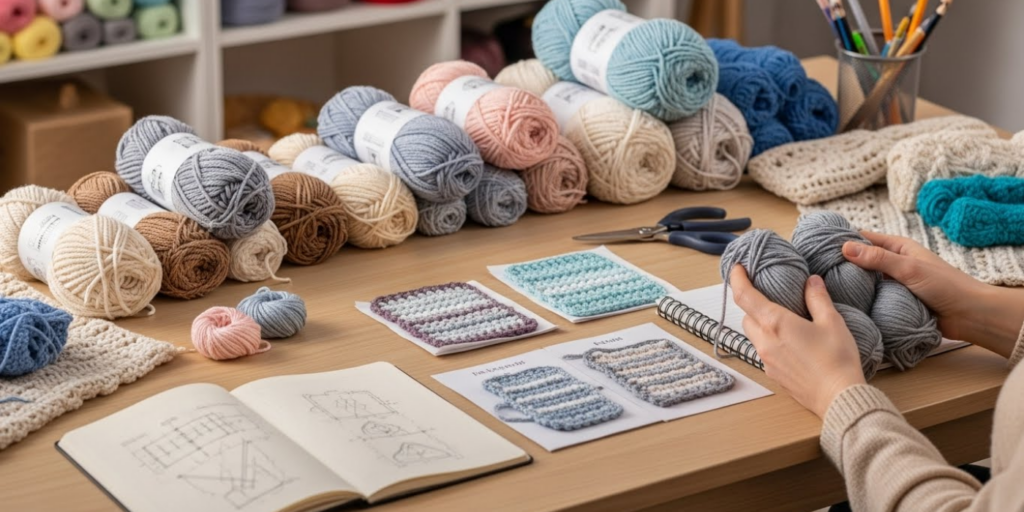
The foundation of any great minimalist project lies in two key elements: yarn selection and stitch repetition.
Yarn matters more than ever when you’re working with few colors and simple shapes. Without bold hues or novelty textures to distract the eye, the quality and hand-feel of your yarn take center stage.
Look for:
- Natural fibers like cotton, linen, wool, or bamboo—they age beautifully and develop character with use
- Smooth, consistent plies that showcase stitch definition
- Subtle heathered or undyed finishes for depth without visual noise
Avoid overly fuzzy, variegated, or glittery yarns—they fight against the clean aesthetic you’re aiming for.
When it comes to stitches, less is more. Stick to classics that create gentle texture without overwhelming the eye:
- Half-double crochet (hdc): dense yet flexible, with a soft horizontal ridge
- Moss stitch (aka linen stitch): a blend of single crochet and chain that mimics woven fabric
- Front/back post stitches: add subtle ribbing for structure (great for bags or cuffs)
- Tunisian simple stitch: creates a fabric that looks almost like knitting—perfect for modern wraps
Pro Tip: Swatch in your chosen stitch and wash/block it. Minimalist pieces often rely on drape and fit—seeing how your fabric behaves after care is essential.
Remember: in minimalist crochet, every stitch is visible. That’s not a flaw—it’s an invitation to slow down and savor each loop.
5 Beginner-Friendly Minimalist Projects to Try
Ready to put theory into practice? Here are five simple, stylish projects that embody minimalist principles—and are perfect for crocheters of all levels:
- The Everyday Market Tote
Made with sturdy cotton yarn and worked in hdc or moss stitch, this bag features clean lines, a flat bottom, and long straps. Choose an oatmeal or charcoal shade for maximum versatility. - Neutral Throw Blanket
A large rectangle in a single stitch (like herringbone half-double crochet) becomes a cozy centerpiece. Use a lofty wool blend for warmth or linen for summer weight. - Simple Ribbed Headband
Worked in the round with front post double crochet for stretch and structure. One skein. One hour. Endless wear. - Minimalist Coasters
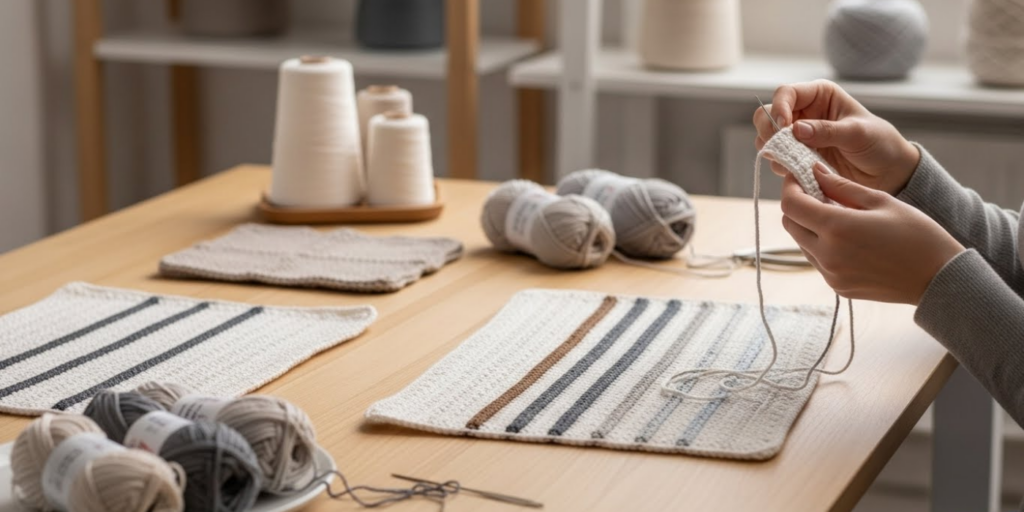
Crochet small squares or circles in tight single crochet using unbleached cotton. They’re practical, quick, and make lovely handmade gifts. - Open-Front Cardigan
Choose a pattern with dropped shoulders and no closures. Worked in a drapey yarn with a simple mesh or mesh-adjacent stitch, it layers effortlessly over any outfit.
Why these work: Each project uses few materials, repetitive stitches, and functional shapes. There’s no assembly, no color juggling, and no fussy finishing. Yet each feels intentional and elevated.
Start with a small item like coasters or a headband to build confidence. Then, graduate to larger pieces as you fall in love with the rhythm of minimalist making.
The Mindful Benefits of Simple Crochet
Beyond aesthetics, minimalist crochet offers something even more valuable: mental clarity.
In a craft often associated with “more stitches, more colors, more projects,” choosing simplicity is a quiet act of rebellion. It says: I don’t need to prove anything. I’m here to make, not to impress.
The repetitive nature of minimalist patterns—row after row of the same stitch—can induce a meditative state. Studies have shown that rhythmic handcrafts like knitting and crochet reduce cortisol levels and improve focus. When your pattern doesn’t demand constant attention, your mind is free to wander, rest, or process emotions.
Moreover, working with limited resources fosters creativity within constraints. How can you make a gray scarf feel special? Through stitch choice. Through edge finishing. Through the care you take in every row. Constraints don’t stifle creativity—they refine it.
There’s also an emotional honesty in minimalist pieces. They don’t hide behind embellishment. What you see is what you get—which mirrors a deeper truth about handmade goods: imperfections become part of the story. A slightly uneven edge? That’s the mark of human hands, not a machine.
In a world of mass production, that authenticity is priceless.
Styling and Living with Minimalist Crochet
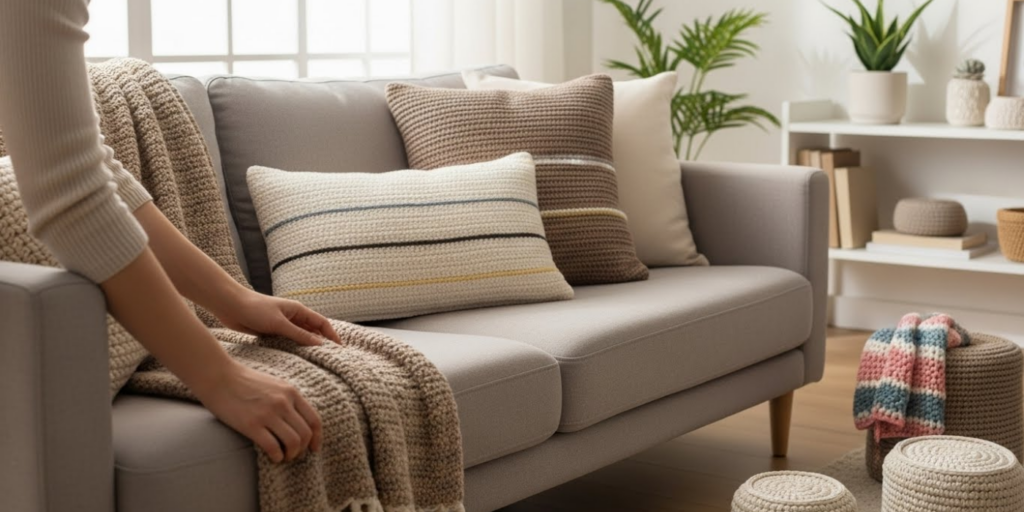
Once you’ve made your minimalist piece, how do you integrate it into your life?
The key is versatility. A well-designed minimalist item should work across seasons, settings, and styles.
- Drape your neutral throw over a gray sofa, a wooden bench, or the foot of a bed. Its simplicity lets it blend, not compete.
- Pair your market tote with jeans and a white tee or a linen dress—it’s a neutral accessory that elevates any look.
- Layer your open-front cardigan over everything from tank tops to turtlenecks. Because it lacks buttons or bold patterns, it adapts to your needs.
Minimalist crochet also aligns beautifully with capsule wardrobes and slow home aesthetics. Instead of owning 10 cheap blankets, you own one beautifully made, thoughtfully designed throw that lasts years.
And because these pieces are often made in timeless colors and shapes, they don’t go out of style. That’s sustainability in action.
Consider gifting minimalist crochet, too. A soft moss-stitch scarf in a quiet tone says, “I made this with care, just for you.” No glitter, no fuss—just warmth and intention.
Conclusion
Minimalist crochet isn’t about doing less—it’s about doing with purpose. By focusing on clean lines, quality materials, and functional beauty, you create pieces that serve your life while soothing your soul. Whether you’re new to crochet or a longtime hook-wielder, this approach offers a refreshing return to the joy of making for making’s sake.
From choosing the right yarn to embracing meditative repetition, every step invites you to slow down and appreciate the craft in its purest form. And the best part? You don’t need fancy supplies or advanced skills—just a hook, some thoughtful yarn, and a willingness to embrace simplicity.
So why not start small? Pick a neutral skein from your stash, choose a calming stitch, and make something with clean lines and quiet beauty. Let your hands move, your mind rest, and your home fill with handmade warmth.
We’d love to hear from you! Do you lean toward minimalist design in your making? What’s your favorite simple crochet project? Share your thoughts or photos in the comments below—your quiet creation might inspire someone else to find beauty in less.
Gabriela Ferreira is a passionate crochet and knitting enthusiast who finds inspiration in every skein of yarn she touches. With a love for color, texture, and handmade detail, she brings creativity and warmth to each project she creates. Gabriela believes that every stitch tells a story, and she enjoys sharing her craft with others who appreciate the beauty of fiber arts.