Introduction
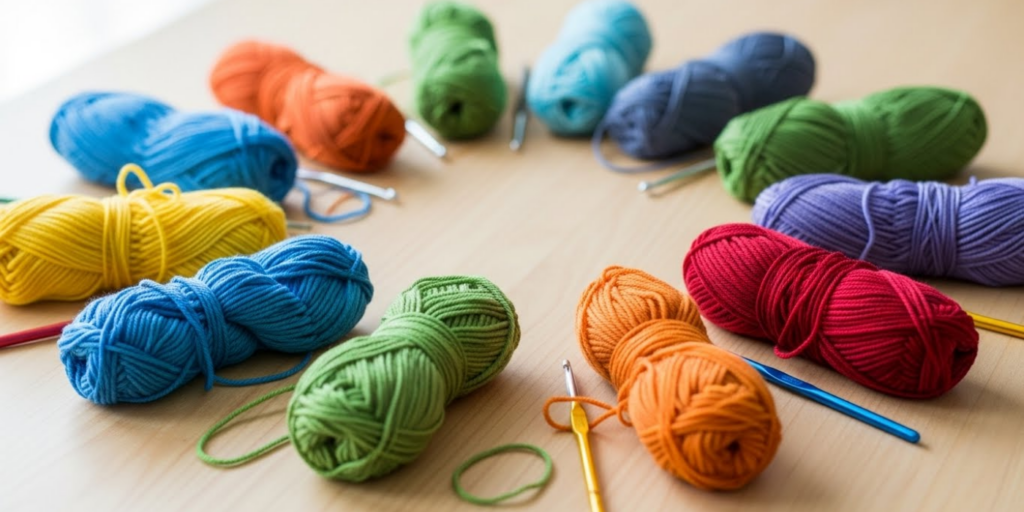
That tiny ball of leftover yarn hiding in your stash? It’s not “just scraps”—it’s potential. From cheerful coasters to whimsical amigurumi, scrap yarn crochet patterns turn odds and ends into treasures, all while reducing waste and stretching your creativity.
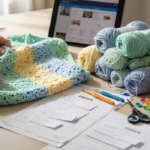
If your craft closet is bursting with half-used skeins, mini-balls, and mystery leftovers from past projects, you’re sitting on a goldmine. The key isn’t to save every inch “just in case”—it’s to use it with purpose. In this article, we’ll explore how to transform those forgotten yarn bits into functional, beautiful, and even giftable creations.
You’ll discover beginner-friendly projects, smart organizing tips, and clever techniques like color pooling and striping with scraps. We’ll also share real-life examples and pattern ideas that require less than 50 yards—so even the tiniest leftovers get a second life.
Whether you’re eco-conscious, budget-savvy, or simply tired of yarn clutter, this guide will help you stitch sustainably and joyfully. Let’s give every inch of yarn the spotlight it deserves!
Why Scrap Yarn Projects Matter: More Than Just “Leftovers”
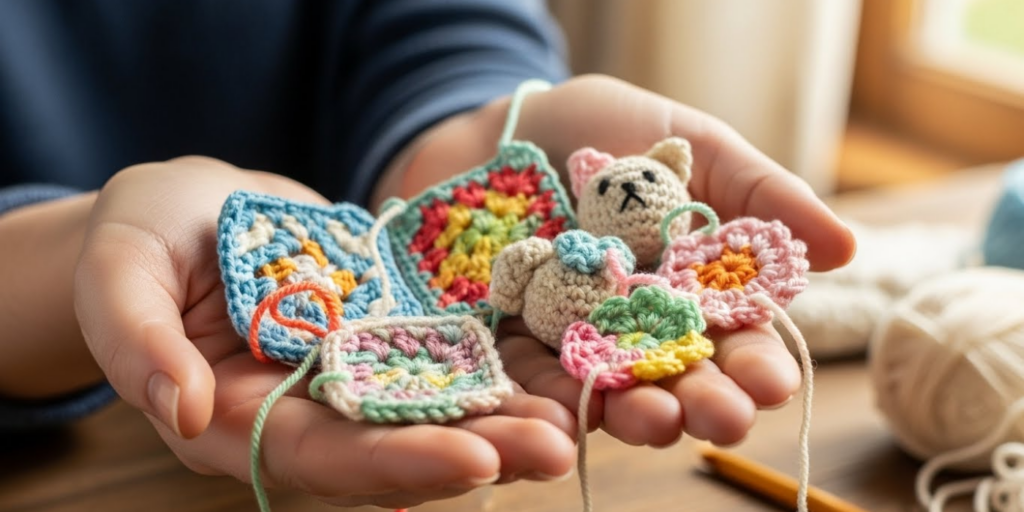
In a world increasingly aware of waste, yarn scraps represent a small but meaningful opportunity to craft more mindfully. The average crocheter accumulates dozens of partial skeins over time—enough to make multiple projects, yet often left unused out of uncertainty or lack of ideas.
But beyond sustainability, scrap yarn crafting offers creative freedom. Without the pressure of matching dye lots or conserving expensive yarn, you’re free to experiment, mix textures, and play with color. A purple cotton scrap beside a mustard wool remnant might seem odd in theory—but together, they could become the most charming pair of mismatched mittens for a child.
Moreover, working with scraps teaches resourcefulness. You learn to adapt patterns, substitute weights, and embrace improvisation—skills that make you a more confident and versatile maker. And let’s not forget the satisfaction: there’s something deeply rewarding about turning “nothing” into something useful.
Did you know? The average crocheter discards or hoards over 200 yards of usable yarn per year. Imagine what you could make with that!
Organizing Your Scraps: From Chaos to Creative Fuel
Before you can stitch with scraps, you need to see what you have. A tangled heap in a drawer won’t inspire—it’ll overwhelm. Start by sorting your leftovers into categories:
- By weight: Lace, fingering, sport, DK, worsted, bulky.
- By fiber: Cotton for kitchen items, wool for warmth, acrylic for durability.
- By length: Use labeled sandwich bags or clear jars for “less than 20 yards,” “20–50 yards,” and “50+ yards.”
Pro tip: Wind tiny leftovers around cardboard bobbins or toilet paper tubes, and label each with yardage and color. Store them in a shoebox or clear bin—you’ll be amazed how much you can fit!
Once organized, group similar colors for gradient projects or bold contrasts for patchwork-style pieces. This simple step turns random scraps into a curated palette.
And don’t forget the emotional benefit: a tidy scrap stash feels like a creative playground, not a chore. Every time you open it, you’ll see possibilities—not clutter.
Beginner-Friendly Scrap Yarn Projects (Under 50 Yards Each)
You don’t need a mountain of yarn to make something meaningful. Here are five quick, joyful projects perfect for small leftovers:
- Amigurumi Eyes or Buttons
Use tiny amounts of black, white, or brown yarn to crochet safety-eye alternatives or decorative buttons for garments. - Keychain Charms or Bag Tags
A mini heart, star, or animal made with less than 15 yards makes a personalized accessory. - Coasters and Mug Rugs
A simple round or square coaster uses ~20 yards. Mix and match colors for a vibrant set! - Bookmarks
A 6-inch strip in single crochet or linen stitch, finished with a tassel, takes under 30 yards and makes a lovely gift. - Potholder Squares
Crochet small textured squares (using cotton scraps!) and seam them together later into full potholders.
Bonus idea: Keep a “scrap project jar.” Every time you finish a large project, add the leftovers to the jar. When it’s full, challenge yourself to use only that yarn for your next creation.
These projects are fast, low-stakes, and perfect for testing new stitches or color combos.
Intermediate Ideas: Where Scraps Truly Shine
Once you’re comfortable with small items, level up with modular designs that thrive on variety:
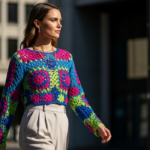
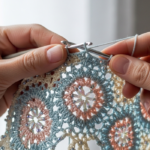
- Granny Squares or Motifs: Make individual squares with different scrap colors, then join them into blankets, totes, or pillow covers. No two squares need to match—imperfection is the point.
- Striped Beanies or Headbands: Alternate scraps every few rows for a lively, boho look. Worsted-weight scraps work especially well here.
- Patchwork Blankets: Use the join-as-you-go method to connect irregularly sized squares or rectangles. The result? A cozy, one-of-a-kind throw full of memories from past projects.
- Scrap Yarn Garland: String together tiny crochet flowers, stars, or pom-poms for wall decor, baby mobiles, or holiday bunting.
Design tip: Stick to a cohesive color family (e.g., all cool tones or earthy neutrals) to keep the look intentional rather than chaotic. Or go full rainbow—it’s your craft!
Many of these projects can be customized in size based on how much yarn you have. Run out of blue? Switch to green. The flexibility is part of the fun.
Clever Techniques to Maximize Every Inch
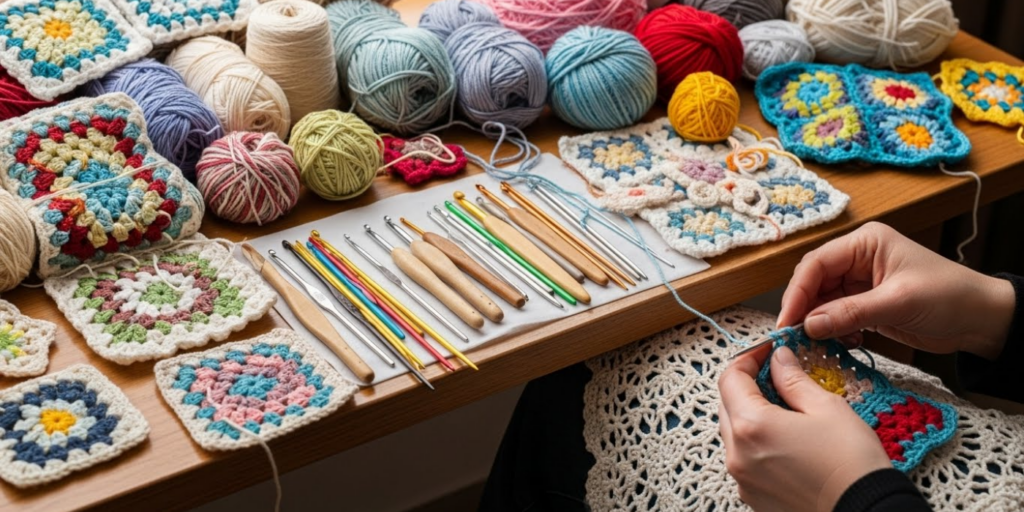
To get the most from limited yardage, try these smart strategies:
- Use a smaller hook: Going down a hook size (e.g., from H/5.0mm to F/3.75mm) uses less yarn per stitch—ideal for delicate scraps.
- Choose dense stitches: Single crochet, moss stitch, or linen stitch create tighter fabric that uses yarn more efficiently than open lace patterns.
- Mix weights intentionally: Combine sport and DK scraps by holding two strands of lighter yarn together to match worsted weight.
- Embrace “controlled randomness”: Instead of planning every color change, let your scraps dictate the rhythm. Sometimes the best designs emerge from happy accidents!
Also, don’t discard tiny bits. Save yarn under 5 yards for:
- Stuffing small amigurumi
- Embroidery details (like facial features)
- Tying bundles of fresh herbs (if using cotton or linen)
Remember: zero waste isn’t about perfection—it’s about respect for the materials you’ve chosen to work with.
Eco-Impact and the Joy of Slow Crafting
Every scrap yarn project is a quiet act of sustainability. Yarn production—especially synthetic fibers—has a real environmental footprint. By reusing what you already own, you:
- Reduce demand for new resources
- Keep usable materials out of landfills
- Lower your crafting carbon footprint
Beyond ecology, scrap crochet aligns with the slow crafting movement: making with intention, care, and presence. There’s no rush to finish. No pressure to match a trend. Just you, your hook, and the joy of creating something uniquely yours.
Think of your scrap projects as love letters to your past self—the version of you who bought that skein for a sweater, or received it as a gift, or found it at a thrift store. Now, you’re giving it new purpose.
And when you gift a scrap-made coaster or keychain, you’re sharing not just an object—but a story of creativity, mindfulness, and resourcefulness.
Conclusion
Scrap yarn isn’t leftover—it’s latent potential. With a little organization, a dash of imagination, and the right patterns, those small skeins and mystery bits can become coasters, toys, garlands, blankets, and more. More than that, they can help you craft more sustainably, creatively, and joyfully.
You don’t need a full skein to make something worthwhile. Sometimes, the smallest pieces create the biggest impact—both in your home and in your heart.
So before you toss that inch of yarn or tuck it away “for someday,” ask yourself: What could this become? Then grab your hook and find out.
Now we’d love to hear from you: What’s the most creative thing you’ve ever made from scrap yarn? Do you have a favorite tiny-project pattern? Share your ideas, photos, or tips in the comments below—and inspire fellow makers to stitch with scraps!
Gabriela Ferreira is a passionate crochet and knitting enthusiast who finds inspiration in every skein of yarn she touches. With a love for color, texture, and handmade detail, she brings creativity and warmth to each project she creates. Gabriela believes that every stitch tells a story, and she enjoys sharing her craft with others who appreciate the beauty of fiber arts.