Introduction
Ever finished a beautiful crochet scarf—only to find it’s started pilling after two wears, or worse, stretched out of shape by week three? You followed the pattern exactly, used the recommended hook size… so what went wrong?
Chances are, the issue wasn’t your stitches—it was the yarn itself, and more specifically, its ply.
While most crocheters focus on yarn weight or fiber content, ply—the number of individual strands twisted together to make a yarn—plays a surprisingly powerful role in how your project looks, feels, and holds up over time. A 4-ply worsted yarn behaves very differently than a single-ply version of the same weight. One might drape like silk; the other might split like frayed rope.
In this guide, we’ll demystify yarn ply: what it really means, how it impacts stitch definition, durability, drape, and even your tension. You’ll learn how to read yarn labels like a pro, choose the right ply for your project (whether it’s a baby blanket or a market tote), and avoid common pitfalls that lead to frustration or wasted yarn.
By the end, you won’t just use yarn—you’ll truly understand it. And that knowledge? It’s the secret ingredient behind projects that look polished, last longer, and feel just right in your hands.
Let’s unravel the truth about ply—one strand at a time.
What Is Yarn Ply? Breaking Down the Basics
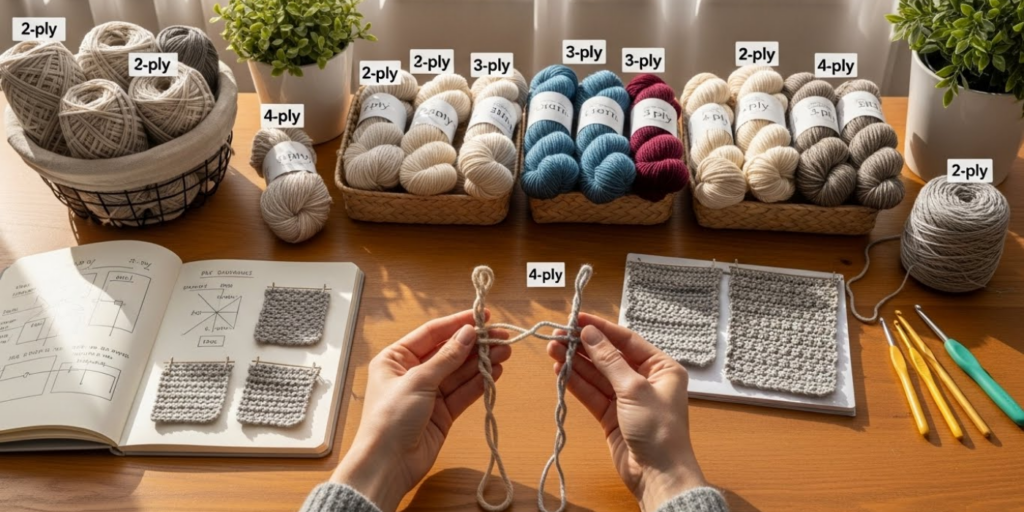
At its simplest, ply refers to the number of individual strands (or “plies”) twisted together to create a single strand of yarn. A 2-ply yarn has two strands spun together; a 4-ply has four, and so on.
But here’s where it gets tricky: ply does NOT always equal thickness.
Historically, especially in the UK, “4-ply” was used as a standard term for what Americans now call fingering or sock weight yarn—regardless of whether the yarn was actually made of four strands. Meanwhile, a thick, chunky yarn might be labeled “single-ply” because it’s made from one thick strand, even though it’s far heavier than traditional 4-ply.
Key Insight: Modern yarn labels often list both weight category (like #4 Worsted) and actual ply count—but not always. Always check the physical yarn, not just the name.
Why does this matter? Because how a yarn is constructed affects how it behaves when you crochet with it. Multiple plies create balance and strength; single plies offer softness and a rustic look—but with trade-offs.
Think of ply like the threads in a rope:
- A single thread snaps easily.
- Twist several together, and you get resilience, roundness, and consistency.
That’s the magic of ply—and why it deserves your attention.
How Ply Affects Stitch Definition and Fabric Appearance
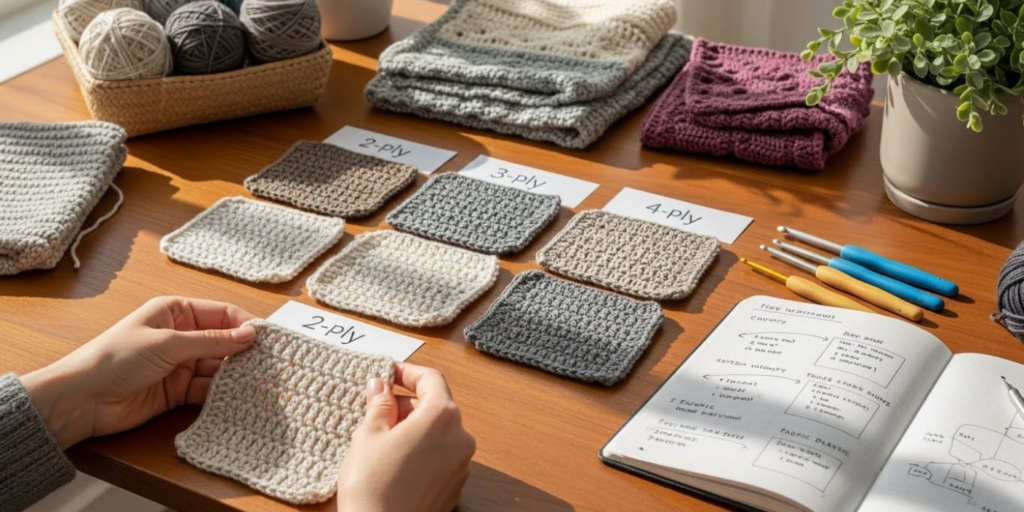
One of the most immediate impacts of ply is on stitch clarity—how crisp or blurred your crochet stitches appear.
Multi-ply yarns (3-ply and up) tend to be rounder and more structured because the twist holds the strands together tightly. This roundness helps stitches sit neatly next to each other, making cables, bobbles, or textured patterns pop with definition. If you’re crocheting a lace shawl or a sweater with intricate fronts, a 4-ply or 6-ply yarn will show off every detail beautifully.
Single-ply yarns, by contrast, are often softer and flatter, with a slightly matte finish. They create a cozy, organic fabric that’s perfect for blankets or cowls—but fine details can get lost in the fuzz. A popcorn stitch might blend into the background; a shell stitch may look more like a soft ripple than a defined arc.
Real Example: Try crocheting the same ripple pattern in a 4-ply cotton and a single-ply merino wool. The cotton will give you sharp peaks and valleys; the wool will deliver cloud-like softness with blurred edges.
So which should you choose?
- For projects where structure matters (bags, garments, amigurumi): choose multi-ply.
- For cozy, drapey items (scarves, shawls, baby blankets): single-ply shines.
Remember: there’s no “best”—only what’s best for your project’s purpose.
Durability, Pilling, and Long-Term Wear: The Hidden Role of Ply
Let’s talk about longevity. You’ve probably noticed that some handmade items stay looking great for years, while others pill, stretch, or fray after a few washes. Ply plays a big role here.
Multi-ply yarns are generally more durable. The twist that binds the plies together helps distribute stress across the yarn, making it more resistant to abrasion. That’s why sock yarns are almost always 4-ply or more—they need to withstand constant friction.
Single-ply yarns, while luxuriously soft, are more prone to pilling and splitting. With no internal structure to reinforce them, they can wear down faster—especially in high-friction areas like underarms or bag handles.
Pro Tip: If you love the look of single-ply but need durability, look for singles with a high twist or added nylon (common in artisan sock yarns).
Also consider usage:
- A market tote made in single-ply cotton might stretch under weight.
- But a bedside blanket in single-ply alpaca? Perfect—it won’t endure heavy wear, so softness wins.
Moreover, ply affects washing resilience. Multi-ply yarns hold their shape better in the wash; single-ply may felt or lose definition if agitated.
Bottom line: Match the ply to the project’s lifestyle. A heirloom baby sweater? Go 4-ply for longevity. A meditation shawl you’ll gently drape? Single-ply’s dreamy texture is worth the care.
Ply and Crochet Tension: Why Your Hands Might Be Fighting the Yarn
Here’s something few talk about: ply can influence your tension—and even cause hand fatigue.
Single-ply yarns are often more “slippery” or “loose” in the hand. Without internal structure, they can stretch as you work, leading to inconsistent tension—especially if you’re a tighter crocheter. You might find yourself pulling harder to control the yarn, which can strain your fingers over time.
Multi-ply yarns, with their balanced twist, tend to feed more evenly through your fingers. They resist stretching mid-stitch, giving you smoother, more consistent results—even during long sessions.
Try This: Crochet two swatches—one in a 2-ply and one in a single-ply yarn of the same weight. Notice which feels easier to control. Which leaves your hand less tired?
Yarn splitting is another common issue with certain plies. Very tightly spun multi-ply yarns can be hard for your hook to penetrate cleanly, causing the hook to “catch” between plies. On the flip side, loosely spun singles may split because there’s no core to hold them together.
Solution:
- Use a hook with a slightly rounded tip (like bamboo or ergonomic hooks) for slippery or splitty yarns.
- Practice a gentler yarn guide—let the yarn flow, don’t grip it.
Your tension isn’t just about skill—it’s also about working with your yarn, not against it.
Choosing the Right Ply for Your Project: A Practical Guide
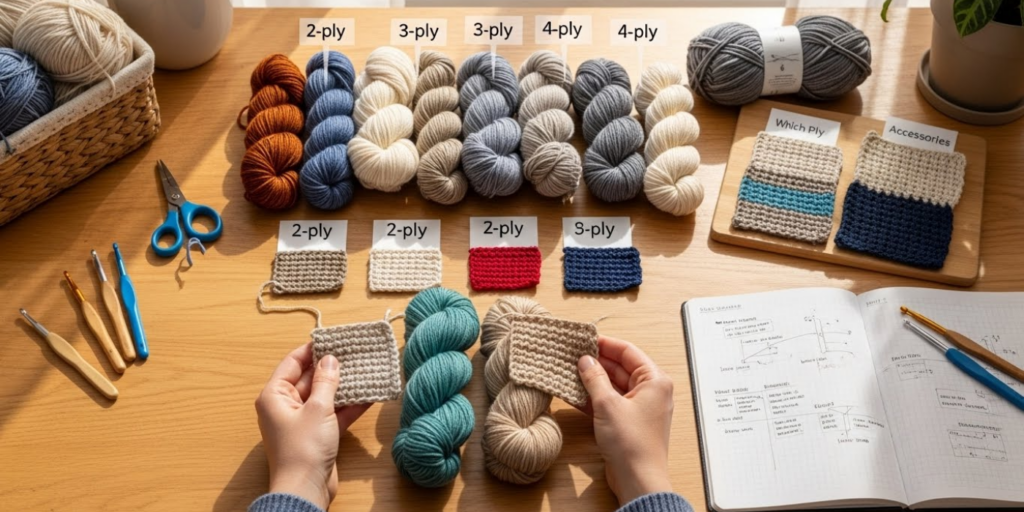
Now that you understand how ply affects your work, how do you choose wisely? Here’s a quick-reference guide:
| Project Type | Recommended Ply | Why |
|---|---|---|
| Garments (sweaters, cardigans) | 3-ply or higher | Holds shape, shows stitch detail, durable |
| Amigurumi / Toys | 4-ply cotton or acrylic | Firm fabric, clear shaping, washable |
| Scarves & Shawls | Single-ply or 2-ply | Soft drape, cozy feel, lightweight |
| Blankets | 2–4 ply (based on use) | Baby = durable 4-ply; throw = soft single-ply |
| Bags & Home Décor | 3–6 ply, tightly spun | Resists stretching, supports weight |
| Lace or Filet Crochet | 2–4 ply, smooth fiber | Crisp stitch definition, minimal fuzz |
Remember: Always swatch! Wash and block your swatch the same way you’ll care for the finished item. This reveals how the ply behaves in real life—not just on the skein.
Also, don’t ignore fiber content. A 4-ply cotton behaves very differently than a 4-ply wool—ply and fiber work together.
Bonus Tip: When substituting yarns, match both weight AND ply structure if possible. Swapping a single-ply for a multi-ply of the same weight can completely change your fabric’s drape and density.
Common Myths About Yarn Ply—Debunked
Let’s clear up a few misconceptions:
Myth 1: “More plies = thicker yarn.”
False. Ply affects structure, not necessarily thickness. You can have a thin 8-ply sock yarn or a thick single-ply roving.
Myth 2: “Single-ply is always low quality.”
Not true! Many luxury yarns (like Malabrigo Worsted) are single-ply and prized for their softness and rich color depth. Quality depends on fiber and spinning—not just ply count.
Myth 3: “Ply doesn’t matter if the weight is the same.”
Big mistake. Two #4 worsted yarns—one single-ply, one 4-ply—can produce fabrics that look and feel completely different. Always consider both.
Myth 4: “All 4-ply yarns are the same.”
Nope! The tightness of the twist, fiber blend, and even the direction of the spin (S-twist vs. Z-twist) all influence behavior.
Takeaway: Ply is just one piece of the puzzle—but it’s a powerful one. Treat it as a design tool, not just a label.
Conclusion
Understanding yarn ply isn’t about memorizing numbers—it’s about learning to listen to your yarn. Every strand tells a story about how it wants to be used, how it will age, and what kind of fabric it will become in your hands.
We’ve explored how ply shapes stitch definition, affects durability, influences your tension, and guides project success. More importantly, we’ve seen that there’s no “perfect” ply—only the right ply for your purpose, your hands, and your vision.
So next time you’re at the yarn shop, don’t just check the weight label. Unwind a bit. Feel the twist. Notice how it drapes. Ask yourself: Will this hold up? Will it show my stitches? Will it feel good to work with?
Armed with this knowledge, you’ll make smarter choices, avoid frustration, and create projects that not only look beautiful but stand the test of time.
Now we’d love to hear from you: Have you ever had a project “fail” because of yarn ply? Or discovered a favorite single-ply or multi-ply yarn you swear by? Share your experiences in the comments below—your tip might save another crocheter hours of trial and error!
And if this guide helped you see yarn in a new light, why not share it with a friend who’s always wondering why their stitches look “off”?
Happy stitching—and may your plies always be perfectly matched to your dreams. 🧶
Gabriela Ferreira is a passionate crochet and knitting enthusiast who finds inspiration in every skein of yarn she touches. With a love for color, texture, and handmade detail, she brings creativity and warmth to each project she creates. Gabriela believes that every stitch tells a story, and she enjoys sharing her craft with others who appreciate the beauty of fiber arts.