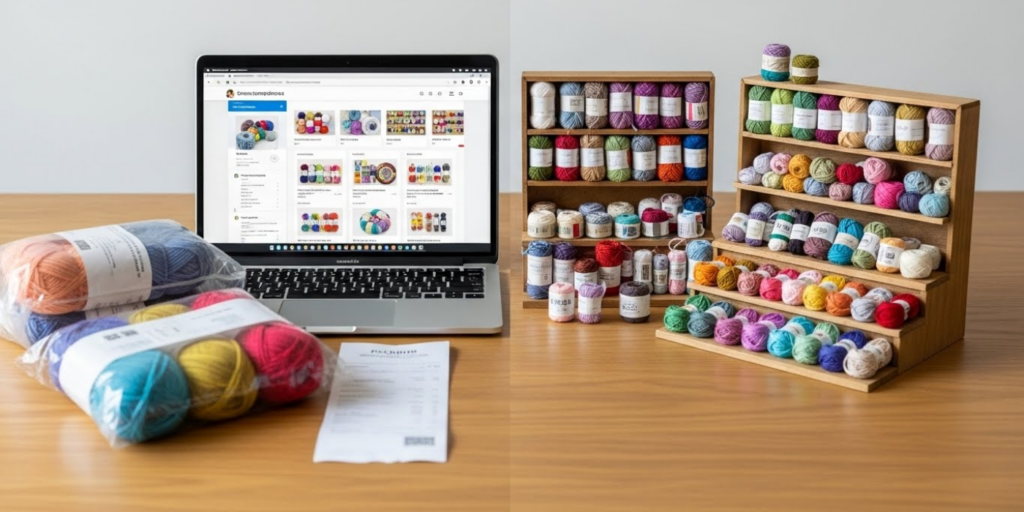
Have you ever stood in the yarn aisle, running your fingers over a skein of merino wool, only to wonder: Would I get a better deal—or better quality—if I bought this online? Or maybe you’ve scrolled through a digital catalog at 2 a.m., tempted by a limited-edition colorway, but hesitated because you couldn’t feel the fiber?
You’re not alone. Every crocheter and knitter faces this modern dilemma: Where should I buy my yarn—online or in a local store?
The truth is, both options have real strengths (and some hidden drawbacks). Your choice can affect your budget, your project’s success, your creative confidence, and even your connection to the crafting community. In this guide, we’ll break down the pros and cons of online and in-store yarn shopping, covering cost, convenience, quality, sustainability, and the intangible joys of each experience.
Whether you’re a weekend hobbyist or a yarn-bomber with a stash the size of a small closet, understanding these trade-offs will help you shop smarter, stitch happier, and maybe even support your local maker ecosystem along the way.
Let’s unravel the skein—strand by strand.
The Allure of Online Yarn Shopping: Convenience, Choice, and Deals
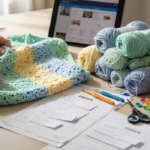
Let’s start with the obvious: online yarn shopping is incredibly convenient. With just a few clicks, you can browse thousands of colors, weights, and fibers—from Icelandic wool to bamboo blends—without leaving your couch. No traffic, no parking, no awkward small talk with strangers while you’re deep in pattern-planning mode.
One of the biggest advantages? Selection. Small local shops simply can’t stock every dye lot, brand, or limited-run yarn. But online retailers like WeCrochet, LoveCrafts, Jimmy Beans Wool, or even Etsy sellers often carry exclusive colorways, discontinued lines, and international brands you’d never find nearby. Need five skeins of Malabrigo Rios in “Frank O’Hara”? Done.
Pricing is another strong draw. Online stores frequently run sales, bundle deals, or free shipping thresholds that local shops can’t match due to overhead costs. Signing up for newsletters often unlocks first-purchase discounts or early access to new arrivals. And price-comparison is effortless—you can toggle between tabs to find the best deal in seconds.
Moreover, online shopping is a lifesaver for rural crafters or those with mobility challenges. If the nearest yarn store is 50 miles away, the internet becomes your lifeline to the fiber world.
But convenience comes with caveats—and we’ll get to those soon. First, let’s see what local stores bring to the table.
The Magic of Local Yarn Stores: Touch, Trust, and Community
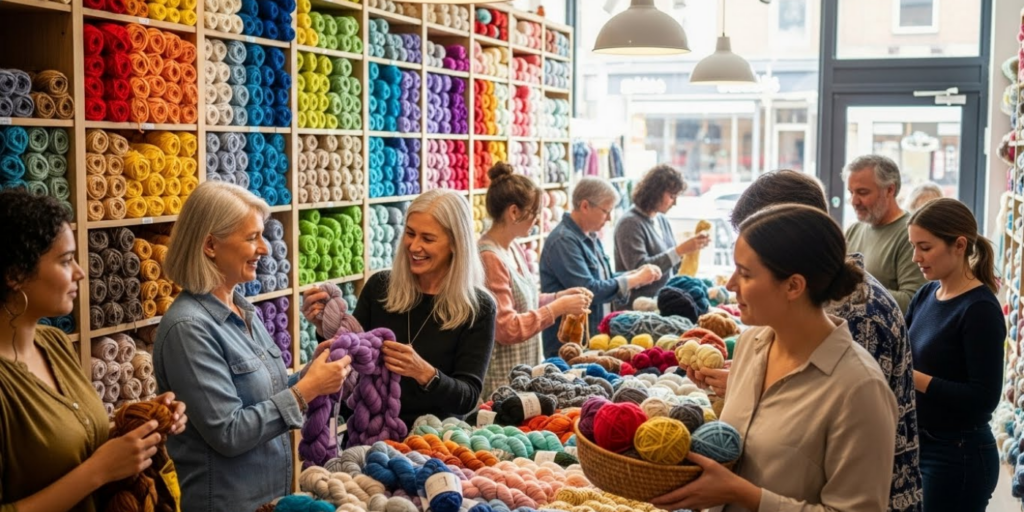
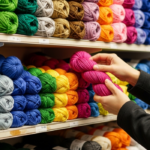
Step into a well-loved local yarn shop (often called a LYS in crafting circles), and you’ll notice something no website can replicate: sensory connection. You can squeeze, stretch, and smell the yarn. You can see how light hits the fibers and whether that “heather gray” is truly neutral or leans purple.
This tactile feedback is critical for project success. A yarn might look soft in a photo but feel scratchy in person. A variegated colorway might pool in unexpected ways—something you’d only notice by holding a full skein. When you’re investing time (and money) into a sweater or baby blanket, confidence in your materials matters.
Beyond touch, local shops offer expertise. The staff are often fellow makers who can help you substitute yarns, adjust hook sizes, or troubleshoot gauge issues. They might even let you swatch before you buy—a luxury online shoppers rarely get.
But perhaps the most underrated benefit is community. Local yarn stores host knit nights, workshops, charity drives, and launch parties for new indie dyers. They’re hubs where friendships form, skills are shared, and creativity thrives in real time. Supporting them keeps these spaces alive—and ensures you always have a place to turn when you’re stuck on round 12 of a complicated lace pattern.
As one longtime crocheter told me: “My LYS isn’t just where I buy yarn—it’s where I feel seen as a maker.”
Hidden Drawbacks: When Online or In-Store Shopping Falls Short
Of course, neither option is perfect. Let’s talk about the less obvious downsides so you can navigate them wisely.
Online shopping risks include:
- Color inaccuracies: Screens vary, and lighting distorts hues. That “sage green” might arrive closer to army green.
- No texture check: A yarn labeled “ultra-soft” might feel synthetic or stiff in person.
- Shipping delays: Need yarn for a last-minute gift? A 5–7 day delivery window won’t help.
- Returns hassle: Most online stores charge return shipping or don’t accept opened skeins.
On the flip side, local stores have limitations too:
- Higher prices: Rent, utilities, and staff wages mean markups are often 10–20% higher than online.
- Limited stock: They might carry only one dye lot, making it hard to match skeins for large projects.
- Geographic inequality: Millions of crafters live in “yarn deserts” with no LYS within driving distance.
- Hours and availability: Many close early or aren’t open weekends—tricky for full-time workers.
Pro tip: Use a hybrid approach. Research online, then check if your LYS can order the exact yarn you want. Many independent shops now offer special orders or price-matching.
Practical Strategies for Smart Yarn Shopping (No Matter Where You Buy)
So how do you get the best of both worlds? Here are real-world strategies that seasoned crafters use:
- Build a “swatch library”: Buy small quantities (or mini-skeins) of new yarns online to test drape, washability, and stitch definition before committing to a full project.
- Use online reviews wisely: Read comments about color accuracy and softness—but prioritize reviews with photos from real buyers.
- Support your LYS digitally: Many local shops now have online stores with curbside pickup. You get convenience and community support.
- Join yarn clubs or pre-orders: Both online retailers and LYSs offer seasonal boxes that introduce you to new fibers—with less risk of mismatched expectations.
- Track your stash: Use apps like Ravelry or Yarn Counter to avoid duplicate purchases and know exactly what you need.
Also, consider project urgency. For a last-minute baby gift? Local is faster. For a sweater you’ll start next month? Online gives you time to compare.
And never underestimate the power of asking questions—whether in-store or via email. Reputable sellers (online or offline) will happily send photos, swatches, or care instructions.
Sustainability and Ethics: The Bigger Picture of Where You Buy
Your yarn-shopping habits have a ripple effect beyond your hook.
Local stores often source from small-batch dyers, eco-conscious brands, or regional mills, reducing shipping emissions and supporting circular economies. Many also accept yarn donations or host “stash swap” events, keeping fibers out of landfills.
Online giants, while convenient, can contribute to overconsumption and packaging waste—especially with fast-shipping models that discourage bulk orders. However, some online retailers now offer carbon-neutral shipping, plastic-free packaging, or yarn recycling programs.
If ethics matter to you, look for brands that are transparent about sourcing, use organic or recycled fibers, and pay fair wages. Whether you buy them online or locally, your dollar becomes a vote for the kind of crafting world you want.
As one indie dyer put it: “Every skein has a story—from sheep to skein to stitch. Choose the path that honors that journey.”
Finding Your Personal Balance: It’s Not All or Nothing
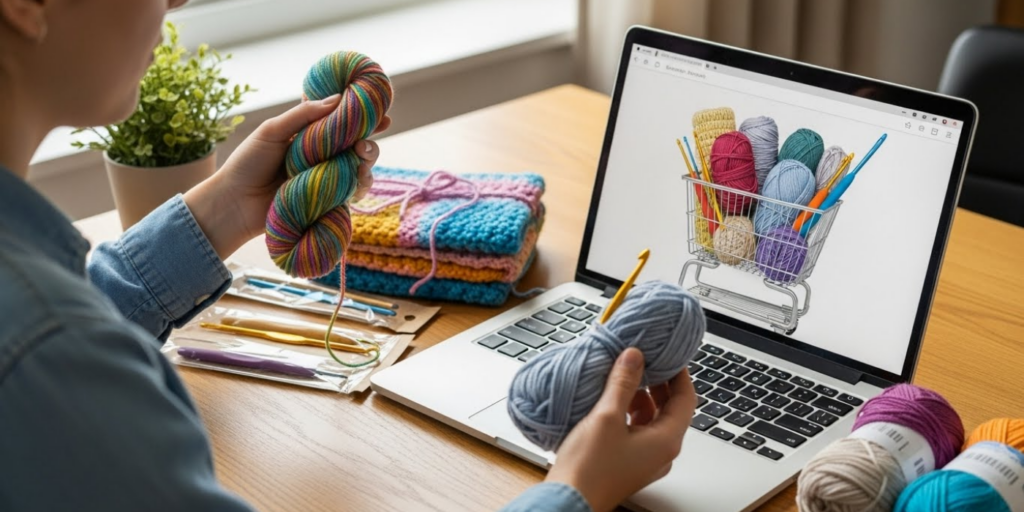
Here’s the good news: you don’t have to choose one over the other forever. The most joyful crafters I know use a flexible, intentional approach based on their project, budget, timeline, and values.
Need a quick acrylic skein for a practice swatch? Hit the big-box craft store.
Dreaming of a luxury shawl in hand-dyed silk? Order from the dyer’s website (or ask your LYS to special-order it).
Want to learn brioche stitch? Sign up for the workshop at your neighborhood shop—then buy the recommended yarn there to support them.
Your needs will shift over time—and that’s okay. What matters is shopping with awareness, not guilt.
Think of yarn shopping like tending a garden: sometimes you order seeds online for variety, sometimes you buy starter plants from the local nursery for reliability, and sometimes you swap cuttings with a neighbor for connection. All paths lead to bloom.
Which Side of the Aisle Are You On?
Yarn shopping—whether online or in-store—is more than a transaction. It’s a reflection of how you want to experience your craft: efficiently or sensorially, independently or communally, frugally or luxuriously.
We’ve covered the key differences:
✅ Online = vast selection, lower prices, 24/7 access
✅ Local stores = hands-on quality control, expert help, community warmth
But the real takeaway isn’t about picking a “winner.” It’s about knowing your priorities for each project—and giving yourself permission to use both.
So next time you’re ready to cast on something new, ask yourself:
Do I need speed—or certainty?
Am I seeking inspiration—or connection?
Is this a practical buy—or a joyful splurge?
Your answers will guide you to the right place.
Now we’d love to hear from you: Do you prefer shopping for yarn online, in-store, or a mix of both? What’s your most memorable yarn-shop find—or your biggest online-shopping surprise? Share your story in the comments below! And if you found this guide helpful, please share it with a fellow maker who’s ever stared at a screen wondering, “Is this yarn really as soft as it looks?”
Happy stitching—and happy shopping!

Gabriela Ferreira is a passionate crochet and knitting enthusiast who finds inspiration in every skein of yarn she touches. With a love for color, texture, and handmade detail, she brings creativity and warmth to each project she creates. Gabriela believes that every stitch tells a story, and she enjoys sharing her craft with others who appreciate the beauty of fiber arts.