Have you ever run your fingers over a handmade blanket and felt like you were touching a living thing—something with depth, character, and soul? That’s not magic. It’s crochet.
If you’ve mastered the basics—chain, single crochet, double crochet—and you’re ready to take your projects from “cute” to captivating, you’re in the right place. This isn’t just another tutorial on how to hold a hook. We’re diving into the art of texture—the secret language of crochet that turns simple yarn into tactile masterpieces. Think of it like painting with threads instead of brushes. Some stitches whisper. Others roar. And when you combine them? You create something no machine can replicate.
In this guide, you’ll discover five advanced crochet stitches that transform flat fabric into three-dimensional wonderlands. We’ll explore how each stitch behaves, why texture matters more than you think, and how to use these techniques to make everything from cozy blankets to statement bags that stop people in their tracks. Whether you’re crafting for joy, for gifts, or even for sale, mastering texture is the key to standing out in a world of mass-produced goods.
Let’s unravel the secrets behind stitches that don’t just look beautiful—they feel unforgettable.
Why Texture Is the Secret Weapon in Crochet
You’ve probably seen a crocheted scarf. Maybe even made one. But have you ever seen one that made you want to hug it?
Texture isn’t just decoration—it’s emotion. Studies in sensory design show that tactile experiences trigger emotional responses. A smooth, flat surface feels safe. But a bumpy, raised, or lacy surface? It invites touch. It tells a story. And in crochet, texture is your most powerful storytelling tool.
Think about it: a plain single crochet blanket is warm. A blanket with clusters of popcorn stitches, alternating with airy shells? It’s a memory. It’s the kind of heirloom your grandchildren will want to wrap themselves in on rainy afternoons.
Advanced stitches like the bobbles, puff stitches, and waffle stitch create depth that catches light and shadow in mesmerizing ways. They turn your work from “handmade” to handcrafted—a distinction that matters more than ever in today’s throwaway culture.
And here’s the best part: you don’t need fancy tools or expensive yarn. Just a hook, some patience, and the willingness to experiment. Most of these stitches use the same basic movements you already know—just arranged in clever, unexpected ways.
Let’s say you’re making a baby blanket. A single crochet border might look neat. But add a row of cluster stitches along the edge, and suddenly, it’s got personality. It feels like a hug. It feels loved.
Texture also solves practical problems. Bumpy stitches hide minor tension inconsistencies. Lacy patterns add breathability to summer garments. Raised motifs provide grip on coasters or pot holders. In other words, texture isn’t just pretty—it’s functional.
So if you’ve ever felt like your crochet projects are “missing something,” this is it. You’re not missing color. You’re not missing pattern. You’re missing depth.
Ready to add that missing dimension? Let’s get our hooks into five advanced stitches that will change how you see crochet forever.
The Popcorn Stitch: Tiny Sculptures in Yarn
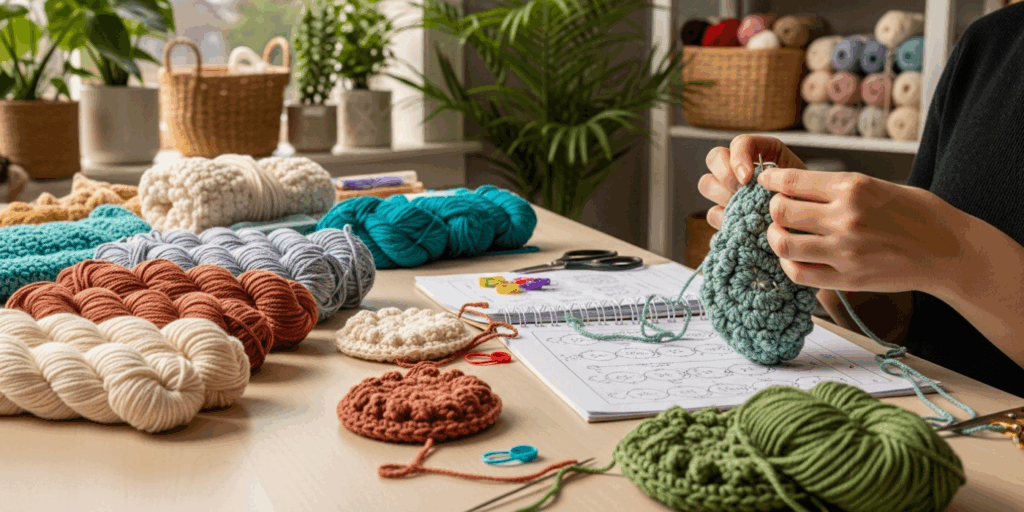
Imagine tiny, puffy clouds stitched into your fabric. That’s the popcorn stitch—a little 3D bubble of yarn that pops right off the surface.
It’s not hard. But it feels hard—because it’s so unexpected. You’re essentially creating a mini cluster of stitches, pulling them all together at the top to form a raised bump. The result? A surface that looks like it’s made of miniature marshmallows.
Here’s how it works:
- Work 5 double crochets into the same stitch.
- Drop the loop from your hook.
- Insert your hook into the top of the first double crochet you made.
- Pick up the dropped loop and pull it through.
- Chain 1 to secure.
It’s that simple. And the magic? You can place them anywhere. One every other stitch? Subtle texture. Every stitch? A quilted masterpiece.
Popcorn stitches are perfect for blankets, baby booties, or even sweaters if you use them sparingly as accents. They add warmth without bulk, and they look expensive—even if you used a budget-friendly acrylic.
Pro tip: Use a contrasting color for your popcorns. A cream blanket with burgundy pops? Stunning. A gray beanie with white pops? Instant winter chic.
I once made a pillow cover using nothing but popcorn stitches in a spiral pattern. My friend picked it up, turned it over, touched it again, then said, “Did you sew this?” I grinned. “Nope. Crocheted. All by hand.”
That’s the power of texture. It fools the eye. And it delights the heart.
The Waffle Stitch: Grids That Feel Like Comfort
If popcorn stitches are little clouds, the waffle stitch is a warm, cozy grid.
This stitch is a repeat of front and back post double crochets worked in a specific pattern. It creates a raised, diamond-like texture that looks like a breakfast waffle—hence the name. And just like a waffle, it holds heat, traps air, and feels hug-worthy.
Here’s the magic formula (for a basic waffle pattern):
- Row 1: Chain an even number. Double crochet in the 4th chain from hook. Skip 2, then front post double crochet (FPdc) in next stitch, back post double crochet (BPdc) in next. Repeat to end.
- Row 2: Chain 3 (counts as first dc). FPdc in the BPdc from previous row, BPdc in the FPdc. Repeat.
It’s rhythmic. Almost meditative. And the texture? Pure luxury.
Waffle stitch is a game-changer for dishcloths, bath mats, and winter scarves. It’s naturally grippy, absorbent, and surprisingly durable. I’ve used it for a set of kitchen towels that have survived 200+ washes—and still look brand new.
What makes it special isn’t just how it looks. It’s how it performs. Unlike flat stitches that flatten over time, the waffle stitch retains its shape. The raised ridges spring back. They don’t flatten under pressure. That’s why it’s favored by makers of therapeutic fidget blankets and sensory toys for kids with autism.
And here’s a secret: you can combine it with other textures. Try a waffle-stitch center panel with popcorn-stitch borders. Or alternate waffle rows with lace rows for a cool, breathable scarf that’s warm on one side and airy on the other.
The waffle stitch doesn’t shout. It whispers, “I’m here to keep you warm.”
And in a world that’s always rushing? That’s a gift.
The Shell Stitch: Elegant Ripples That Dance with Light
Now let’s shift gears—from cozy grids to graceful waves.
The shell stitch is where crochet turns into art. It’s built on clusters of stitches (usually 5 or 7 double crochets) worked into a single stitch, leaving gaps between each “shell.” The result? A flowing, scalloped edge that looks like ocean waves or the petals of a flower.
It’s been used for decades in doilies, shawls, and vintage afghans—but modern makers are bringing it back with bold yarns and unexpected color combinations.
Try this: use a variegated yarn (one that changes color along the strand) with shell stitch. As you work, the colors ripple across the surface like a sunset. It’s mesmerizing.
Here’s a simple shell pattern:
- Chain a multiple of 6 + 4.
- Row 1: Skip 3 chains, 5 dc in next chain. Skip 2 chains, 1 dc in next chain, skip 2 chains, 5 dc in next chain. Repeat to end.
- Row 2: Chain 3 (counts as first dc). 1 dc in first dc of shell. 5 dc in space between shells. Repeat.
The beauty of the shell stitch is its versatility. Work it in a tight repeat for a dense, elegant blanket. Stretch it out for a lacy, open shawl. Use thick yarn for a bold, modern statement. Fine thread for a delicate bridal wrap.
I made a shawl for my sister’s wedding using cotton thread and shell stitch. It weighed less than a pound but looked like it cost a fortune. She wore it under her veil—and cried when she saw it. “It feels like a cloud,” she said.
That’s the emotional power of texture. It doesn’t just decorate. It commemorates.
And here’s the best part: shell stitch is forgiving. If you miscount a few stitches, the pattern still flows. It’s like a river—no two ripples are exactly the same, and that’s what makes it beautiful.
The Bullion Stitch: The Velvet of Crochet
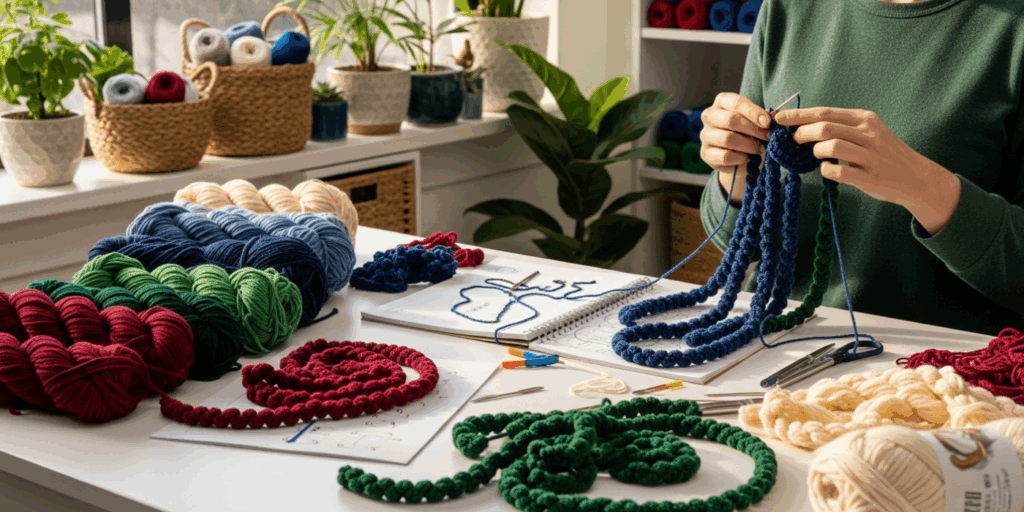
If you’ve ever touched velvet and thought, “I wish I could crochet this,” meet the bullion stitch.
This is the most advanced stitch on our list—and the most rewarding. It’s a long, twisted stitch that creates a dense, velvety bump on the surface. It looks like embroidery, feels like silk, and is often mistaken for knitting.
Here’s the trick: you wrap the yarn around your hook 8–12 times (depending on thickness), then pull through all loops at once. It sounds complicated. It feels like magic.
Why go through the trouble? Because the bullion stitch adds a richness no other stitch can match. It’s ideal for floral motifs, decorative accents, or even entire garments if you’re feeling bold.
I once made a cuff for a sweater using bullion stitches in deep emerald green. It looked like tiny, raised leaves. People kept reaching out to touch it—even strangers on the subway.
Bullion stitch takes patience. You’ll need to count your wraps carefully. Your fingers might cramp. But the payoff? Pure luxury.
Use it sparingly. One bullion flower on a plain hat? Showstopper. An entire blanket? That’s a labor of love—and worth every minute.
Pro tip: Use a smooth, non-fuzzy yarn like cotton or silk blend. Fuzzy yarns hide the detail. You want the twist to shine.
The bullion stitch isn’t for beginners. But if you’ve been crocheting for a while and want to challenge yourself? This is your next masterpiece waiting to happen.
Mixing Textures: Where Magic Happens
Here’s the truth no one tells you: the most stunning crochet pieces aren’t made with one stitch.
They’re made with layers.
Think of texture like music. A single note is fine. But a chord? That’s emotion.
Combine the waffle stitch’s warmth with the shell stitch’s elegance. Add popcorn bumps for surprise. Use bullion stitches as delicate accents. The possibilities are endless.
Try this project idea: a textured throw blanket with four distinct sections.
- Top: Waffle stitch for warmth
- Middle: Shell stitch in a gradient ombre
- Bottom: Popcorn clusters like falling snow
- Border: Bullion stitch flowers in gold thread
It’s not just a blanket. It’s a story.
And here’s the best part—you don’t need to plan it all out in advance. Start with one texture. Add one more. See how they interact. Let your hands guide you.
I learned this the hard way. My first “textured” blanket was a mess—popcorns too close, shells too far, no rhythm. But I kept going. I took notes. I tried again. And now, my favorite blanket is one I made during a difficult year. Every stitch holds a memory.
Texture isn’t just about technique. It’s about presence.
When you slow down to make a bullion stitch, you’re not just crocheting. You’re breathing. You’re being still. In a world of screens and speed, that’s revolutionary.
Your Turn: Start Small, Dream Big
You don’t need to make a blanket tomorrow. Start with a coaster. A headband. A bookmark.
Pick one stitch from this list—maybe the popcorn stitch—and work a 4×4 inch swatch. Just 16 stitches. See how it feels under your fingers. How the light catches it. How it makes you smile.
Then, try combining it with a simple single crochet border. That’s it. You’ve just created something no store can sell.
Texture transforms the ordinary into the extraordinary. It turns yarn into memory. Hook into hand. Time into treasure.
So go ahead. Pick up your hook. Choose one stitch. Make one bump. One shell. One ripple.
And when someone touches it and says, “Did you make this?”—you’ll smile and say, “Yes. Every stitch, with love.”
Because in the end, that’s what crochet is really about.
What’s your favorite textured stitch? Have you ever made something that made someone pause just to touch it? Share your story in the comments below—I’d love to hear how texture has touched your life. And if you found this guide helpful, don’t keep it to yourself. Share it with a fellow crocheter who needs a little inspiration today.
Your hands are capable of creating beauty that machines can’t replicate. Now go make something only you could make.
Gabriela Ferreira is a passionate crochet and knitting enthusiast who finds inspiration in every skein of yarn she touches. With a love for color, texture, and handmade detail, she brings creativity and warmth to each project she creates. Gabriela believes that every stitch tells a story, and she enjoys sharing her craft with others who appreciate the beauty of fiber arts.