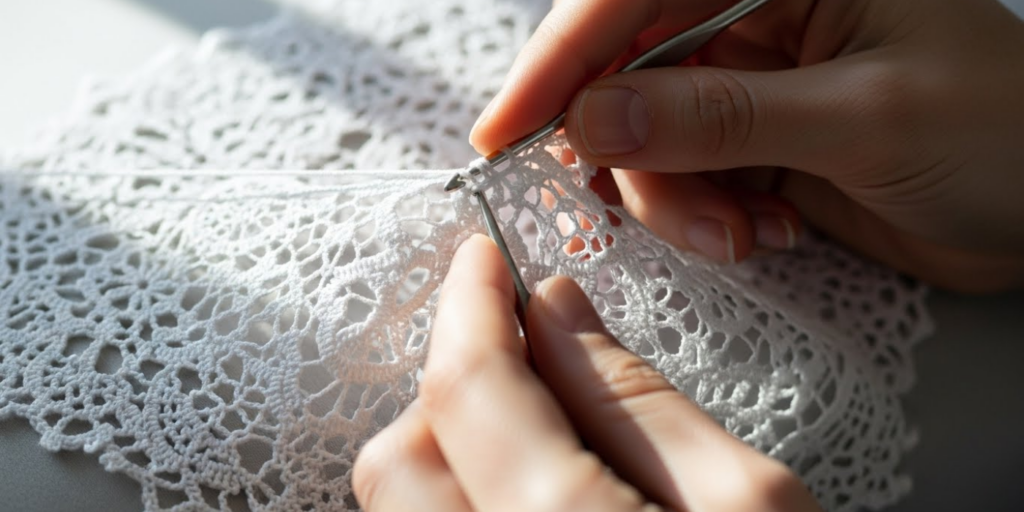
Imagine delicate, flowing curves that mimic the elegance of antique lace—yet you’re not weaving, knitting, or even using a loom. You’re holding just a hook, some thread, and creating something that looks like it belongs in a royal trousseau… with nothing but crochet.
Welcome to the enchanting world of Bruges lace crochet—a 19th-century Belgian technique that’s quietly making a stunning comeback in today’s handmade fashion, home décor, and slow-craft movement.
At first glance, Bruges lace might seem intimidating—those intricate braids, graceful loops, and rhythmic motifs can look like the work of a textile sorcerer. But here’s the secret: it’s built from simple components anyone can learn. And once you do, you’ll unlock a world where vintage artistry meets modern creativity.
In this guide, you’ll discover the history behind Bruges lace, why it’s uniquely suited for today’s makers, how to get started (even as a beginner!), and fresh ideas to incorporate this timeless technique into scarves, edgings, garments, and more. Whether you’re a seasoned crocheter or just learning to hold a hook, this forgotten gem might just become your new favorite stitch.
What Is Bruges Lace Crochet—and Why It’s So Special
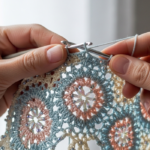
Bruges lace crochet isn’t your average granny square or single-stitch repeat. Instead, it mimics true Bruges bobbin lace—a centuries-old handmade lace from Belgium—using only crochet techniques. The result? A flexible, ribbon-like fabric made of crocheted “tapes” (or braids) joined together with decorative loops, picots, or floral motifs to form curves, medallions, or flowing borders.
Unlike traditional lace that’s worked in one continuous piece, Bruges lace is modular: you create individual strips (called “laces” or “tapes”), then connect them as you go or later using chains or small motifs. This gives you incredible control over shape and scale—perfect for custom-fit collars, doilies, shawls, or even contemporary fashion details.
What makes it truly special is its duality: it feels heirloom-quality yet is incredibly adaptable. You can use cotton thread for doilies, sport-weight yarn for a boho bag, or even metallic thread for holiday ornaments. It’s vintage, yes—but not stuck in the past.
Fun fact: Bruges lace crochet became popular outside Belgium in the early 1900s when crochet pattern books began translating European lace techniques for home crafters in the U.S. and U.K.
A Brief History: From Flemish Courtyards to Your Crochet Hook
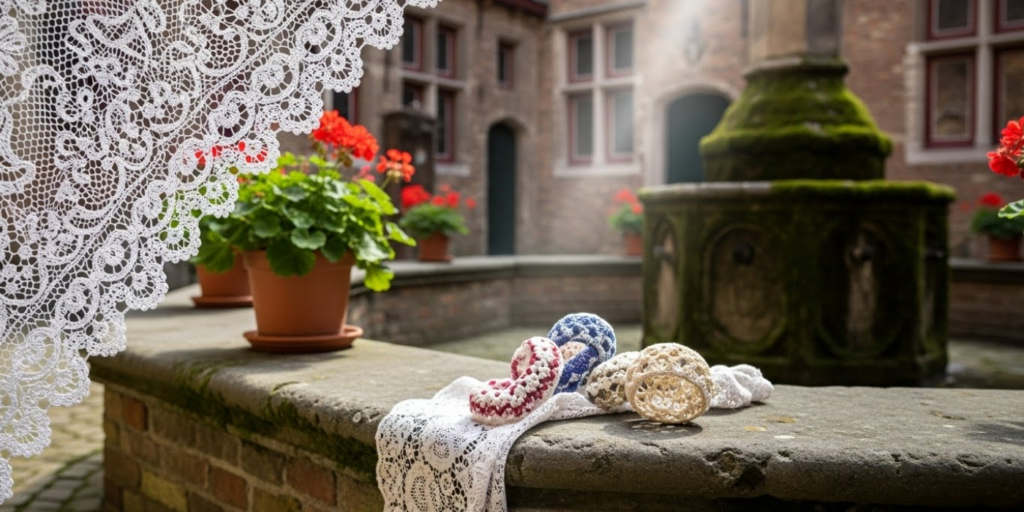
To appreciate Bruges lace, it helps to understand its roots. True Bruges lace (or Brugse kant) dates back to the 15th century in Flanders, now part of modern-day Belgium. Artisans—often women—spent hours weaving fine linen threads on pillows using dozens of bobbins, creating lace so prized it was called “white gold.”
By the 1800s, demand for handmade lace exploded—but so did the desire for affordable alternatives. Enter crochet. Crafters discovered they could replicate the fluid, scalloped beauty of bobbin lace using just a hook and thread. Pattern books emerged, and “Bruges crochet lace” was born—not identical to the original, but close enough to capture its soul.
Though machine-made lace eventually dominated the market, Bruges crochet lace survived in niche circles. Today, it’s experiencing a renaissance, thanks to the slow stitching movement, sustainability trends, and makers who crave techniques with history and heart.
So when you work a Bruges lace motif, you’re not just making a project—you’re keeping a 500-year-old art form alive, one stitch at a time.
Getting Started: Essential Tools and First Stitches
Don’t worry—you don’t need a treasure chest of supplies to begin. Bruges lace is wonderfully minimalist in its requirements. Here’s what you’ll need:
✅ Basic Supplies:
- Crochet hook: Size depends on your yarn. For thread: steel hooks (0.6–1.5mm). For yarn: 2.5–4mm.
- Yarn or thread: Cotton is ideal—it holds shape well. Try size 10 or 20 crochet thread for traditional lace, or sport/DK weight for modern wearables.
- Scissors
- Tapestry needle (for weaving ends)
✅ Core Techniques to Know:
- Chain stitch (ch) – the foundation
- Single crochet (sc) – used in tape construction
- Double crochet (dc) – for motifs and joins
- Picots – tiny loops that add vintage charm
Your First Mini Project: The Basic Tape
The backbone of Bruges lace is the crocheted tape—a flat, narrow strip usually made with rows of single crochet worked back and forth.
Simple Tape Pattern (for practice):
- Ch 6
- Sc in 2nd ch from hook, sc in each across (5 sc)
- Ch 1, turn
- Sc in each st across
- Repeat until tape is 6–8 inches long
Once you’ve made two tapes, connect them with 3-chain loops every few rows. Voilà—you’ve just created your first Bruges lace join!
Tip: Don’t stress over tension at first. The beauty of Bruges lace is in its organic flow—not perfection.
Modern Applications: Beyond Doilies and Collars
Yes, Bruges lace was once reserved for christening gowns and table linens. But today’s makers are reimagining it in bold, fresh ways. Here’s how you can bring this vintage technique into the 21st century:
🌸 Fashion & Accessories
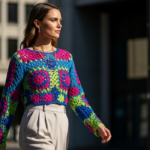
- Edgings on cardigans or sleeve cuffs – add subtle texture without bulk
- Bruges lace belts – crocheted tapes shaped into flexible waist ties
- Boho earrings or hairpins – use fine metallic thread for delicate jewelry
🏡 Home Décor with Soul
- Lampshade wraps – let light filter through lace patterns
- Pillow borders – mix Bruges tape with solid panels for contrast
- Wall art – frame a medallion-style Bruges motif as textile art
🎁 Thoughtful Handmade Gifts
A Bruges lace bookmark, ornament, or handkerchief feels deeply personal in our mass-produced world. Plus, small projects use minimal yarn—perfect for stash-busting!
Real-life example: One Etsy seller saw a 200% increase in sales after adding Bruges lace trim to her linen tea towels. Buyers called it “heirloom meets modern farmhouse.”
The key? Use Bruges lace as an accent, not the whole garment. A little goes a long way—and that’s where its magic shines.
Troubleshooting Common Challenges (and Easy Fixes)
Even experienced crocheters can hit snags with Bruges lace. Here are three frequent frustrations—and how to solve them:
❌ Problem 1: Tapes curl or twist
Why: Uneven tension or too-tight stitches.
Fix: Try a larger hook size or consciously relax your grip. Blocking your finished piece with pins and steam will also flatten tapes beautifully.
❌ Problem 2: Joins look clunky or uneven
Why: Inconsistent loop placement or chain length.
Fix: Use stitch markers every 5–6 rows on your tapes to mark where you’ll attach loops. Keep your joining chains the same length (e.g., always ch 3).
❌ Problem 3: “I don’t know how to shape curves!”
Why: Bruges curves come from varying loop frequency, not bending the tape.
Fix: To make a gentle curve, add more joining loops on one side. For tight turns (like in medallions), cluster loops closely together. Think of it like steering a boat—one side pulls tighter than the other.
And remember: mistakes add character. Many vintage Bruges pieces show irregularities—and that’s part of their charm.
Why This Technique Fits Perfectly into Today’s Crafting Ethos
In an age of fast fashion and disposable décor, Bruges lace crochet is a quiet act of resistance. It’s slow, intentional, and deeply tactile—a reminder that beauty takes time.
Moreover, it aligns perfectly with current trends:
- Sustainability: Use leftover yarn or organic cotton
- Mindfulness: The rhythmic repetition of tape-making is meditative
- Customization: Unlike printed fabric, your lace is one-of-a-kind
But perhaps most importantly, Bruges lace honors craft heritage without being rigid. You’re not copying a museum piece—you’re remixing it. Maybe you’ll add a pop of neon thread to a vintage motif, or use eco-friendly bamboo yarn instead of linen. That’s not disrespect—it’s evolution.
As one fiber artist put it: “Old stitches don’t die. They just wait for new hands to love them.”
Your First Bruges Project: A Simple Bookmark (Free Mini-Pattern)
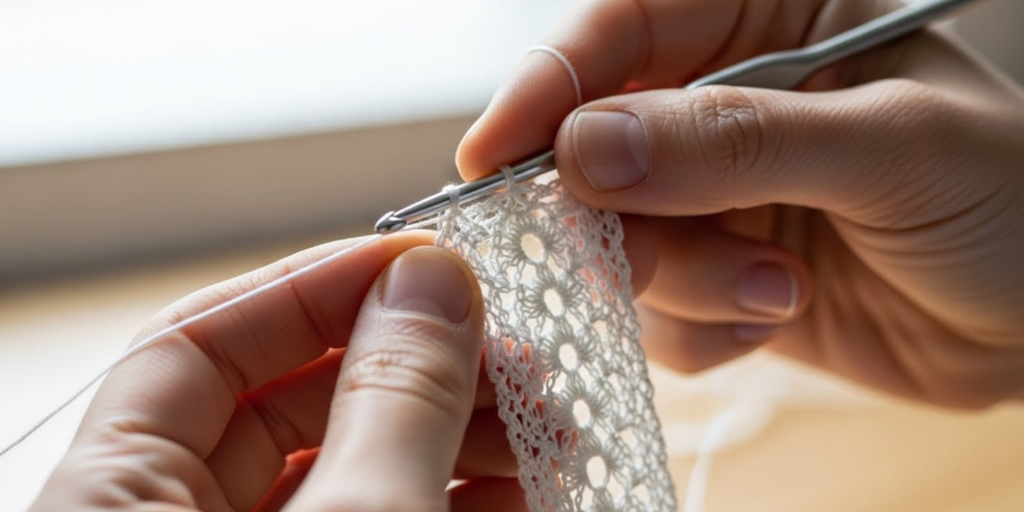
Ready to try? Here’s a beginner-friendly project that takes under 2 hours:
Bruges Lace Bookmark
Finished size: 2” x 6”
Materials:
- Size 10 crochet cotton (white or pastel)
- 1.5mm steel hook
- Scissors
Instructions:
- Make 2 tapes:
- Ch 8, sc in 2nd ch from hook and across (7 sc)
- Ch 1, turn. Sc across. Repeat until tape is 6” long. Fasten off.
- Align tapes side by side.
- Join with ch-3 loops every 4 rows:
- Attach yarn to first tape, ch 3, sl st to corresponding row on second tape.
- Continue down length, spacing loops evenly.
- Add picots to loops for flair:
- In each ch-3 loop, work (sc, ch 3, sc).
Weave in ends, lightly block, and you have a timeless gift—or a lovely treat for yourself!
Bonus: Add a tassel or bead at the bottom for extra personality.
Final Thoughts: Stitching the Past into Your Present
Bruges lace crochet isn’t just a technique—it’s a bridge. A bridge between generations, between utility and art, between quiet tradition and bold self-expression.
You don’t need to be a historian or a perfectionist to enjoy it. All you need is curiosity, a hook, and a willingness to move slowly. In doing so, you join a lineage of makers who believed that beauty belongs in everyday life—not just in galleries or museums, but in the collar of a sweater, the edge of a napkin, the corner of a page.
So why not give it a try? Start with a short tape. Make one loop. See how it feels.
And when you hold your finished piece—light as air, strong as memory—you’ll understand why this “vintage” stitch is so perfectly modern.
Ready to Begin Your Bruges Journey?
We’d love to see what you create! Share a photo of your first Bruges lace project on Instagram with #MyBrugesLace—or comment below with your biggest question about getting started.
Have you worked with Bruges lace before? What surprised you most? Let’s build a community of mindful makers, one delicate loop at a time.
Your hook is waiting. The lace is calling. Will you answer?

Gabriela Ferreira is a passionate crochet and knitting enthusiast who finds inspiration in every skein of yarn she touches. With a love for color, texture, and handmade detail, she brings creativity and warmth to each project she creates. Gabriela believes that every stitch tells a story, and she enjoys sharing her craft with others who appreciate the beauty of fiber arts.