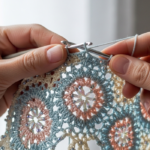
Have you ever watched a seasoned crocheter work and wondered how their hands move with such ease—stitches perfectly even, rhythm steady, expression relaxed—while your own fingers cramp after just a few rows? You’re not behind. You’re not “bad” at it. You’ve just never been shown how to hold your tools in a way that works with your body, not against it.
Here’s the truth: your grip is the foundation of everything you create. It affects your stitch tension, your speed, your comfort, and even whether you’ll want to pick up your hook tomorrow. Yet, most tutorials skip over this crucial skill—or assume there’s only one “right” way.
In this guide, you’ll discover the two main crochet hook holds, learn how to manage yarn tension like a pro, avoid common mistakes that cause pain or frustration, and—most importantly—find the technique that feels natural for you. Because when your hands are relaxed and your tools flow with your movements, your projects become less of a struggle and more of a joy.
Whether you’re just starting out or have been crocheting for years with nagging wrist pain, this is your invitation to craft with greater ease, confidence, and comfort. Let’s dive in!
1. Why Your Grip Is the Secret to Better Crocheting
Before we talk about how to hold your hook, let’s talk about why it matters so much.
Think of your hook and yarn as an extension of your hands. If your grip is tense, awkward, or inefficient, your entire experience suffers. You might notice:
- Uneven stitches (some tight, some loose)
- Hand or wrist fatigue after short sessions
- Slow progress because your movements feel choppy
- Frustration when your finished project doesn’t match the pattern photo
A 2021 survey by the Craft Yarn Council found that over 68% of beginner crocheters experience hand discomfort within their first month—not because they lack talent, but because they haven’t learned ergonomic techniques yet.
The good news? Small changes make a huge difference. Adjusting how you hold your hook or guide your yarn can transform your tension, reduce pain, and even speed up your work. And no—there’s no single “correct” method. The best technique is the one that works for your hands, your project, and your comfort.
2. The Pencil Grip: Precision for Detail-Oriented Work
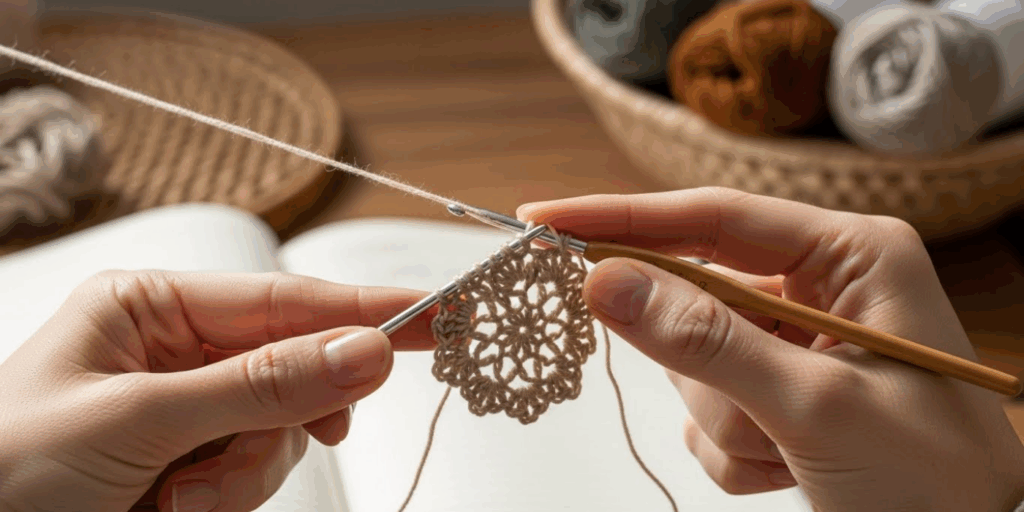
The pencil grip is the most common starting point for new crocheters—and for good reason. It feels familiar, like holding a pen to write or draw.
How to do it:
- Hold the hook between your thumb and index finger, near the thumb rest (if your hook has one).
- Let the shaft rest gently on your middle finger.
- Keep your wrist relatively straight, palm facing down.
This grip gives you fine control over the hook tip, making it ideal for:
- Small hooks (steel hooks or sizes B–E / 2.25–3.5mm)
- Fine yarns (lace, fingering, or sport weight)
- Intricate projects like amigurumi, doilies, or colorwork
Why it works: You can easily see your stitches and maneuver the hook into tight spaces. Many crocheters who also knit or draw find this grip intuitive.
Watch out for:
- Gripping too tightly (a common beginner habit)
- Hovering your hand above the work (causes fatigue)
- Raising your shoulder (creates unnecessary tension)
Pro tip: Rest the heel of your hand or your pinky on your project for stability. This reduces strain and keeps your stitches consistent.
3. The Knife Grip: Comfort for Long, Relaxing Sessions
If the pencil grip feels fussy or tiring, you might prefer the knife grip—so named because you hold the hook like a dinner knife when cutting food.
How to do it:
- Slide the hook into your palm.
- Place your thumb on top of the hook for downward control.
- Use your index finger to guide the tip.
- Your palm faces slightly inward, and your wrist bends gently.
This grip shines when you’re:
- Working on large projects (blankets, sweaters, scarves)
- Using larger hooks (size F/3.75mm and up)
- Crocheting for 30+ minutes at a time
Why it works: It engages larger muscles in your hand and forearm, reducing finger fatigue. Many experienced crocheters find it more relaxed and faster once they get used to it. It also naturally encourages looser, more fluid tension—perfect for garments that need drape.
Watch out for:
- Letting the hook slip if your hands get sweaty
- Over-rotating your wrist (can lead to strain over time)
Pro tip: Try an ergonomic hook with a soft, contoured handle (like Clover Amour or Furls Streamline) to enhance comfort and prevent slipping.
4. Finding Your Perfect Hold: It’s Personal!
Here’s the most liberating truth: there is no single “pro” way to hold your hook. Top designers, YouTube instructors, and yarn shop owners use both grips—or hybrids—depending on the project.
Try this now:
Crochet 5 rows using the pencil grip. Then switch to the knife grip for 5 more rows. Ask yourself:
- Which felt more natural?
- Which gave me more even stitches?
- Which caused less hand fatigue?
Don’t decide after one try. Give each method a fair shot over a few days. You might even discover your own style—perhaps your middle finger supports the hook differently, or your thumb wraps more securely. That’s not “wrong.” It’s your technique, and that’s what matters.
💡 Fun fact: Some left-handed crocheters hold their hook like a right-hander—and it works perfectly for them! Technique is about results, not rules.
5. Mastering Yarn Tension: The Key to Consistent Stitches
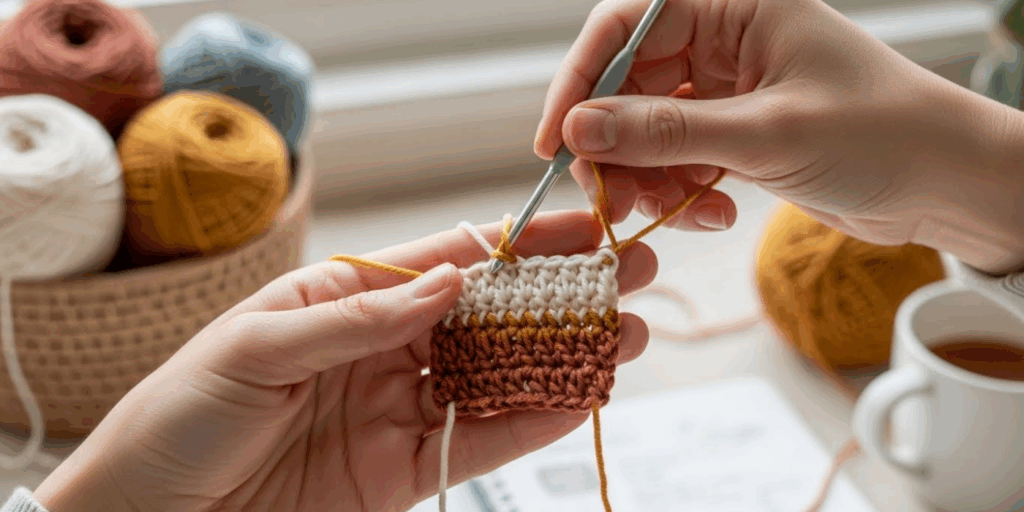
Now, let’s talk about your yarn hand—the unsung hero of even tension.
Uneven tension is the #1 reason for wavy edges, distorted shapes, and projects that don’t match the pattern dimensions. The fix? Controlled, consistent yarn feed.
The Classic Tension Method (Great for Most Yarns)
- Drape the yarn over your pinky (from back to front).
- Weave it under your ring finger, then over your middle finger.
- Pinch the working yarn lightly between your thumb and index finger, just above the hook.
This creates a natural “brake.” When you need more yarn, relax your fingers slightly. When you need less, apply gentle pressure with your thumb.
Alternative Techniques (Because One Size Doesn’t Fit All)
- Index Finger Wrap: Loop yarn once around your index finger. Best for looser tension or slippery yarns.
- Two-Finger Pinch: Hold yarn between middle and index fingers. Great for fine control with lace or thread.
- Yarn Guide Ring: A small silicone or metal ring that slides onto your finger to maintain tension without finger fatigue—ideal for arthritis or long sessions.
✅ Test your tension: Your yarn should glide smoothly through your fingers—not stretch tight like a guitar string, nor hang loose like a hammock. When you pull a loop through, it should feel effortless.
6. 3 Common Mistakes (and How to Fix Them Fast)
Even experienced crocheters fall into these traps. Here’s how to break free:
Mistake #1: The Death Grip
You clamp down on your hook like it might fly away.
Fix: Hold it just firmly enough to control it. Imagine you’re holding a baby bird—gentle but secure. Set a timer to “check grip” every 10 minutes until it becomes automatic.
Mistake #2: Letting Yarn Run Wild
Feeding yarn straight from the skein with no tension control.
Fix: Always wind your yarn into a ball or cake first. Then use your yarn hand to guide it. Even a single loop around your index finger improves consistency.
Mistake #3: Ignoring Pain
“Pushing through” wrist or finger discomfort.
Fix: Stop. Stretch. Adjust. Crocheting should never hurt. If it does, your technique—not your body—is the problem.
7. Pro-Level Tips to Boost Comfort & Control
Ready to level up? These subtle upgrades make a big difference:
- Use ergonomic hooks: Brands like Clover Amour, Furls, or Pony Comfort feature soft, contoured handles that reduce pressure points—especially helpful for arthritis or weak grip strength.
- Match hook size to yarn weight: Using a tiny hook with bulky yarn forces you to pull too hard. Check the yarn label for recommended sizes.
- Practice “air crocheting”: Without yarn, mimic your hook motions for 2 minutes daily. This builds muscle memory without strain.
- Film yourself: Record a short video of your hands while crocheting. You’ll instantly spot tension, awkward angles, or inefficient movements.
- Stretch before and after: Simple hand stretches (like finger spreads and wrist circles) improve circulation and prevent stiffness.
8. Embrace Your Unique Crochet Style
Here’s the most important takeaway: professional crocheters don’t all hold their hooks the same way. Some use their pinky to stabilize. Others rest their elbow on a table. A few even crochet “backward” or with custom grips.
What matters isn’t how it looks—it’s how it works for you.
Your goal isn’t to mimic someone else perfectly. It’s to develop a technique that:
- Keeps your hands pain-free
- Creates even, consistent stitches
- Lets you lose yourself in the joy of making
So give yourself grace. Experiment. Adjust. Celebrate small improvements.
Conclusion: Crochet with Comfort, Confidence, and Joy
You now know the two main ways to hold your crochet hook, how to manage yarn tension like a seasoned maker, and practical fixes for the most common pitfalls. But more importantly, you’ve been reminded that crocheting is meant to be a joyful, sustainable craft—not a source of pain or frustration.
Your hands are your creative partners. Treat them well. Find a grip that supports your natural movement. Tweak your yarn tension until your stitches flow like music. And remember: progress isn’t about perfection—it’s about comfort, consistency, and connection to your craft.
So pick up your hook right now and try one small adjustment—maybe a looser grip, a new finger wrap, or a 30-second hand stretch. Notice how it feels. Watch how your stitches respond.
And if you’ve discovered a grip trick that changed your crocheting life, share it in the comments below! The crafting community grows stronger when we lift each other up with real, tested wisdom.
Happy crocheting—you’ve got this! 🧶✨
Gabriela Ferreira is a passionate crochet and knitting enthusiast who finds inspiration in every skein of yarn she touches. With a love for color, texture, and handmade detail, she brings creativity and warmth to each project she creates. Gabriela believes that every stitch tells a story, and she enjoys sharing her craft with others who appreciate the beauty of fiber arts.