You spent hours—maybe even days—crocheting that delicate shawl, that cozy blanket, or that adorable amigurumi doll. Every stitch was made with love, patience, and a little bit of magic. Now, you want to keep it looking as beautiful as the day you finished it… but you’re terrified of ruining it in the wash.
You’re not alone.
Many crocheters—whether beginners or seasoned artisans—feel this same anxiety. What if the colors bleed? What if it stretches out of shape? What if the yarn shrinks or turns stiff? The fear of destroying something handmade is real. But here’s the good news: with the right care, your crochet pieces can last for decades. They can be washed safely, stored properly, and even passed down as heirlooms.
In this guide, we’ll walk you through every step of washing and caring for your crochet creations—no matter what yarn you used. We’ll cover everything from gentle hand-washing techniques to drying tricks that prevent stretching, how to store delicate items without yellowing or moth damage, and even how to revive a piece that’s seen better days. You’ll learn why some yarns need special treatment, how to spot when your item needs a deep clean, and how to avoid the most common (and costly) mistakes crocheters make.
By the end, you’ll feel confident, not nervous, when it’s time to clean your next masterpiece. Let’s turn fear into freedom—and make your handmade treasures last as long as your memories.
Why Crochet Needs Special Care (And Why Regular Laundry Won’t Cut It)
Crochet isn’t just fabric—it’s structure. Unlike machine-knit sweaters or mass-produced textiles, handmade crochet pieces are built stitch by stitch, often with natural fibers like wool, cotton, or silk. These materials are delicate, porous, and sensitive to heat, friction, and harsh chemicals.
Think of your crochet blanket like a fine painting. You wouldn’t toss it into a washing machine with detergent and hot water, right? Yet, many of us do exactly that with our handmade items—because we assume “it’s just yarn.” But here’s the truth: a single cycle of hot water and spin can shrink, felt, or distort your piece beyond repair.
Take wool, for example. When exposed to heat and agitation, wool fibers lock together in a process called felting. That beautiful, soft afghan you made with merino wool? One wrong wash, and it turns into a thick, felted coaster. Ouch.
Even cotton—often thought of as “tough”—can lose its shape if hung to dry while heavy with water. The weight of the wet yarn pulls the stitches downward, stretching your blanket into a saggy, uneven mess.
And let’s not forget dyes. Many hand-dyed or inexpensive yarns release color when first washed. If you toss a red scarf with a white doily, you might wake up to a pink-and-white tie-dye disaster.
So why does this matter? Because your crochet isn’t just an object—it’s time. Time spent choosing the perfect yarn. Time spent counting stitches. Time spent crocheting while listening to your favorite podcast or sipping tea after a long day. That’s not replaceable.
The good news? With a little knowledge and a few simple steps, you can protect your work—and extend its life by years, even decades.
The Gentle Hand-Wash: Your Crochet’s Best Friend
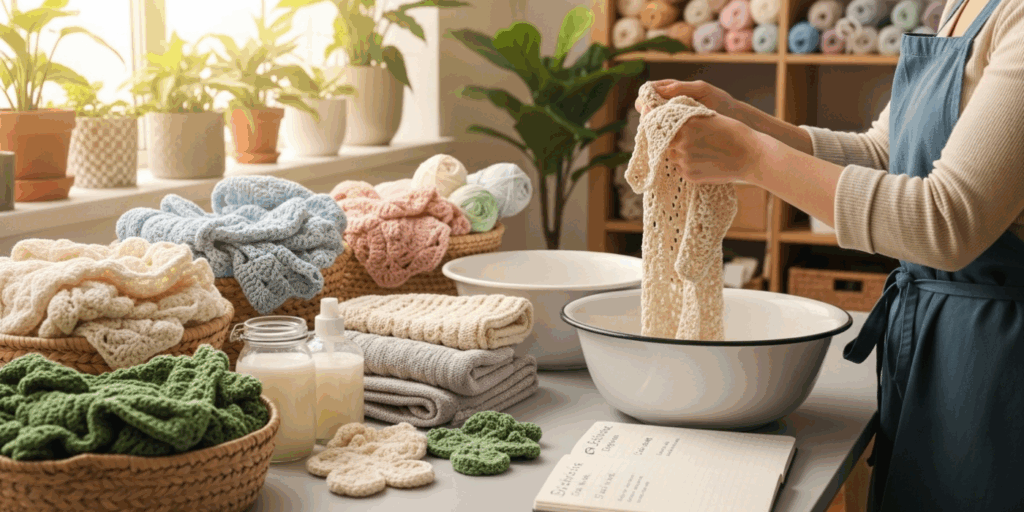
The safest, most reliable way to clean any handmade crochet piece? Hand-washing. Yes, it takes a few extra minutes. But think of it as self-care—for your creation and for you.
Here’s how to do it right:
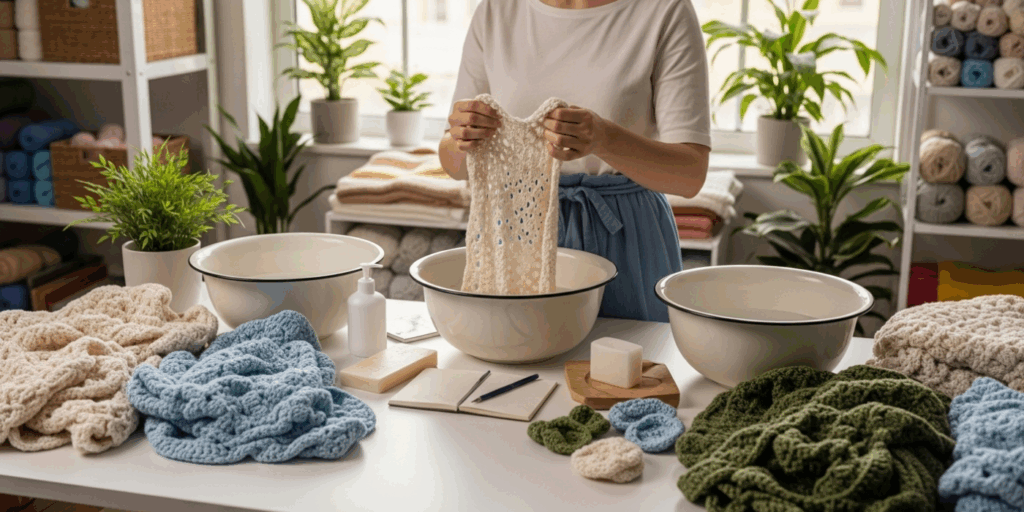
- Fill a clean sink or basin with cool or lukewarm water. Never use hot water unless the yarn label specifically says it’s safe. Cool water (around 70–85°F) is ideal—it prevents shrinking, fading, and felting.
- Add a gentle detergent. Skip regular laundry soap. Instead, use a mild detergent designed for delicates, wool, or baby clothes. Brands like Woolite, Eucalan, or The Laundress Delicate Wash work wonders. These are pH-balanced and free of harsh enzymes that can break down fibers.
- Submerge your piece and let it soak. Gently press the item down so it’s fully underwater. Let it soak for 15–20 minutes. Don’t scrub, twist, or rub. Let the water and soap do the work.
- Rinse, rinse, rinse. Drain the soapy water and refill the sink with clean, cool water. Gently press the item to release the suds. Repeat until the water runs clear. This step is crucial—leftover soap can attract dirt and make fibers brittle over time.
- Remove excess water without wringing. Wringing is the #1 killer of crochet. Instead, gently press the item between two clean, dry towels. Roll the towels up like a burrito and press down lightly. Unroll, and your piece will be damp but not dripping.
You might think this is overkill. But trust me: I once washed a beloved granny square blanket in the machine on “gentle.” It came out half its size, stiff as cardboard, and the colors had bled into each other. I cried. Don’t make my mistake.
Pro tip: If your piece is especially delicate (like lace or silk), add a splash of white vinegar (1–2 tablespoons) to the final rinse. It helps restore softness and neutralize any lingering soap residue.
Drying: The Silent Hero (or Villain) of Crochet Care
Drying is where most crochet pieces go wrong—even after a perfect wash.
Never, ever hang your crochet item by one corner to dry. Gravity will stretch it into a lopsided mess. I’ve seen sweaters turn into scarves and blankets become saggy hammocks. It’s heartbreaking.
Here’s how to dry your piece properly:
- Lay it flat on a clean towel or drying rack. Use a mesh drying rack if you have one—it allows air to circulate underneath. If you’re using a towel, lay it flat on a counter or table.
- Gently reshape it. This is the most important step. Use your fingers to smooth out the stitches and restore the original dimensions. If you made a square pillow, make sure all four sides are even. If it’s a circle, gently pull it into a perfect round. If it’s a sweater, align the sleeves and neckline.
- Use pins or blocking wires (optional but helpful). For intricate lace pieces—like shawls or doilies—blocking is your secret weapon. Pin the item to a foam mat or towel, stretching it slightly to open up the pattern. This isn’t about making it bigger—it’s about making it right. Many crocheters swear by blocking; it’s the difference between “nice” and “showroom-worthy.”
- Let it air-dry completely. This can take 24–48 hours, depending on thickness and humidity. Be patient. Rushing with a hairdryer or heater can damage fibers and cause uneven drying.
Bonus tip: If you live in a humid climate, use a fan to circulate air around your drying piece. It speeds things up without heat damage.
And remember: sunlight is your friend for disinfecting, but your enemy for fading. If you’re drying near a window, rotate the piece occasionally so it dries evenly and doesn’t get bleached by UV rays.
Storing Your Crochet: Beyond the Closet Shelf
You’ve washed it. You’ve dried it. It looks beautiful. Now what?
Storing crochet properly is just as important as cleaning it. Many people toss their handmade items into plastic bins or crowded closets—and then wonder why they smell musty, turn yellow, or get moth-eaten.
Here’s how to store your pieces like a pro:
- Avoid plastic bags. They trap moisture and create a breeding ground for mildew. Instead, use breathable cotton storage bags or acid-free tissue paper. You can even repurpose old pillowcases—they’re perfect for storing blankets or garments.
- Keep it cool, dry, and dark. Humidity, heat, and sunlight are the three enemies of fiber longevity. Store your items in a closet or drawer away from windows and heat sources.
- Use natural moth repellents. Moths love wool and silk. Cedar blocks, lavender sachets, or dried rosemary tucked in with your items are safe, fragrant, and effective. Avoid chemical mothballs—they leave a lingering odor and can damage fibers.
- Fold, don’t hang. Hanging a heavy crochet blanket by its edges can cause stitches to stretch or even snap over time. Fold gently and stack with tissue paper between layers to prevent creasing.
- Check on your pieces every few months. Even if you don’t use them, give them a quick once-over. Fluff them out, air them in a well-ventilated room, and re-fold if needed. This prevents permanent creases and keeps fibers “breathing.”
I once found an old crochet baby blanket in my grandmother’s attic. It was 50 years old, folded in a cardboard box with newspaper. The paper had stained the wool yellow, and the scent of mildew was strong. But after a gentle wash and proper drying? It looked like new. That blanket now belongs to my daughter. And it’s all thanks to the right storage.
Reviving Old or Stained Crochet: Yes, You Can Fix It
Maybe your piece has been tucked away for years. Maybe it got stained by coffee, sunscreen, or a toddler’s snack. Maybe it’s looking a little dull or stiff.
Don’t toss it.
Crochet is resilient. With a little TLC, you can often bring it back to life.
- For yellowing: Soak in a mixture of cool water and 1/4 cup baking soda for 2–3 hours. Rinse thoroughly. For stubborn yellowing, add 1/4 cup hydrogen peroxide (3%) to the soak—this is safe for most fibers and acts as a gentle bleach.
- For odors: Spritz with a mix of water and a few drops of essential oil (lavender or tea tree), then air-dry in a shaded spot. Or place the item in a sealed container with activated charcoal for 24 hours.
- For stiffness: Soak in a solution of cool water and 1 tablespoon of hair conditioner (yes, really!). Let it sit for 20 minutes, then rinse gently. The conditioner coats the fibers, restoring softness without residue.
- For holes or loose stitches: Don’t panic. You can darn small holes with matching yarn and a tapestry needle. It’s easier than you think—and adds character to your piece.
One of my friends revived a 40-year-old crocheted table runner that had been stored in a damp basement. It was brittle, stained, and smelled like old books. After a gentle wash, a conditioner soak, and careful blocking? It looked like it had just come off the hook. She used it for Thanksgiving dinner—and everyone asked where she bought it.
Your pieces can have a second life too.
Yarn-Specific Care: Not All Crochet Is Created Equal
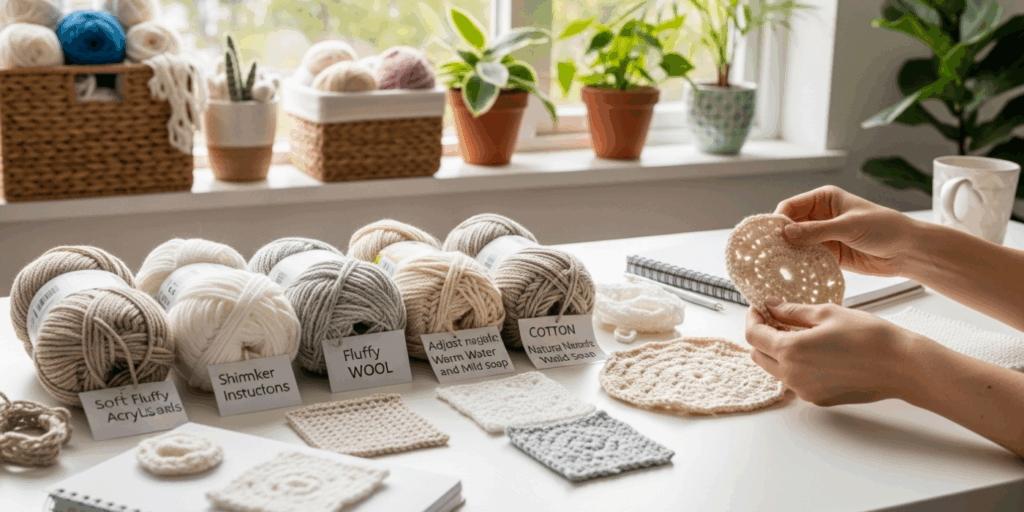
Different yarns need different care. Here’s a quick cheat sheet:
| Cotton | Cool water, mild soap | Lay flat | Can shrink if washed in hot water. Gets softer with each wash. |
| Wool & Alpaca | Cold water, wool-specific detergent | Lay flat, block if needed | Never agitate or wring. Felt easily. Use vinegar rinse for softness. |
| Acrylic | Warm water, mild soap | Lay flat or tumble dry low | More forgiving. Can handle low heat, but high heat can melt fibers. |
| Silk | Cold water, no detergent (just rinse) | Lay flat, avoid direct sun | Extremely delicate. Dry cleaning recommended for valuable pieces. |
| Blends | Follow the most delicate fiber in the blend | Lay flat | Check the label—even if it’s 80% acrylic, if it has 20% wool, treat it like wool. |
Always check the yarn label first. Most modern yarns have care instructions printed right on the skein. When in doubt? Go cooler, gentler, and slower.
Final Thoughts: Care Is an Act of Love
Every time you wash, dry, or store your crochet piece, you’re not just cleaning fabric—you’re honoring the time, the effort, the quiet moments that went into making it.
This isn’t about perfection. It’s about preservation. About keeping the warmth of your hands alive in something that can outlast trends, seasons, even lifetimes.
Your crochet isn’t just something you made. It’s a piece of you.
So the next time you hesitate before washing that blanket your grandma taught you to make—or that hat you crocheted while grieving a loss—remember: caring for it isn’t a chore. It’s a ritual. A quiet way of saying, “I remember. I value this.”
And that’s worth a few extra minutes of your day.
Your Turn: What’s Your Crochet Story?
What’s the most meaningful crochet piece you’ve ever made—or received? Have you ever had a washing disaster? Or maybe you’ve revived an old piece and felt that rush of joy?
I’d love to hear your stories in the comments below. Share your tips, your mistakes, your triumphs. Let’s build a community of crocheters who don’t just make beautiful things—but know how to keep them beautiful, too.
And if you found this guide helpful? Share it with a fellow crocheter. Because handmade love deserves to be passed on.
Happy crocheting—and even happier caring. 🧶💛

Gabriela Ferreira is a passionate crochet and knitting enthusiast who finds inspiration in every skein of yarn she touches. With a love for color, texture, and handmade detail, she brings creativity and warmth to each project she creates. Gabriela believes that every stitch tells a story, and she enjoys sharing her craft with others who appreciate the beauty of fiber arts.