There’s something deeply satisfying about combining the rhythm of crochet with the peace of the outdoors—whether you’re lounging on a sun-dappled picnic blanket, unwinding by a crackling campfire, or listening to waves lap at the shore. But what if your handmade creations could enhance those moments too?
Outdoor crochet isn’t just about doing crochet outside—it’s about crafting functional, beautiful items designed specifically for life beyond your living room. From insulated drink sleeves that keep your lemonade cold to compact market totes that survive sandy beaches, these projects marry practicality with creativity in ways that elevate your outdoor adventures.
In this guide, we’ll explore why certain crochet patterns are perfect for picnics, camping trips, and beach days—and how to choose (or design) pieces that are lightweight, durable, easy to clean, and travel-friendly. You’ll discover beginner-friendly projects, smart material tips, and clever hacks that turn yarn into real-world solutions. Whether you’re planning a weekend getaway or just dreaming of one, these patterns will help you stitch your way to more comfortable, stylish, and sustainable outdoor experiences.
So grab your hook, pack your project bag, and let’s head outside—together.
Why Outdoor Crochet Deserves Its Own Spotlight
Not all crochet projects are created equal—especially when they leave the comfort of climate-controlled interiors. Outdoor environments bring unique challenges: sun, sand, moisture, wind, and the need for portability. A delicate lace shawl might be stunning indoors, but it’s useless as a beach cover-up if it’s too flimsy or hard to pack.
That’s where purpose-built outdoor crochet shines. These patterns prioritize function without sacrificing charm. Think:
- A foldable picnic blanket with waterproof backing
- A mesh produce bag that doubles as a sandy swimsuit carrier
- A campfire mug cozy that protects your hands and keeps coffee warm
Moreover, handmade outdoor gear often aligns with eco-conscious values. Instead of disposable plastic coolers or single-use towels, your crochet alternatives reduce waste and last for years. A cotton market tote replaces dozens of plastic bags. A reusable snack pouch cuts down on packaging.
And let’s not forget the joy factor. There’s a special pride in using something you made—especially when friends ask, “Did you really crochet that beach bag?” You’re not just packing gear; you’re carrying a piece of your creativity into the wild.
Picnic-Perfect Crochet: Lightweight, Washable, and Stylish
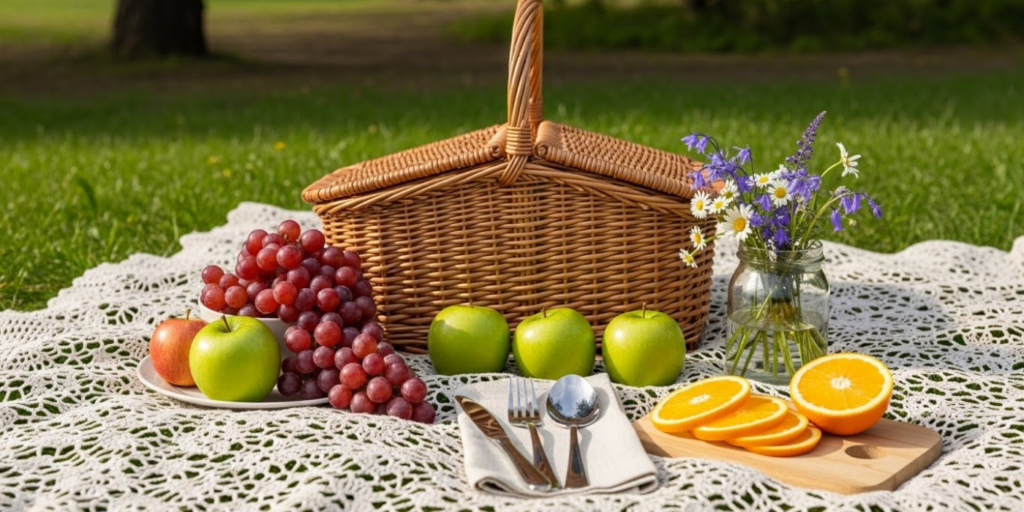
Picnics call for items that are easy to carry, easy to clean, and easy on the eyes. Fortunately, crochet excels in all three areas—with the right choices.
Start with yarn selection. For picnic accessories, choose 100% cotton or cotton-blend yarns. They’re naturally absorbent (great for spills), machine-washable, and hold their shape well. Avoid wool—it can felt when wet—and super-soft acrylics, which may stain more easily.
Now, consider these must-have picnic patterns:
- Insulated Beverage Cozies: Keep drinks cold (or hot!) with a double-layered cozy. Add a snap or button to secure it around your bottle or can.
- Reusable Snack Bags: Crochet small drawstring pouches to hold nuts, crackers, or berries. Line them with food-safe fabric if carrying messy items.
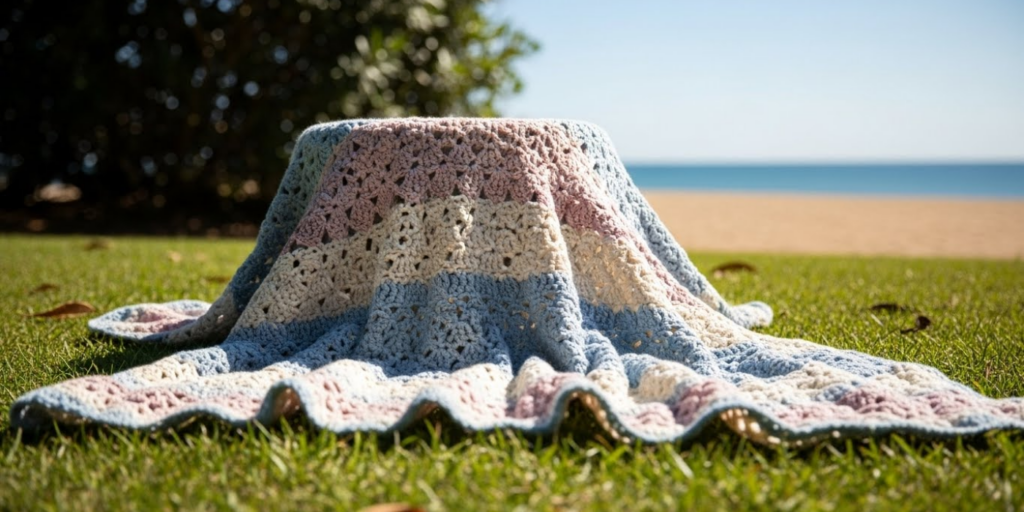
- Foldable Blanket with Pockets: A lightweight blanket with integrated pockets holds utensils, napkins, or sunscreen. Use a dense stitch like moss stitch or waistcoat stitch for durability.
- Napkin Rings or Utensil Wraps: Tiny but mighty! Roll your cutlery in a crocheted wrap with a button closure—eco-friendly and chic.
One clever tip? Make everything modular. A set of matching cozies, bags, and wraps in coordinating colors becomes a cohesive picnic kit you can proudly pull out again and again.
Plus, because these items are small, they’re perfect for beginner to intermediate crocheters—ideal for quick weekend projects before your next outing.
Camping Crochet: Rugged, Compact, and Multi-Functional
Camping gear needs to be lightweight, durable, and multi-use—no room for fluff (literally and figuratively). But that doesn’t mean sacrificing personality. In fact, handmade camping accessories can add warmth and charm to even the most rustic site.
When choosing yarn for camping projects, acrylic or nylon blends often outperform natural fibers. They dry quickly, resist mildew, and stand up to dirt and friction. For items that touch food or skin, look for anti-microbial treated yarns or stick with tightly stitched cotton that’s easy to sanitize.
Here are practical camping crochet ideas that actually earn their place in your pack:
- Campfire Mug Cozy: Protect your hands from hot enamel mugs. Add a loop to hang it from your gear.
- Lantern Sleeve: Crochet a breathable mesh cover for your LED lantern to diffuse light and keep bugs out.
- Gear Organizers: Small pouches with carabiner clips hold matches, lip balm, or headlamp batteries. Use water-resistant yarn or add a fabric lining.
- Compact Pillow: Stuff a crocheted pillow cover with a compressible travel pillow or even clean clothes. Bonus: it doubles as lumbar support in the car.
Pro hack: Crochet a universal strap with buttonholes that can secure tarps, hang wet towels, or bundle firewood. It’s the Swiss Army knife of outdoor crochet!
And don’t overlook comfort items. A lightweight scarf or beanie made from breathable yarn can make chilly nights cozier—without taking up precious space.
Beach-Ready Crochet: Quick-Dry, Sand-Resistant, and Breezy
Beach crochet walks a fine line: it must be open enough to let air flow, yet structured enough to be useful. The biggest enemies? Sand, salt, and sun damage.
To combat these, choose smooth, tightly spun yarns in light colors (they reflect UV rays better than dark hues). Cotton, bamboo, or synthetic blends like Lion Brand Shawl in a Ball or WeCrochet’s Comfy Cotton work beautifully. Avoid fluffy or textured yarns—they trap sand like magnets.
Now, let’s talk essential beach patterns:
- Mesh Tote Bag: A loose, openwork stitch (like mesh or filet) lets sand fall right through. Perfect for carrying towels, shells, or wet swimsuits.
- Sun Hat with Wide Brim: Use stiffened cotton yarn and a dense stitch pattern to help the brim hold its shape. Add a chin strap for windy days.
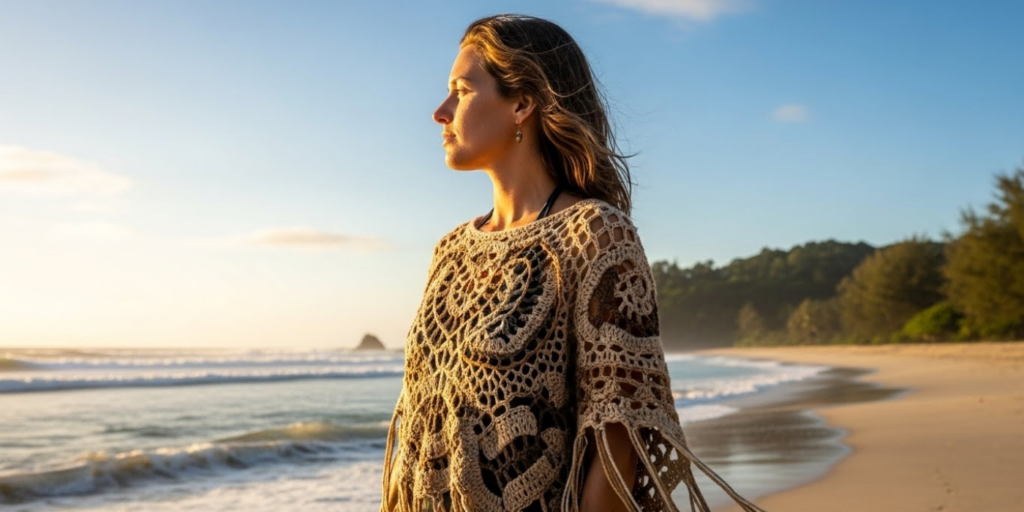
- Cover-Up or Beach Poncho: Lightweight and breathable, these can be made in one rectangle with arm slits—no seaming required!
- Flip-Flop Straps or Sandal Charms: Tiny crochet flowers or beads on your footwear add flair and help you spot your flip-flops in a crowd.
One underrated idea? Crocheted drink markers. Tiny seashells or starfish in different colors help guests identify their cups—no more mix-ups!
Bonus tip: Always rinse beach crochet items in fresh water after use to remove salt and sand. Lay flat to dry away from direct sun to prevent fading.
Choosing Yarns and Stitches That Stand Up to the Elements
Not every stitch or fiber is suited for outdoor life. The key is matching your materials to the environment.
For sun exposure: UV rays degrade fibers over time. Acrylic fades fastest; cotton and nylon hold color better. Bamboo yarn offers natural UV resistance and a silky drape—ideal for beachwear.
For moisture: Avoid wool (it absorbs water and takes forever to dry). Instead, opt for quick-dry synthetics or tightly crocheted cotton that won’t sag when damp.
For durability: Use tighter stitches like single crochet, half double crochet, or moss stitch. Open lace looks pretty but won’t hold up to rough use. For high-wear items (like tote handles), double or triple the strands for extra strength.
Also, consider yarn weight. For beach cover-ups, go lightweight (#1–3). For picnic blankets or camping organizers, worsted (#4) offers sturdiness without bulk.
And remember: always swatch. Test how your chosen yarn behaves when wet, stretched, or packed tight. Better to learn on a 4-inch square than a finished beach bag!
Sustainability and Self-Reliance: The Bigger Picture
Beyond convenience and cuteness, outdoor crochet supports a more intentional, sustainable lifestyle. Each handmade item replaces a disposable one. Each reusable bag reduces plastic waste. Each durable cozy means one less cardboard sleeve in the landfill.
In a time when fast fashion and single-use culture dominate, choosing to make your own outdoor gear is a quiet act of resistance—and self-reliance. You’re not just following trends; you’re building a kit that reflects your values: care, craftsmanship, and connection to the natural world.
Plus, these projects often spark joy in others. Gifting a picnic set to a newlywed couple or a beach tote to a college student heading to spring break turns crochet into a language of love and practical support.
So whether you’re stitching under a tree, by a lake, or in your sunlit kitchen dreaming of adventure, know that your hook is doing more than making loops—it’s weaving a slower, more thoughtful way to experience the outdoors.
Ready to Take Your Crochet Outside?
From sunny picnics to starlit campsites and salty beach days, your crochet skills can enhance every outdoor moment. The patterns don’t need to be complex—just thoughtful, functional, and made with the right materials.
So why not start small? Pick one project from this list—maybe a mesh tote or a drink cozy—and make it this weekend. Test it on your next outing. See how it feels to use something you created with your own hands in the fresh air.
We’d love to hear from you: Which outdoor crochet project are you most excited to try? Are you team picnic blanket, camping organizer, or beach cover-up? Share your plans or photos in the comments below! And if you found this guide helpful, please pass it along to a fellow maker who loves both yarn and adventure.
Happy hooking—and happy exploring!

Gabriela Ferreira is a passionate crochet and knitting enthusiast who finds inspiration in every skein of yarn she touches. With a love for color, texture, and handmade detail, she brings creativity and warmth to each project she creates. Gabriela believes that every stitch tells a story, and she enjoys sharing her craft with others who appreciate the beauty of fiber arts.