You’ve spent hours—maybe days—crocheting that beautiful blanket, sweater, or amigurumi. The colors are perfect, the stitches even, the pattern followed to a T. But when you go to join the last piece… ugh. A lumpy seam. A visible bump. A crooked edge that ruins the whole look.
Sound familiar?
You’re not alone. Even experienced crocheters struggle with joins that don’t “disappear.” And here’s the truth: a project isn’t finished until the seams are invisible. That final step—often rushed or ignored—is what separates a good piece from a professional one.
In this guide, we’ll walk you through the real secrets to seamless crochet joins and invisible finishes. No more bulky seams. No more visible ends sticking out like sore thumbs. Just smooth, polished, gallery-worthy results that make people ask, “Did you buy this?”
We’ll cover the top 4 techniques that pros use (and never tell beginners), how to choose the right method for your project, common mistakes to avoid, and even a foolproof trick for hiding your yarn tails so thoroughly, your cat won’t find them.
By the end, you’ll not only know how to join like a pro—you’ll understand why it matters, and how mastering this one skill transforms your entire crocheting experience. Let’s dive in.
Why Invisible Joins Matter More Than You Think
Let’s be honest: most of us focus on the fun part—the color changes, the shaping, the satisfying click-click-click of the hook. The joining? That’s the chore. The cleanup. The part we skip or “wing.”
But here’s what no one tells you: your seams are the foundation of your project’s professionalism.
Think of it like painting a room. You wouldn’t just slap on two coats of paint and call it done if the edges were uneven, drippy, or peeling at the corners, right? The same applies to crochet. A visible seam doesn’t just look sloppy—it weakens your piece. It can pull, stretch unevenly, or even unravel over time.
I once made a baby blanket with the most gorgeous ombre yarn. I was so proud… until I washed it. The seams stretched out, the edges curled, and the whole thing looked like it had been through a tumble dryer with rocks. Why? Because I’d used a basic slip stitch join without securing the ends properly.
The good news? You don’t need to be a master to fix this.
The difference between a “handmade” look and a “store-bought” finish comes down to three things:
- The technique you use (not just any join will do)
- How you handle your yarn ends (yes, they matter!)
- The tension you maintain (and how you block afterward)
When you master seamless joins, you’re not just hiding flaws—you’re elevating your craft. People will assume you bought it at a boutique. Your friends will beg for patterns. And best of all? You’ll feel proud every time you pick up your creation.
So before you rush to sew that last piece, pause. Ask yourself: Do I want this to look like I made it… or like I’m a pro?
The answer starts with choosing the right join.
The 4 Best Invisible Join Techniques (And When to Use Each One)
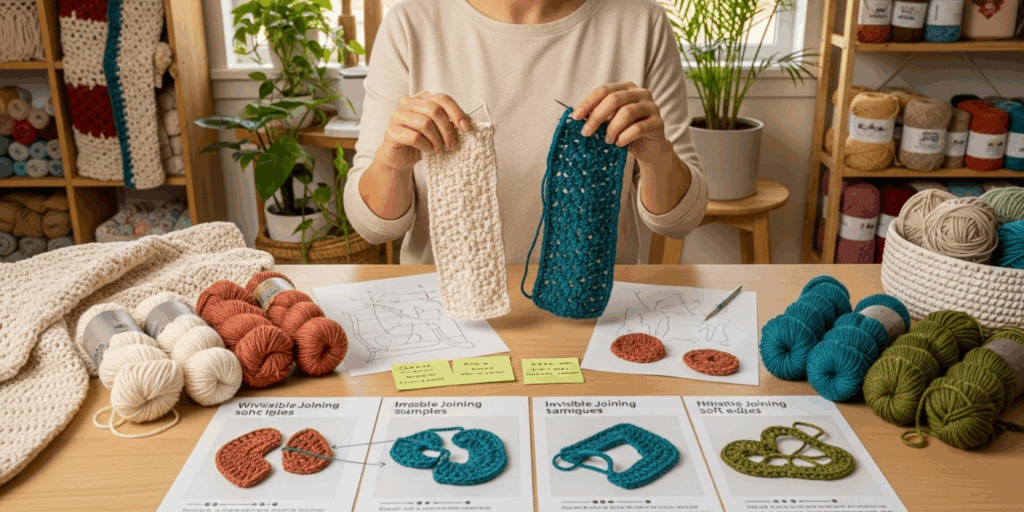
Not all joins are created equal. What works for a granny square blanket won’t work for a seamless sweater sleeve. Here are the four most effective, professional-grade methods—and exactly when to use them.
1. The Slip Stitch Join (Best for Rounds & Circles)
This is the classic go-to for joining rounds—like hats, coasters, or circular shawls. But most people do it wrong. They slip stitch into the first stitch, pull tight, and call it done. Result? A visible bump.
The pro trick: After your last stitch, insert your hook into the top of the first stitch (not the chain space), yarn over, and pull through both loops. Then, don’t pull tight yet. Instead, weave the tail through the next 3–4 stitches on the back side before pulling snug. This distributes tension evenly.
Pro tip: Use a tapestry needle to weave the tail in the same direction as your stitches for extra invisibility.
2. The Mattress Stitch (Best for Seaming Flat Pieces)
This is the gold standard for joining granny squares, afghan panels, or sweater pieces. It’s the technique tailors use to sew seams invisibly.
Here’s how: Lay your two pieces side by side, right sides facing. Thread a tapestry needle with your yarn tail. Insert the needle under both vertical bars of the edge stitches—one from each piece—pulling gently so the fabric lies flat. Work your way up, keeping tension even.
Why it works: Unlike the whip stitch (which creates a ridge), the mattress stitch mimics the natural vertical lines of your crochet, making the join disappear.
Bonus: Use a contrasting thread to practice first. You’ll see how perfectly it blends once you switch to your project yarn.
3. The Invisible Join (aka the “No-Slip” Join for Continuous Rounds)
This is the holy grail for amigurumi and spiral projects. It eliminates that telltale spiral bump.
Here’s how: When you reach the end of your round, don’t slip stitch. Instead, cut your yarn, leaving a 6-inch tail. Thread it onto a tapestry needle. Insert the needle under the front loop only of the very first stitch of the round. Pull through. Then, go back and insert the needle under the front loop of the last stitch you made. Pull snug.
Voilà—no bump. No visible join. Just smooth, continuous rounds.
Best for: Toys, hats, bags—anything where a seam would break the illusion.
4. The Single Crochet Join (Best for Heavy or Bulky Yarns)
If you’re working with thick wool, roving, or multiple strands, a slip stitch or mattress stitch might not hold—or might look too thin.
Enter: the single crochet join. Work a row of single crochet along the edge of both pieces, stitching through both layers at once. Keep your tension loose enough to avoid puckering, but tight enough to hold.
Why it’s perfect for bulky yarns: It creates a flexible, durable seam that moves with the fabric. And because you’re using the same yarn, it blends right in.
Pro tip: Block this seam after joining. It’ll lay flatter than anything.
The Hidden Enemy: Yarn Tails You’re Not Handling Right
You’ve joined your pieces beautifully. The seams look flawless. But then… you spot a tiny, stubborn tail sticking out near the edge. Or worse—it’s loose and starts unraveling after one wash.
Here’s the truth: your join is only as strong as your ends.
Most crocheters make three big mistakes with tails:
- Cutting them too short (under 4 inches).
- Weaving them in straight lines (instead of zigzagging).
- Ignoring the direction of the stitches.
The fix? Three simple rules:
✅ Always leave at least 6 inches. You can trim later, but you can’t add more.
✅ Weave in against the stitch direction. If your stitches go left to right, weave right to left. This anchors the tail deeper into the fabric.
✅ Weave in two different directions. Go in one direction for 2 inches, then turn and go back for another 2 inches. This locks the tail in place like a knot.
Try this pro trick for amigurumi: After weaving in your tail, tie a tiny, hidden knot inside the stuffing. Cut the excess close. It won’t show, and it’ll never come loose—even after machine washing.
And if you’re working with variegated or self-striping yarn? Match the color. Cut your tail from the same color section as the seam. If your yarn changes every 4 rows, wait until you’re in the right color block before cutting.
Small detail? Yes. Game-changer? Absolutely.
Blocking: The Secret Weapon No One Talks About
You’ve joined your pieces. You’ve hidden your ends. But your blanket still looks a little… uneven. Corners curl. Edges wobble.
That’s where blocking comes in.
Blocking isn’t just for lace shawls. It’s essential for every crochet project—even chunky blankets.
What is blocking? It’s gently shaping your finished piece using water, steam, or pins to relax the fibers and set the stitches into their ideal form.
Why it matters for seams:
- It evens out tension differences between your join and the rest of the fabric.
- It flattens any slight puckering from your join.
- It makes your invisible seams truly invisible.
How to block like a pro:
- Wet block for cotton, linen, or wool: Soak your piece in lukewarm water for 15 minutes. Gently squeeze (don’t wring!). Lay flat on a towel, roll it up, and press to remove excess water.
- Pin it out on a foam mat or clean towel, stretching gently to shape. Use rust-proof pins.
- Let it dry completely (24–48 hours). Don’t rush it.
For acrylic? Use steam blocking instead. Hold a steamer 2–3 inches above the fabric (don’t touch!), then pin while warm.
Real-life result: I had a scarf with uneven edges that looked amateurish. After blocking, it looked like it came from a high-end boutique. My sister asked if I’d bought it at a craft fair.
Blocking doesn’t just fix seams—it transforms your entire project from “handmade” to “handcrafted.”
The Final Touch: Confidence in Your Craft
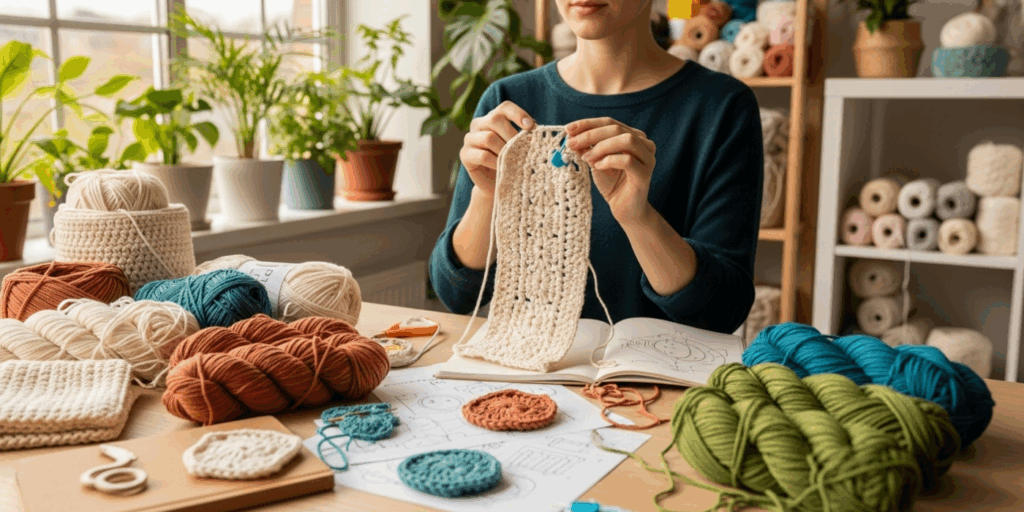
Here’s the quiet truth most crocheters don’t admit: we’re often our own harshest critics.
You spend hours on a project, then stand back and think, “It’s good… but not perfect.” Maybe it’s the seam. Maybe it’s the way the color fades. Maybe it’s just that you know you rushed the ends.
But here’s what I’ve learned after 12 years of crocheting and teaching: perfection isn’t about flawlessness. It’s about intention.
When you take the time to join seamlessly, when you weave in those tails with care, when you block your piece like it matters—you’re not just finishing a project. You’re honoring your time, your skill, your creativity.
That’s why invisible joins aren’t just technical tricks. They’re acts of self-respect.
The next time you finish a piece, don’t just say, “It’s done.” Say, “I made this. And I made it well.”
Try one of these techniques this week. Pick one project—even a small coaster or a single granny square—and join it using the mattress stitch or invisible join. Notice how it feels to finish something that looks professional.
Then, imagine applying that same care to your next blanket, sweater, or gift.
You deserve to feel proud of what you create.
And now, you know how to make sure everyone else sees it too.
Your Turn: Join the Invisible Craft Movement
So—what’s your go-to join method? Have you tried the invisible join for amigurumi yet? Or did you just discover the magic of blocking?
I’d love to hear from you.
👉 Drop a comment below: What’s the one crochet mistake you’re finally ready to fix?
👉 Tag a friend who always rushes their seams (we all know one).
👉 Try one technique this week and snap a before-and-after photo. Share it with #InvisibleCrochetMagic.
Your next project doesn’t need to be perfect.
It just needs to be yours—and finished with care.
Now go on. Grab your hook. And make something beautiful—seamlessly.
Happy crocheting,
—Your Secret Seam Whisperer 🧶
Gabriela Ferreira is a passionate crochet and knitting enthusiast who finds inspiration in every skein of yarn she touches. With a love for color, texture, and handmade detail, she brings creativity and warmth to each project she creates. Gabriela believes that every stitch tells a story, and she enjoys sharing her craft with others who appreciate the beauty of fiber arts.