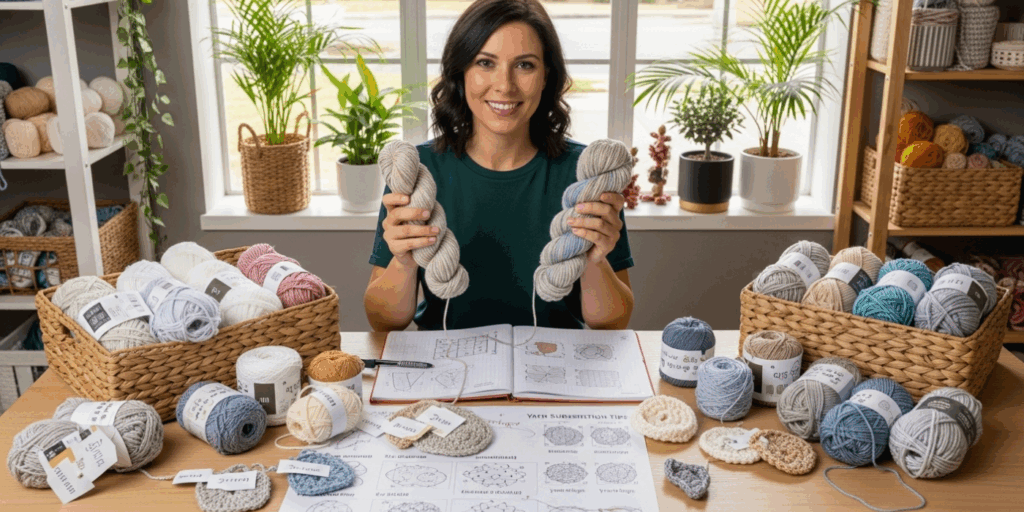
You’ve found the perfect pattern. The stitches look divine, the color palette is dreamy, and you can already picture yourself wrapped in the finished blanket on a cozy winter evening. But then—you realize the yarn it calls for is discontinued. Or out of stock. Or just… too expensive. Panic sets in. Do you abandon the project? Wait months for a restock? Or worse—settle for something that just doesn’t feel right?
Hold on. Before you give up, take a deep breath. You’re not stuck—you’re just at the beginning of a creative adventure. Yarn substitution isn’t a compromise. It’s an art. And with the right tips, you can swap yarns like a pro and still end up with something even better than you originally imagined.
Whether you’re a beginner who’s never ventured beyond the ball band or a seasoned knitter with a stash that rivals a small yarn shop, knowing how to substitute yarns wisely is one of the most empowering skills you can master. It saves money, reduces waste, and lets you personalize your projects with colors and textures you truly love.
In this guide, we’ll walk you through everything you need to know to substitute yarn successfully—no guesswork, no ruined projects, just confidence in your hands and joy in your finished piece. We’ll break down the science behind yarn weight, explain how to match fiber content for drape and care, show you how to test swatches like a pro, and even reveal how to turn a “limited availability” problem into a signature style. By the end, you’ll see yarn substitution not as a hurdle—but as your ticket to endless creative freedom.
Why Yarn Substitution Isn’t Just a Backup Plan—It’s a Creative Superpower
Let’s be honest: most of us don’t start knitting because we love following rules. We start because we love making something beautiful, something ours. But patterns are written with specific yarns in mind—not because those yarns are sacred, but because they’re the ones the designer had on hand when they created the piece.
Here’s the truth: 90% of patterns can be adapted to other yarns. The key isn’t finding the exact match—it’s understanding why the original yarn was chosen and how to replicate its behavior.
Think of it like baking. If a recipe calls for almond flour and you only have oat flour, you don’t just swap them 1:1 and hope for the best. You consider moisture content, density, binding properties. The same goes for yarn. A bulky wool will behave differently than a bulky acrylic. A cotton blend will drape differently than a silk blend. If you ignore these differences, you might end up with a sweater that’s too tight, a shawl that doesn’t flow, or a hat that flops like a wet sock.
The good news? Once you learn to read yarn labels like a detective, you’ll start seeing substitutions everywhere. Found a gorgeous hand-dyed sock yarn on Etsy? You can use it for a cowl if you match the gauge. Discontinued your favorite worsted weight? There are at least five modern alternatives with the same drape and stitch definition.
Here’s the game-changer: Every time you substitute yarn successfully, you’re not just finishing a project—you’re building your knitting intuition. You begin to trust your eyes and your hands over rigid instructions. That’s the real magic.
And here’s a secret: many of today’s most beloved handmade items weren’t made with the “official” yarn. They were made by someone who looked at the pattern, looked at their stash, and said, “I’ve got this.”
Decoding Yarn Weight: Your First Clue to a Perfect Swap
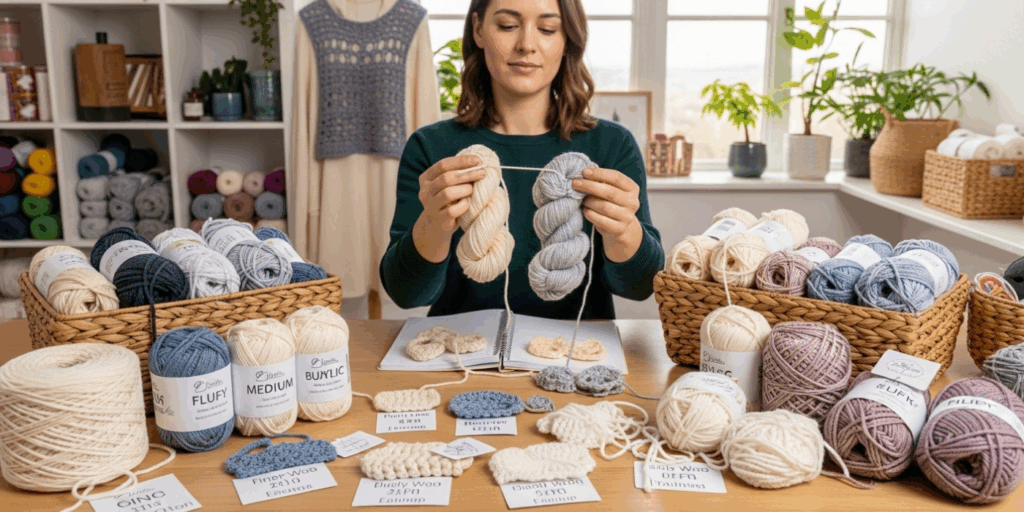
If you’ve ever stared at a ball band wondering what “DK” or “Aran” even means, you’re not alone. Yarn weight labels can feel like a foreign language. But once you understand them, they become your roadmap.
Yarn weight refers to the thickness of the yarn—not its actual weight in grams or ounces. The Craft Yarn Council has standardized categories from 0 (Lace) to 7 (Jumbo). Most patterns use weights between 3 (Light/DK) and 5 (Bulky).
Here’s the simple trick: Always match the gauge, not the label.
Let’s say your pattern calls for “Worsted Weight (4)” yarn, and you want to use a different brand. You can’t just assume all “worsteds” are the same. One brand’s worsted might knit up at 4.5 stitches per inch, while another’s is 5.5. That difference? It can turn a sweater into a toddler-sized vest.
So how do you check? Knit a swatch.
Cast on 20 stitches with your chosen needle size. Knit 4 inches in stockinette stitch. Measure how many stitches fit in 4 inches. Divide by 4. That’s your stitches per inch.
Compare that to the pattern’s gauge (e.g., “20 stitches = 4 inches”). If you’re close—within 1–2 stitches per inch—you’re golden. If you’re way off, try a different needle size. Go up a size if you have too many stitches; go down if you have too few.
Pro tip: Use the same needle material as the original pattern suggests. Bamboo grips more than metal, so you might need a slightly larger needle with bamboo to match the same gauge.
And here’s a real-life example: I once substituted a merino wool for a cotton blend in a cardigan pattern. Cotton doesn’t stretch like wool, so my swatch was tighter. I went up a needle size—and suddenly, the fabric had the same soft drape the designer intended. The finished sweater? Even better. It held its shape beautifully, and I loved the cool, breathable feel for spring.
Bottom line: Don’t trust the word “worsted.” Trust your swatch.
Fiber Content Matters More Than You Think (Here’s How to Get It Right)
Now that you’ve nailed the weight, let’s talk about what the yarn is made of. Fiber content affects everything: warmth, elasticity, washability, drape, and even how the finished piece feels against your skin.
Let’s say your pattern calls for 100% merino wool. You want to use a blend because you’re allergic to wool or you’re knitting for someone who is. You pick a cotton-acrylic blend. Sounds fine, right?
Not quite.
Merino wool has natural stretch and memory. It bounces back. Cotton? It’s heavy and doesn’t rebound. Acrylic? It can pill and lack breathability. Swap wool for cotton without adjusting for these differences, and your sweater might sag at the shoulders, lose its shape after one wash, or feel stiff and uncomfortable.
Here’s a simple cheat sheet:
| Warmth & Elasticity | Wool, Alpaca, Cashmere | 100% Cotton, Bamboo |
| Drape & Sheen | Silk, Rayon, Bamboo | Acrylic, Polyester |
| Machine Washable | Superwash Wool, Acrylic, Nylon Blends | Non-superwash Wool, Linen |
| Softness Against Skin | Merino, Cashmere, Alpaca | Coarse Wool, Jute |
Real story: I made a baby blanket using a 100% acrylic yarn because it was affordable and machine washable. It looked fine at first. But after three washes? It started to balloon and look fuzzy—like a cloud that lost its shape. I learned the hard way: acrylic stretches out, doesn’t rebound, and can look “cheap” over time.
Instead, I now look for superwash merino blends with a touch of nylon—they’re soft, washable, and hold their shape. For baby items, I’ll even use bamboo blends—light, breathable, and naturally antibacterial.
Your move: Before swapping, ask yourself:
- Will this item be worn close to the skin?
- Will it need frequent washing?
- Does it need to hold its shape (like a sweater) or drape (like a shawl)?
Match the fiber’s behavior to the project’s purpose. That’s how you avoid regret.
Swatching Isn’t Optional—It’s Your Secret Weapon
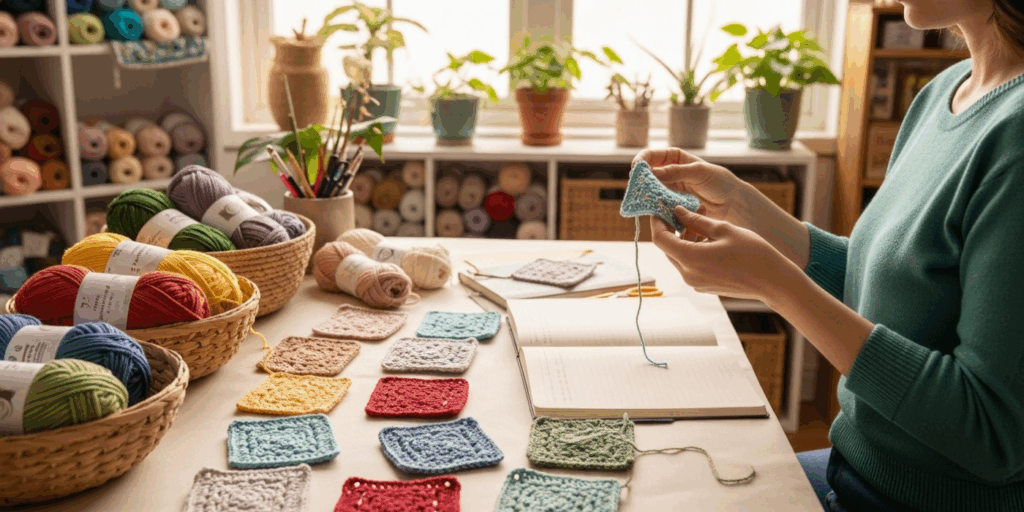
Okay, let’s get real. Most of us hate swatching. It feels like a waste of time. “I just want to start knitting!” we say. But here’s the truth: skipping your swatch is like buying shoes without trying them on.
I once skipped a swatch for a lace shawl. I loved the yarn, the pattern looked easy, and I was excited. I cast on and knitted for three days. Then I realized—my lace wasn’t opening up. The holes were tiny, the fabric was stiff, and the whole thing looked like a doily that had been stepped on.
I ripped it out. Started over. Made a swatch. Changed needle sizes. And the second time? The lace bloomed like a flower. The difference? One hour of swatching saved me three days of heartbreak.
Here’s how to swatch like a pro:
- Use the recommended needle size from the pattern.
- Knit at least 6 inches square—small swatches lie. Bigger ones show truth.
- Block your swatch. This is non-negotiable. Wash or steam it the same way you’ll treat the finished piece. Fibers behave differently after blocking. Wool fluffs up. Cotton shrinks. Acrylic stays stiff.
- Measure after blocking. Count your stitches and rows over 4 inches. Compare to the pattern.
- Write it down. Note the yarn, needle size, and gauge. You’ll thank yourself later.
Bonus tip: If you’re substituting a yarn with a different texture—say, a fuzzy mohair for a smooth worsted—knit your swatch with two strands held together. Sometimes, doubling a thinner yarn gives you the same thickness and texture as the original. It’s a game-changer for lace or airy projects.
Swatching isn’t boring. It’s your insurance policy. And the peace of mind? Priceless.
The Magic of Yarn Substitution: Turning Limitations into Signature Style
Here’s the most beautiful part of yarn substitution: it makes your work uniquely yours.
Think about it. When you follow a pattern exactly as written, you’re making what someone else imagined. But when you choose your own yarn, you’re adding your personality, your values, your story.
Maybe you’re knitting for your mom who hates synthetic fibers—so you choose organic cotton.
Maybe you’re on a budget and find a stunning sale on a local indie dyer’s yarn—so you adapt the pattern to use it.
Maybe you’re eco-conscious and want to use recycled materials—so you hunt for yarns made from ocean plastic or repurposed textiles.
I once substituted a luxury alpaca yarn with a locally spun wool from a small farm in Vermont. The original pattern was elegant and drapey. My version? It had a rustic charm. The stitches were a little more textured, the color had natural speckles, and the whole thing smelled like a mountain breeze. My mom cried when she received it. “It feels like home,” she said.
That’s the power of substitution. It turns a project from “made from a pattern” into “made with love.”
And here’s a pro move: Keep a substitution journal. When you find a great swap, write it down:
- Original yarn: “Malabrigo Worsted”
- My substitute: “Plymouth Encore”
- Needle size: US 7 (instead of US 8)
- Notes: “Slightly less drape, but more durable. Great for kids’ sweaters.”
Over time, you’ll build your own personal database of swaps. You’ll stop relying on blogs or forums—you’ll trust your own experience.
And that’s when you become a true knitting artist.
Final Tips: 5 Quick Hacks for Flawless Yarn Swaps
Before you head to your yarn stash, here are five no-fail tips to make your next substitution a win:
- Match the yardage per skein. If the pattern needs 1,000 yards and your substitute has 200 yards per skein, you’ll need 5 skeins. Always buy an extra skein—just in case.
- Check the care instructions. Can you machine wash it? Dry flat? If the original yarn is hand-wash only and yours isn’t, think about who will wear it. A baby sweater? Maybe you need to stick to machine-washable.
- Use online tools. Websites like Ravelry’s Yarn Substitution Tool or YarnSub.com let you enter a yarn and get real alternatives with user reviews. Super helpful for beginners.
- When in doubt, go slightly thinner. It’s easier to knit tighter than to stretch out a too-thick fabric. A slightly thinner yarn with bigger needles often gives better drape than a thick one with small needles.
- Don’t fear color. If the original yarn is a solid and you have a variegated one you love? Go for it! Just make sure the color changes don’t obscure stitch patterns. Avoid busy variegated yarns for complex cables or lace—they can disappear.
You’re Not Just Replacing Yarn—You’re Reinventing Your Craft
Every time you substitute yarn, you’re not just solving a problem. You’re growing as a maker.
You’re learning to trust your instincts.
You’re honoring your values—whether that’s sustainability, affordability, or local support.
You’re creating pieces that carry your fingerprint, not just a brand name.
The perfect yarn isn’t always the one the pattern says. Sometimes, it’s the one you found on sale at your local shop. Or the one your grandmother gave you. Or the one you fell in love with during a trip to the mountains.
So the next time you face a discontinued yarn or a tight budget, don’t sigh. Smile.
Because you now know the secret: the best yarn for your project isn’t the one listed—it’s the one that speaks to you.
Knit boldly. Swap fearlessly. And remember: the most beautiful things aren’t always the most expensive. Sometimes, they’re the ones made with a little creativity, a little courage, and a whole lot of heart.
Now it’s your turn.
Have you ever substituted yarn and ended up with a project you loved more than the original? Or maybe you’re holding a pattern right now wondering what to swap? Share your story in the comments below—I’d love to hear your substitution wins (and even your funny fails!).
And if this guide helped you feel more confident, please share it with a fellow knitter who’s been stuck on a yarn dilemma. Because the best thing about knitting? It’s not just about the finished piece.
It’s about the community that grows around it.
Happy knitting. Your perfect yarn is out there—and now, you know exactly how to find it. 🧶

Gabriela Ferreira is a passionate crochet and knitting enthusiast who finds inspiration in every skein of yarn she touches. With a love for color, texture, and handmade detail, she brings creativity and warmth to each project she creates. Gabriela believes that every stitch tells a story, and she enjoys sharing her craft with others who appreciate the beauty of fiber arts.