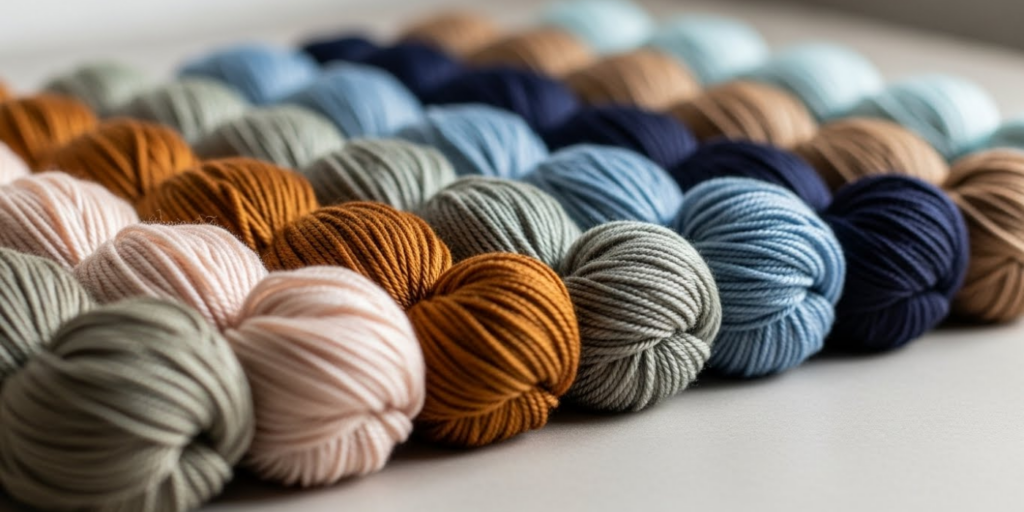
Ever fallen in love with a gorgeous scarf pattern… only to realize it calls for “4-ply yarn” and you have no idea what that means in your country? Or maybe you’ve bought a skein labeled “DK” while traveling in Europe, brought it home, and discovered it’s slightly thicker than your usual “light worsted”?
You’re not alone. Yarn weight confusion is one of the most common frustrations for fiber artists working with international patterns, online marketplaces, or yarns from abroad. The same yarn can be called “sport,” “baby,” “5-ply,” or “light” depending on whether you’re in the U.S., U.K., Australia, or South Africa—and that mismatch can turn a dream project into a misfit sweater.
But don’t toss your hook or needles in frustration just yet. With a little knowledge and a reliable conversion guide, you can confidently navigate any yarn label, anywhere in the world.
In this article, you’ll learn why yarn weight systems differ globally, how to decode labels like a pro, and—most importantly—how to use practical conversion charts to substitute yarns with confidence. We’ll also share tips for checking gauge, choosing alternatives, and avoiding common pitfalls. Whether you’re ordering yarn from overseas or adapting a vintage pattern, this guide will help you stitch with clarity, no matter your location.
Why Yarn Weight Systems Vary Around the World
First, let’s clear up a common myth: “ply” does not equal yarn weight.
Historically, “ply” referred to the number of strands twisted together to make a yarn (e.g., 2-ply = two strands). But over time, different countries began using “ply” as a proxy for thickness—leading to major inconsistencies. For example:
- In the U.K., “4-ply” typically means a light fingering-weight yarn.
- In Australia, “4-ply” might refer to something closer to sport or DK weight.
- In the U.S., “ply” is rarely used on labels at all—instead, we rely on the Craft Yarn Council’s Standard Yarn Weight System, which uses numbers (0 to 7) and descriptive names like “Worsted” or “Bulky.”
Why the confusion? Because yarn traditions evolved independently. British knitters developed terms based on textile mills; Americans standardized for mass production; Europeans often use metric measurements (like meters per 100 grams).
Fun fact: A 2021 survey of 1,200 international crocheters found that 73% had started a project only to realize their yarn was the wrong weight—wasting time, money, and motivation.
So while the fiber might be the same, the language around it isn’t. That’s where conversion becomes essential.
The Universal Solution: The Standard Yarn Weight System (0–7)
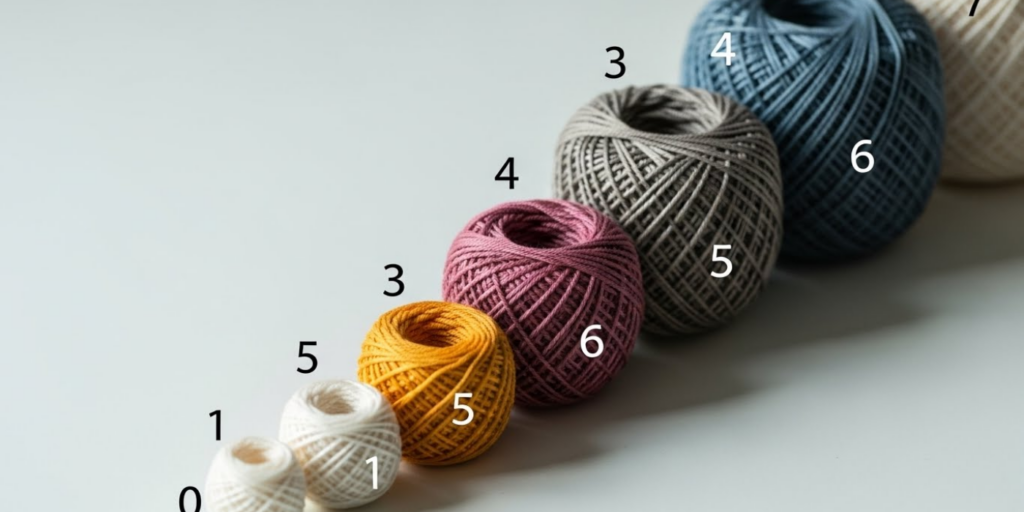
Good news: there is a global standard you can trust—the Craft Yarn Council’s Yarn Weight System. Introduced in the early 2000s and now widely adopted (even outside the U.S.), it classifies yarn into 8 categories, from 0 (lace) to 7 (jumbo):
| Number | U.S. Name | Common International Equivalents |
|---|---|---|
| 0 | Lace | 1-ply, cobweb, thread |
| 1 | Super Fine | Fingering, sock, 4-ply (U.K.) |
| 2 | Fine | Sport, baby, 5-ply (Australia) |
| 3 | Light | DK (Double Knitting), light worsted |
| 4 | Medium | Worsted, Aran, Afghan |
| 5 | Bulky | Chunky, craft, rug yarn |
| 6 | Super Bulky | Roving, extreme chunky |
| 7 | Jumbo | Arm knitting yarn, novelty roving |
This system focuses on thickness and recommended hook/needle size, not ply or brand names. And because it’s visual (many yarn bands now include the number inside a symbol), it’s easy to recognize—even if you don’t speak the language.
Pro tip: When in doubt, look for the number on the yarn label. If it’s missing, check the suggested hook size—that’s often a more reliable indicator than the name.
Practical Conversion: Matching Yarns Across Regions
Now, let’s get practical. Suppose you’re in Canada and want to make a British pattern calling for “DK yarn.” What do you grab off the shelf?
Use this quick-reference conversion guide:
| U.S. / Craft Yarn Council | U.K. | Australia/NZ | Suggested Hook (U.S.) |
|---|---|---|---|
| Lace (0) | 1–2 ply | 1–2 ply | 1.5–2.25 mm |
| Fingering (1) | 3–4 ply | 4 ply | 2.25–3.5 mm |
| Sport (2) | 5 ply | 5 ply | 3.5–4.5 mm |
| DK (3) | 8 ply | 8 ply | 4.5–5.5 mm |
| Worsted (4) | Aran | 10 ply | 5.5–6.5 mm |
| Bulky (5) | Chunky | 12 ply | 6.5–9 mm |
| Super Bulky (6) | Super Chunky | 14+ ply | 9–12 mm |
Note: “Ply” labels in the U.K. and Australia are traditional approximations—not exact. Always check gauge!
Real-world example:
Maria in Texas wanted to make a Norwegian sweater pattern that called for “Garngruppe C” (a Scandinavian term). She looked up the gauge (22 sts = 10 cm on 4mm needles) and matched it to DK weight (3) in the U.S. system. Her sweater fit perfectly—all thanks to understanding weight, not just names.
How to Substitute Yarn Like a Pro (Even Without the Exact Match)
Sometimes, you won’t find the exact weight—or it’s out of stock. That’s okay! Yarn substitution is a skill, not a compromise. Follow these steps:
Step 1: Check the Gauge
The pattern’s stitches per inch (or 10 cm) matters more than the yarn name. If your swatch matches the pattern’s gauge using a different yarn, you’re golden.
Step 2: Compare Yardage
Look at meters or yards per 100 grams. Two yarns of the same weight should have similar yardage. If your substitute has 20% less yardage, you’ll need more skeins.
Step 3: Consider Fiber and Drape
Cotton stretches less than wool. Acrylic may be stiffer than bamboo. Even within the same weight, fiber affects drape and fit—especially for garments.
Step 4: Swatch—Always!
Knit or crochet a 4” x 4” swatch, wash it as you would the finished item, then measure again. This reveals how the yarn behaves in real life.
Bonus tip: Use apps like YarnSub or Ravelry’s yarn database to find reliable substitutes based on weight, fiber, and yardage.
Remember: The right yarn isn’t the one with the “correct” name—it’s the one that gives you the right fabric.
Common Pitfalls (and How to Avoid Them)
Even experienced crafters trip up on yarn conversions. Here are the top mistakes—and fixes:
❌ Assuming “DK” is the same everywhere
Reality: Some European DK yarns are closer to sport weight; others edge into worsted.
✅ Fix: Always check the recommended needle size (U.K. DK is usually 3.75–4.5mm; if it’s 5mm, it’s likely heavier).
❌ Ignoring dye lots
Two skeins labeled “worsted” from the same brand can look different if they’re from different dye lots—especially in hand-dyed yarns.
✅ Fix: Buy all skeins for a project at once, and check dye lot numbers.
❌ Trusting online photos
Screen colors and lighting distort yarn appearance. That “cream” might be yellow; that “light gray” might be taupe.
✅ Fix: Order swatch cards or buy from shops with generous return policies.
❌ Skipping the swatch to “save time”
This almost always backfires. A misgauged sweater can cost more in wasted yarn than the 30 minutes it takes to swatch.
✅ Fix: Treat swatching as part of the creative process—not a chore.
As one seasoned knitter puts it: “Swatching is the love letter you write to your future self.”
Why Understanding Yarn Weight Makes You a Better Maker
Mastering yarn conversion isn’t just about avoiding mistakes—it expands your creative freedom.
Suddenly, you can:
- Use vintage patterns from your grandmother’s collection (even if they say “nylon 4-fold”)
- Order unique hand-dyed yarns from indie makers in Germany, Japan, or Peru
- Swap stash yarns into new patterns without fear
- Teach others with confidence
Moreover, it connects you to a global community of makers. When you understand that a Scottish “Aran” and an American “Medium” are cousins, not strangers, the craft feels more unified.
In a world where creativity knows no borders, your ability to “speak yarn” across systems is a quiet superpower.
Free Resource: Your Printable Yarn Weight Conversion Chart
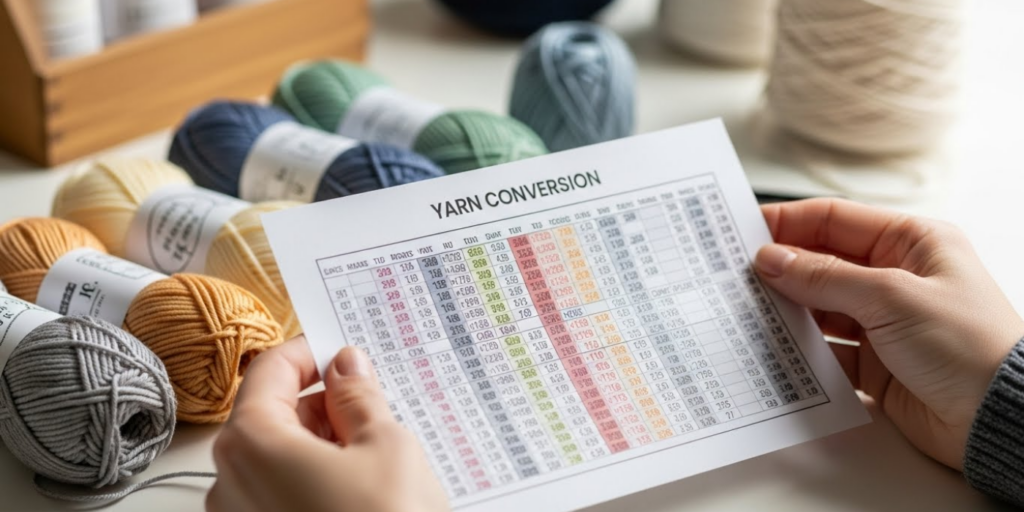
To make your life easier, we’ve created a printable, wallet-sized yarn weight conversion chart that fits in your project bag! It includes:
- Standard Weight Numbers (0–7)
- U.S., U.K., Australian, and European terms
- Recommended hook & needle sizes
- Typical uses (e.g., “Lace = shawls, doilies”)
[Download it here] (Note: In a live blog, this would link to a PDF)
Keep it in your notions pouch or tape it inside your stitch journal—you’ll reach for it more often than you think!
Final Thoughts: Speak the Universal Language of Yarn
Yarn is more than fiber—it’s a bridge between cultures, generations, and makers. But to cross that bridge smoothly, we need a common language.
The good news? You don’t need to memorize every term. Just understand the principles: focus on thickness, check gauge, and use the Standard Yarn Weight System as your anchor. With those tools, you can confidently explore patterns and yarns from every corner of the globe.
So next time you see a pattern labeled “8-ply” or “Garnstärke 4,” don’t panic. Take a breath, consult your chart, make a swatch, and trust your hands.
After all, whether you call it DK, light worsted, or 8-ply… it’s still just yarn waiting for your hook or needles to bring it to life.
Ready to Conquer Global Yarn Labels?
We’d love to hear your yarn conversion story!
👉 Have you ever successfully substituted a yarn from another country? What did you make?
👉 Did you learn the hard way that “4-ply” means different things in different places?
Share your tips or questions in the comments below—or tag us on social with #GlobalYarnGuide!
And if this guide saved you from a yarn-buying blunder, share it with a fellow maker who’s about to order skeins from overseas.
Happy stitching—and happy travels through the wonderful world of yarn! 🧶🌍
Gabriela Ferreira is a passionate crochet and knitting enthusiast who finds inspiration in every skein of yarn she touches. With a love for color, texture, and handmade detail, she brings creativity and warmth to each project she creates. Gabriela believes that every stitch tells a story, and she enjoys sharing her craft with others who appreciate the beauty of fiber arts.